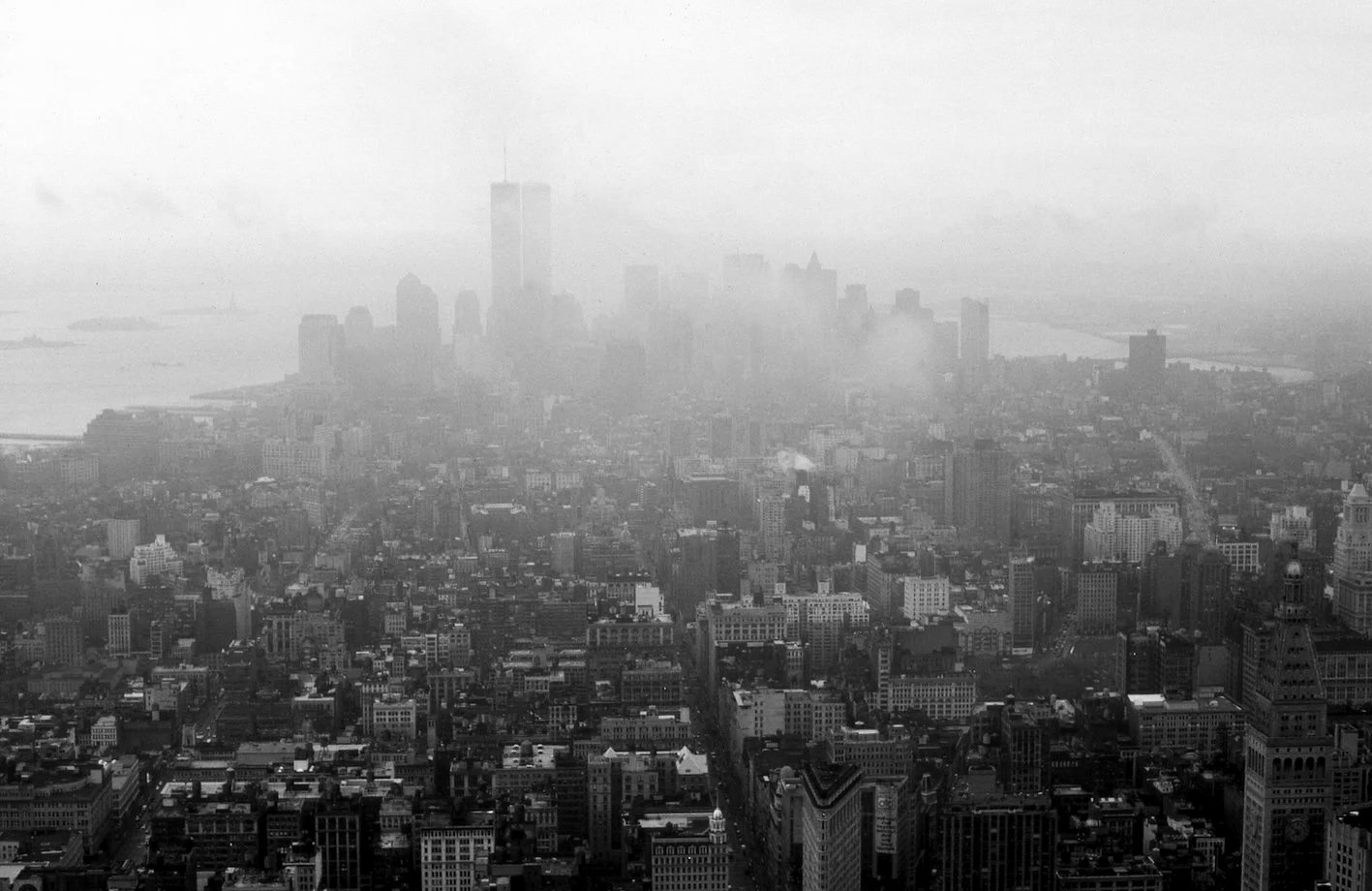
Civil (1996), slide by Robert Pacitti
CIVIL
(1996)
Performance • Text • Film • LegacyIn 1996, Robert Pacitti travelled to New York to meet the writer, raconteur and professional homosexual Quentin Crisp. His intention was to create a new theatre work taking Crisp’s infamous autobiography, The Naked Civil Servant, as its starting point.
Wanting to explore ideas of disobedience, liberty and self-invention, Robert recognised Quentin as a precursor to many of the queer and post-gay identities emerging at the time. Crisp had always run the gauntlet of public disapproval and, reflecting on their meeting, Robert later wrote: “I have seen the face of a parent.”
Returning to England, Robert began editing and shaping the material gathered during his time in America: interviews with Quentin, Super 8 film, slide images, sound recordings and notebooks.
Civil premiered in Manchester in 1996, opening that year’s Queer Up North Festival. Originally performed by a cast of five, the making process proved painfully difficult. The production failed to capture the richness of the material generated during its creation, leaving everyone involved undone by an unhappy process. Over the following months, Robert worked alone to completely rework Civil as a solo performance. The new version premiered at the Institute of Contemporary Arts in London, and the work finally found its form.
In an excerpt from a 1999 essay on Pacitti’s work, Dr Andrea Phillips wrote:
‘In Civil the scene resembles an architectural blueprint, a tentative map of a possible building. The stage is dominated by a large white bed and a long white film wall which spans the space. Light divides and connects scene frames as Pacitti sings and performs quiet rituals, de- and reconstructing both himself and Crisp out of slips of narrative. The work stages intimate self-exploration and, at the same time, suggests the love of a community and the way in which a community might help itself. That community is both us, watching, and a longed-for one. Pacitti seems to be attempting to enact a series of miracles; suspensions of disbelief.’
Dr Andrea Phillips, Living but Knowing (1999)
In the years that followed, Civil became Robert’s most widely toured work, reaching audiences internationally. Writing for Live Art Magazine, Christopher Hewitt described the piece as “a seamless flow of beautifully crafted, intelligent images”, while journalist Pancho Sanchez, writing in Mexico City’s La Crónica de Hoy, called Civil “the perfect argument by Pacitti”.
LEGACY REMAKE, 2005
Following Quentin’s death in 1999, Robert was invited to perform at a memorial staged in Manchester. The experience profoundly altered his relationship with Civil: a work originally concerned with liberty now carried an overwhelming sense of loss. Feeling that the piece remained politically relevant, but not wanting to embody it himself again, Robert decided to pass Civil to another performer.
He chose Richard Eton (Dicky), and in 2005 the two travelled to New York with a small team, staying at the Chelsea Hotel while creating new Super 8 and video material that would make sense of Dicky’s presence onstage. Everything else about the original solo work remained unchanged. Dicky then performed Civil from 2005 to 2008.
Originally conceived around shared aspirations and joint activism, Civil increasingly became, through its successive performances, a meditation on legacy and letting go - of ownership, of origin, and ultimately of Quentin.
PROGRAMME NOTES FROM 2005
‘I was born in 1967 - the year that homosexuality was conditionally decriminalised in Britain - the same year Nico sang ‘Chelsea Girls’ - the same year ‘The Naked Civil Servant’ was first published. I am the bastard twin of these events - “we are family”’
Robert Pacitti, 1995
‘Since Quentin’s sad death, Civil has only been seen once. Undeniably the emphasis of the piece has now shifted, and a work which initially set out to explore shared aspirations and joint activism now inevitably reads as a series of images and ideas placed in relation to notions of legacy. To embrace and further this new reading, I made the decision to pass on the performance - constructed around my own body, experiences and beliefs - to another performer. This, in turn, began to raise questions of how someone else interprets and inhabits the piece - how the images and concerns of the work 'fit' elsewhere, and what this new inheritance might mean.
When watching Civil it is important to remember that the piece is 10 years old. Aside from one change of music, I have kept the work exactly as it was first performed, albeit by someone other than myself. Of course the past decade has brought about a great number of changes, not least in the development of performance, the rights of queer people, and the advent of new technologies.
And so, whilst Civil is not a museum piece, aspects of it are undeniably more commonplace onstage than when it was first made, indeed elements of the performance might now be seen as dated. But I find a sense of liberation in knowing and accepting this. Whilst, in part, the work is absolutely of its time, in not changing it I’ve been able to reassess, with some distance, the motivation of the work, to again explore its original intentions and specific agendas. This is still a work about liberty and disobedience. And whilst it also, perhaps inevitably, now reads as an obituary for Quentin, Civil remains a work about activism and the power of the individual to create change.’
Robert Pacitti, Winter 2005
THE AGE, MELBOURNE
Civil, North Melbourne Town Hall,
Martin Ball, August 2008
‘Quentin Crisp is one of those people for whom the phrase "larger than life" doesn't quite seem to do justice. Born into repressed Edwardian society in 1908, he went on to become perhaps the most famous homosexual of his time, as well as being a successful author, actor and general provocateur.
Crisp's notoriously flamboyant behaviour lends itself to artistic representation, but it is his social and political legacy rather than his personal life that is the subject of Robert Pacitti's one-man show Civil (an allusion to Crisp's autobiography, The Naked Civil Servant). Originally performed by Pacitti himself, the role has been taken on by Richard Eton in a production now touring Australia.
Pacitti's poetic homage is inspired by Crisp's life-long commitment to dissent and his preparedness to put himself in the firing line to challenge what he felt were socially constrictive norms. The work therefore has a visceral edge to it that at times cuts very close to the bone.
In one sequence, Eton draws a Bowie knife so tightly across his body that it appears to score his naked flesh. He then performs a symbolic evisceration that evokes the tragedy of AIDS as well as the legacy of homophobic violence. It is not for the squeamish.
Apart from the power of its ideas, Civil also delivers beautifully constructed visual poetics - from the grainy images of Manhattan's Lower Bast Side to the exquisite tableaux vivants that invoke iconic images such as the Statue of Liberty and Christ's crucifixion.
Eton delivers a powerful performance. A shame that there were only two performances in Melbourne.’
GLASGOW HERALD
Civil, Tramway, Glasgow
Mary Brennan, October 2008
‘When the late Quentin Crisp moved to New York, he found that his droll astute observations on life, society and the over-rated virtues of dusting brought him an affectionate celebrity. Not quite the status this self-declared "stately homo" of England would have predicted for himself, given the determined way he had nailed his colours to the mast of legally-backed prejudice in the years prior to 1967, the year when homosexuality was conditionally decriminalised in Britain.
It's Crisp's history of daily subversion and quietly obdurate protest that this thoughtful and evocative one-man performance piece - devised by Robert Pacitti and now performed by Richard Eton - wisely wants us to remember. Against a grainy backdrop of New York streets and skylines, Eton - sometimes in white pyjamas, sometimes naked - enacts images that border on the darkly fantastical or the Grimm-ly mythic while acknowledging the homo-erotic edge to martyrdom and violence that has inspired writers and painters for centuries.
A hurricane lamp held nobly aloft proclaims the Liberty (statue and statute) of New York, but a knife mapping out the veins of Eton's naked torso - then probing his rectum, before slipping between his lips - silently embraces complex notions of pain, pleasure, victimisation and self-harm. A dead rabbit becomes the centre of a ritual shrine, its blood then marks out Eton's bare flesh with the painterly wounds of St Sebastian.
These many-layered images build, with an unhistrionic poetry, into a cogent challenge to modern complacency. The elderly Crisp, hatted, scarved and still jaunty, is filmed in New York - hurrah! But the red wine with which Eton toasts Liberty cascades like blood down his torso... equal rights, as Crisp knew, are often brutally won.’
ATTITUDE MAGAZINE
Nowt So Queer! Manchester’s Queer Fest proves
It’s Not So Grim Up North After All (excerpt)
Mark White & Toby Manning, April 1996
'"It's a piece of work looking at disobedience, liberty, what our choices really are... and I wanted to make petrol bombs on stage," says Robert Pacitti, hiding a small grin, about his new show, Civil. The multi-media performance incorporates text from Quentin Crisp's autobiography The Naked Civil Servant but it is far from being an easy narrative interpretation - not that you'd expect anything less from the author of Geek.
"I don't think Civil’s going to change anything," he says. "More underline what we're still going through." This wiry 28-year-old is up to challenge all dominant culture: queer as well as straight. He's fired by activism. "I refuse to feel guilty about that. I do believe in revolution."
Talking points from Civil will no doubt include bricks being thrown across stage and a soundtrack of vinyl customised with sellotape. "It's really different to all my recent work - a real departure. But it's not an easy ride. We'll be looking at deeply uncomfortable psychological states of existence." Pacitt's last play Geek was banned, one particular objection being a scene where Union Jacks were pulled out of arses. "I knew it was a great way to open a show but didn't think it was shocking." Still, he could end up having the last laugh "I want to take Civil to Nottingham. They owe me one. Big time."
The Robert Pacitti Company premieres Civil at the Dance House on April 26 & 27 before touring selected sites worldwide.’
Video, photographic, press, marketing and making documentation exists for this project and will be accessible, in due course, as part of the Robert Pacitti Archive held by the Theatre Collection at the University of Bristol.
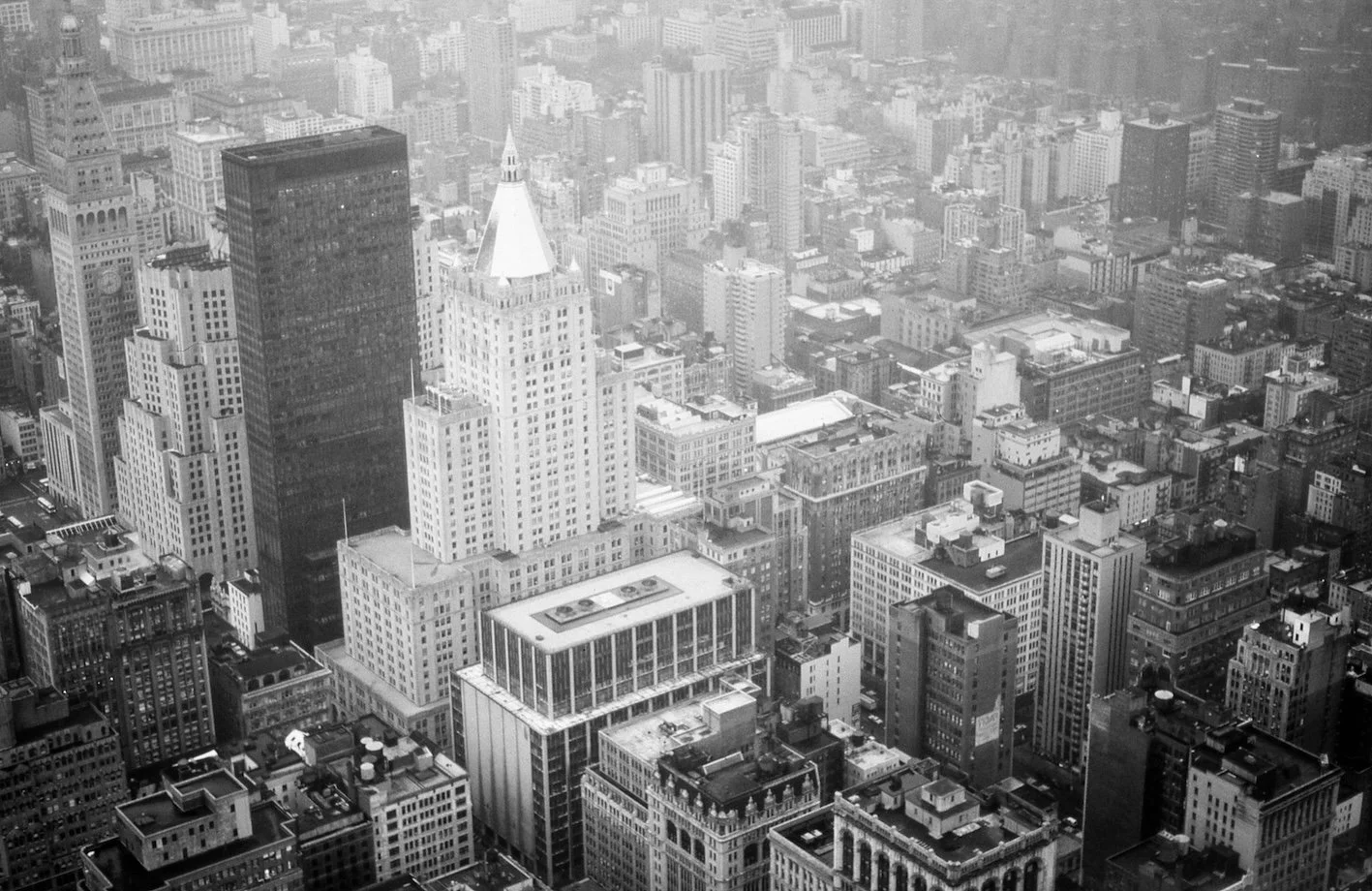
Civil (1996), slide by Robert Pacitti
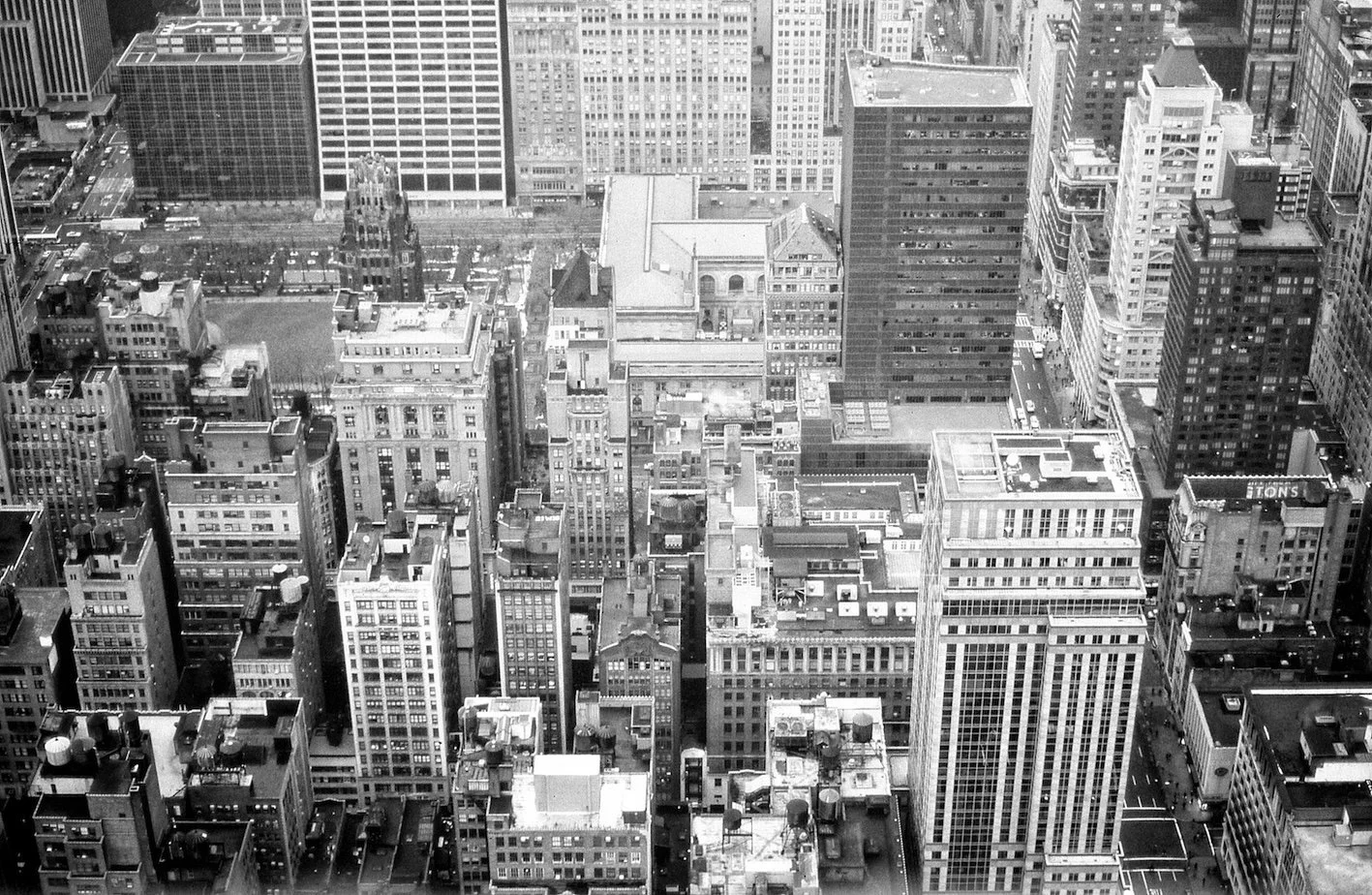
Civil (1996), slide by Robert Pacitti
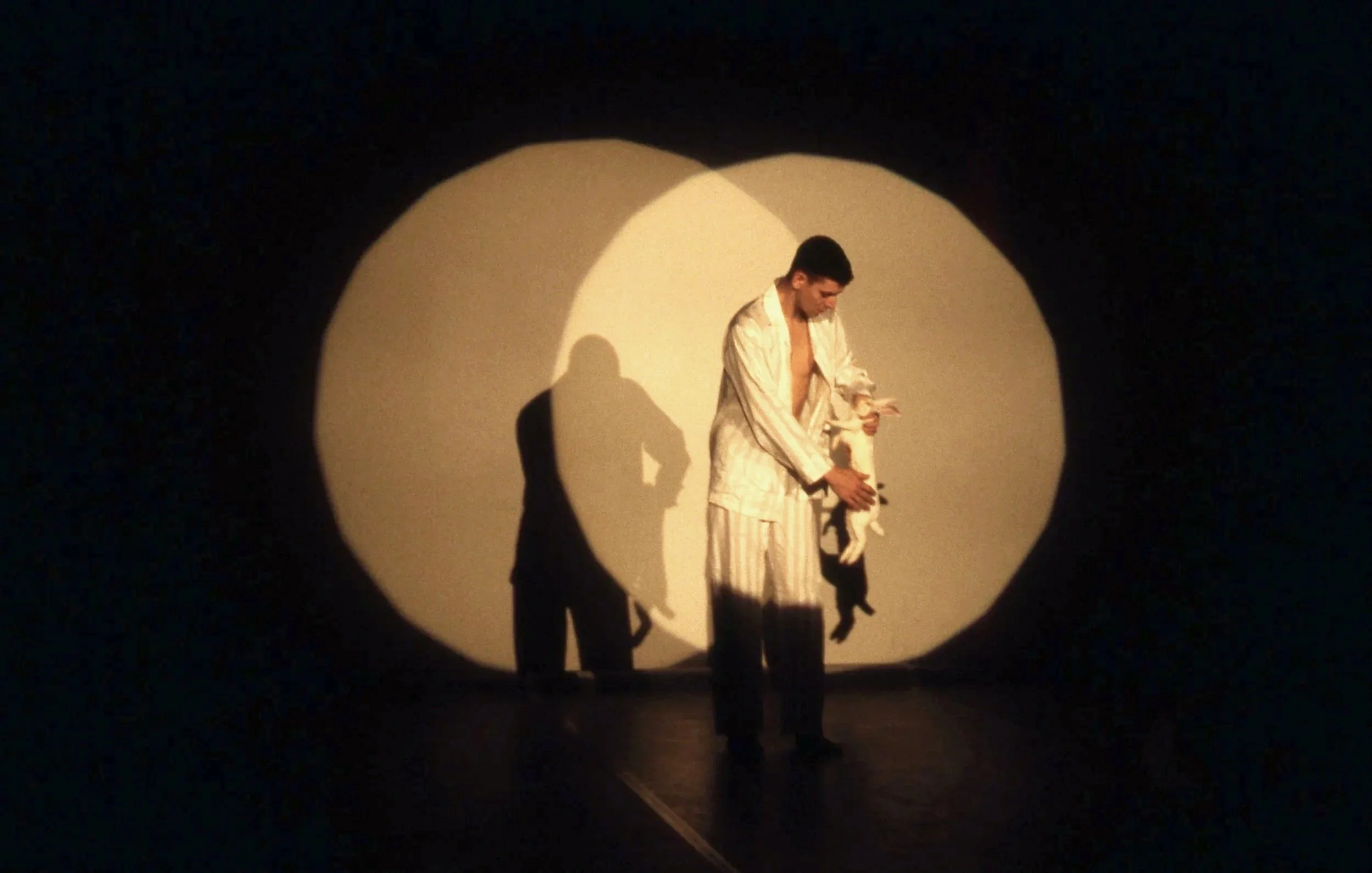
Robert Pacitti in Civil (1996). ICA video documentation still.
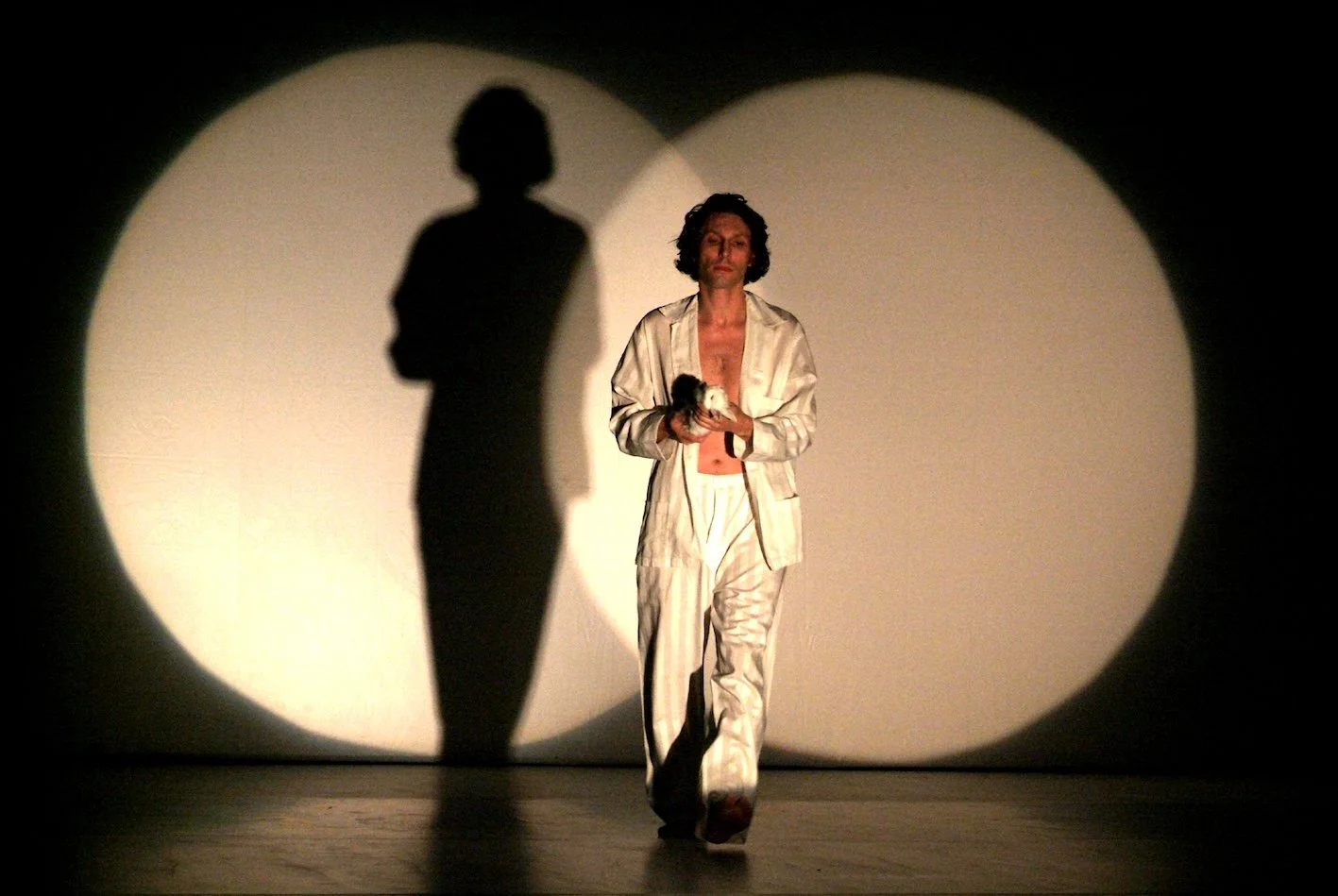
Richard Eton in Civil (2005). Documentation video still.
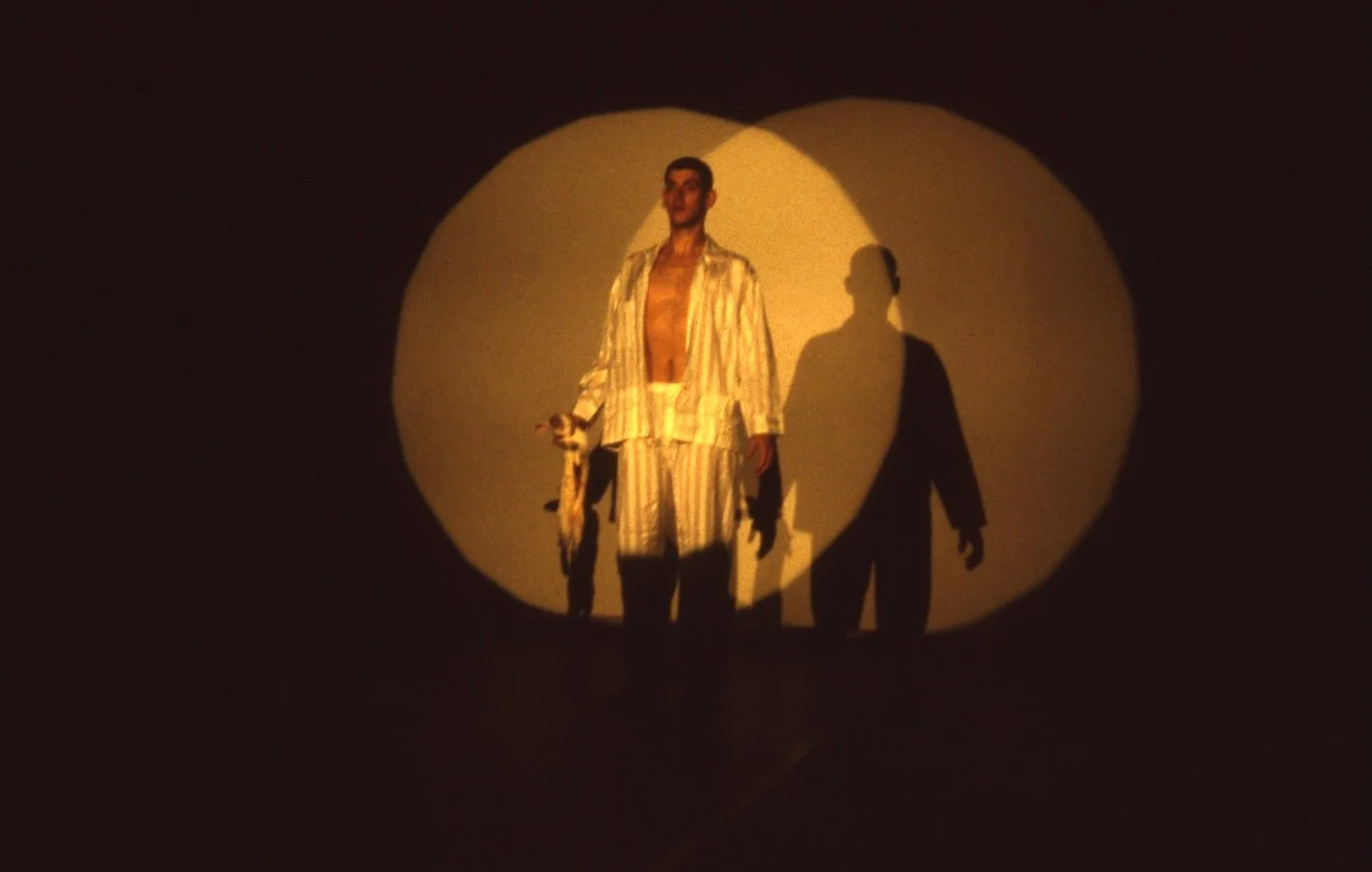
Robert Pacitti in Civil (1996). ICA video documentation still.
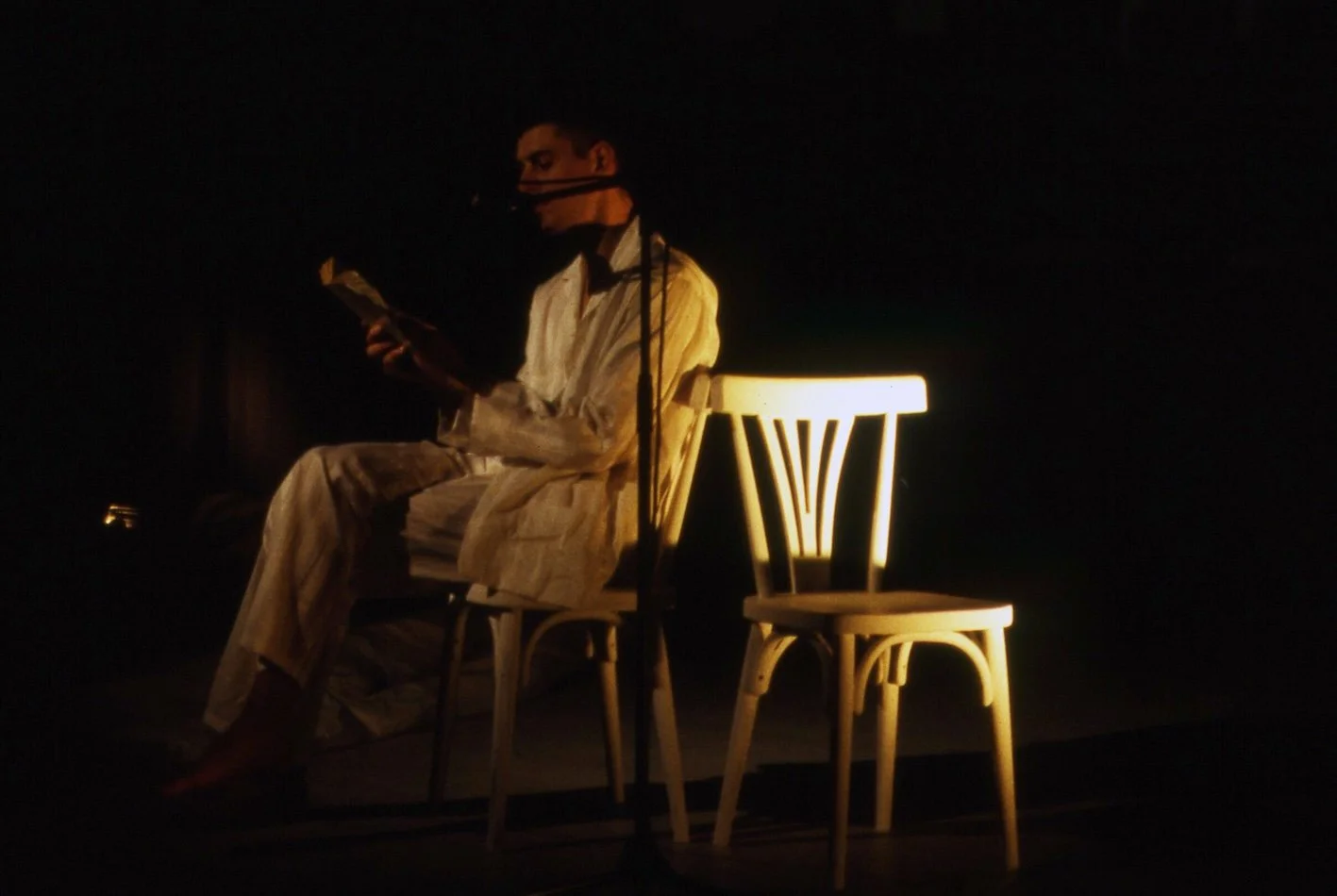
Robert Pacitti in Civil (1996). ICA video documentation still.
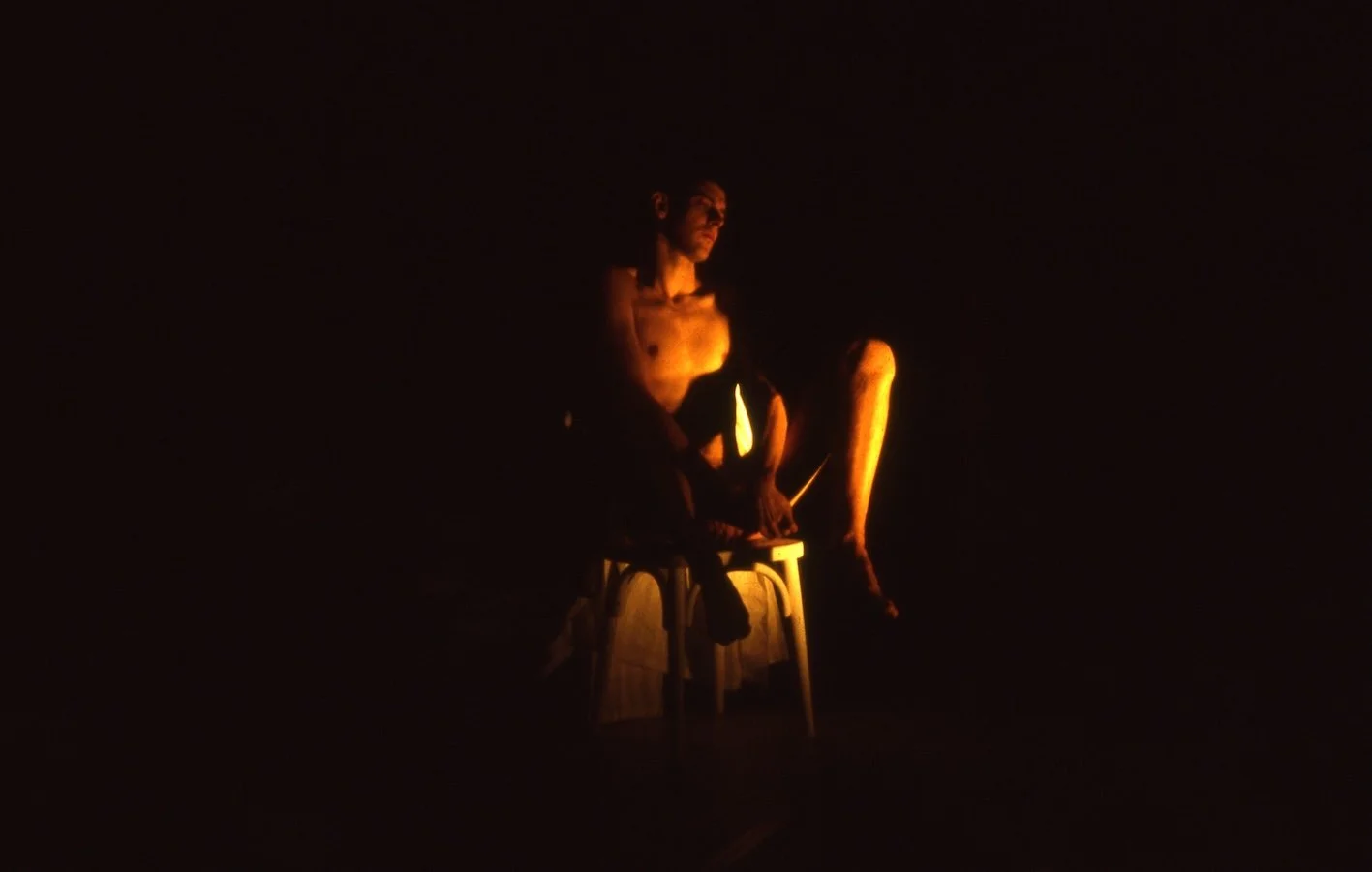
Robert Pacitti in Civil (1996). ICA video documentation still.
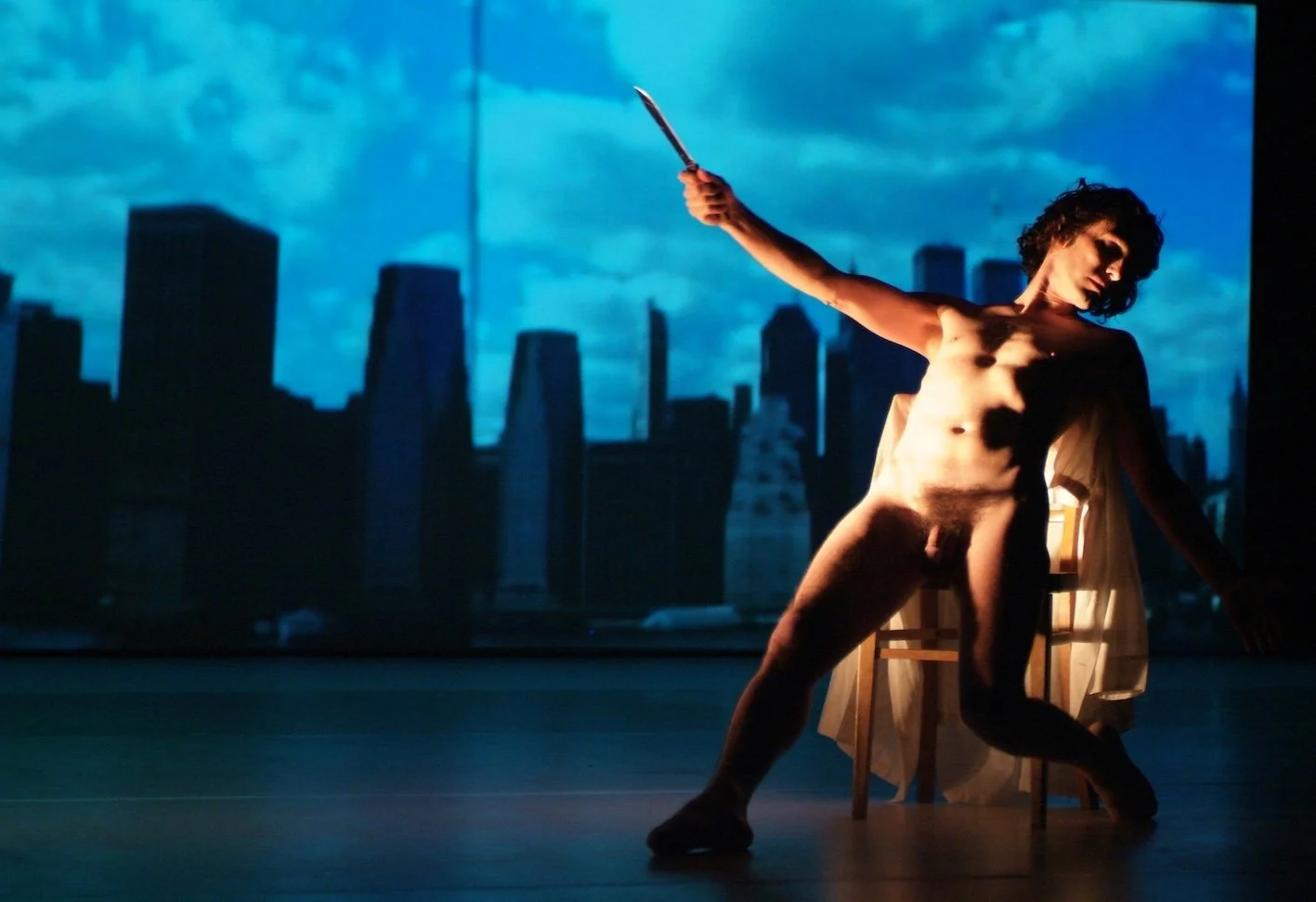
Richard Eton in Civil (2005). Documentation video still.
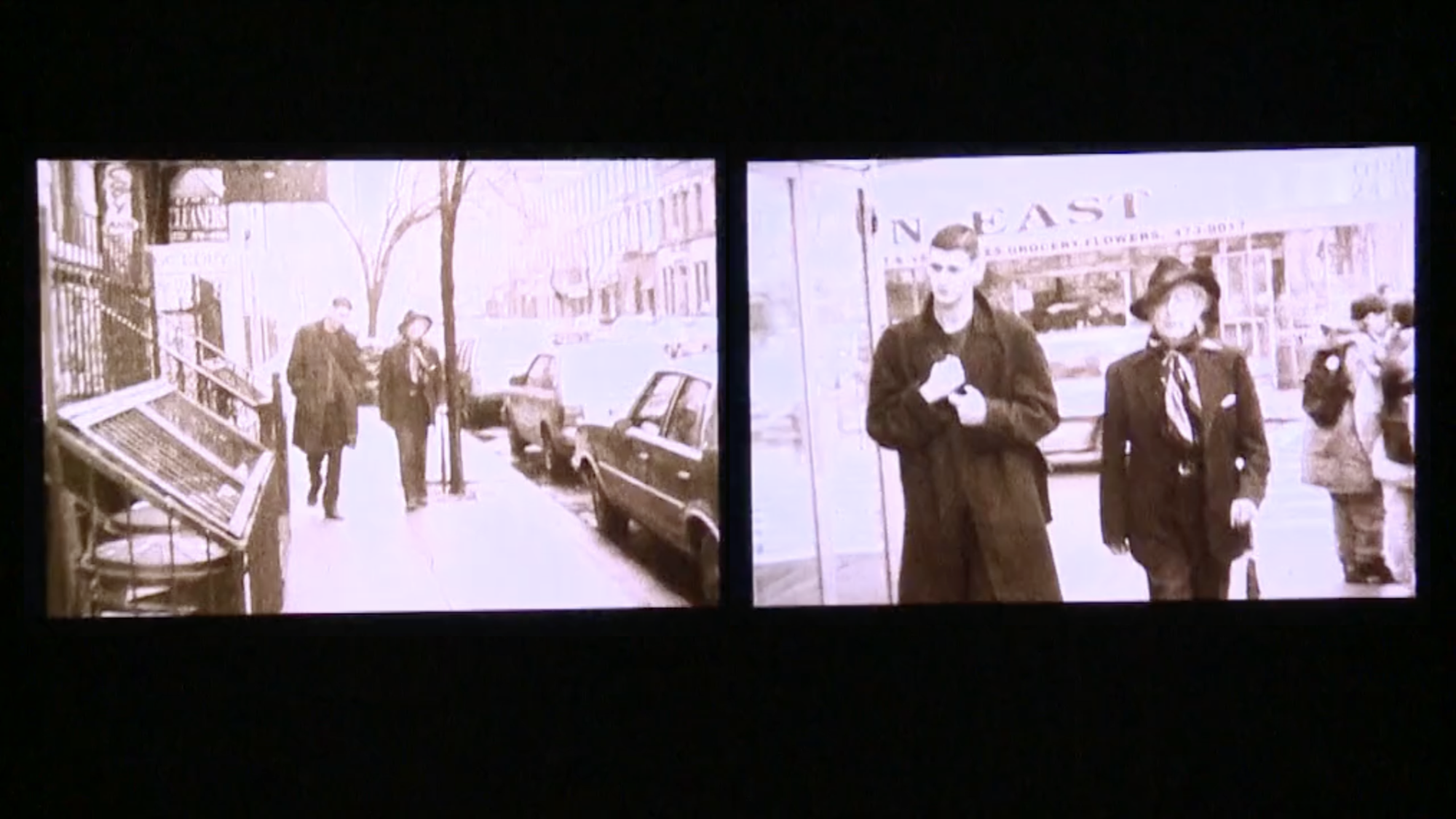
Civil (1996). Video still of original footage projected.

Civil (1996). Video still of original footage projected.
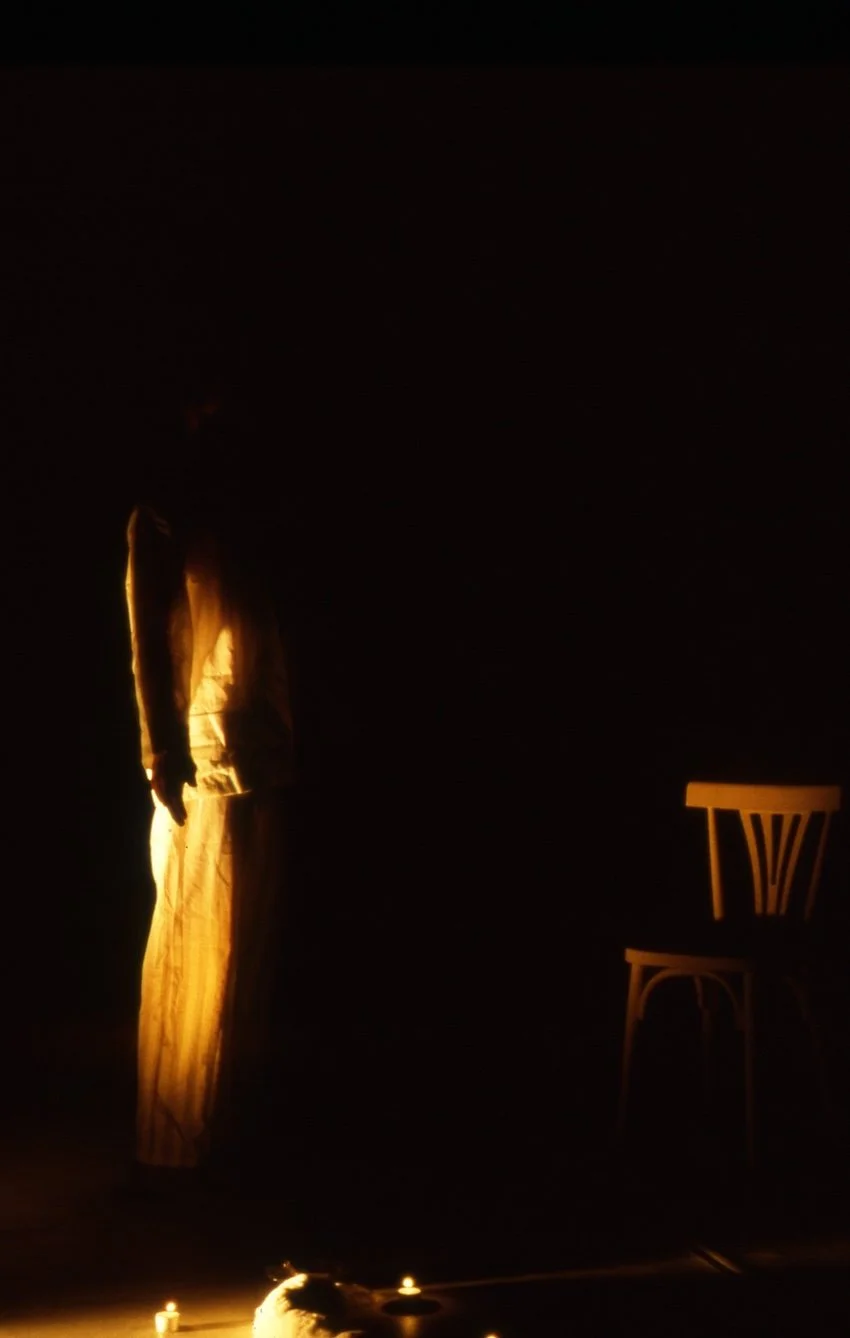
Robert Pacitti in Civil (1996). Photo by Roger Nelson.
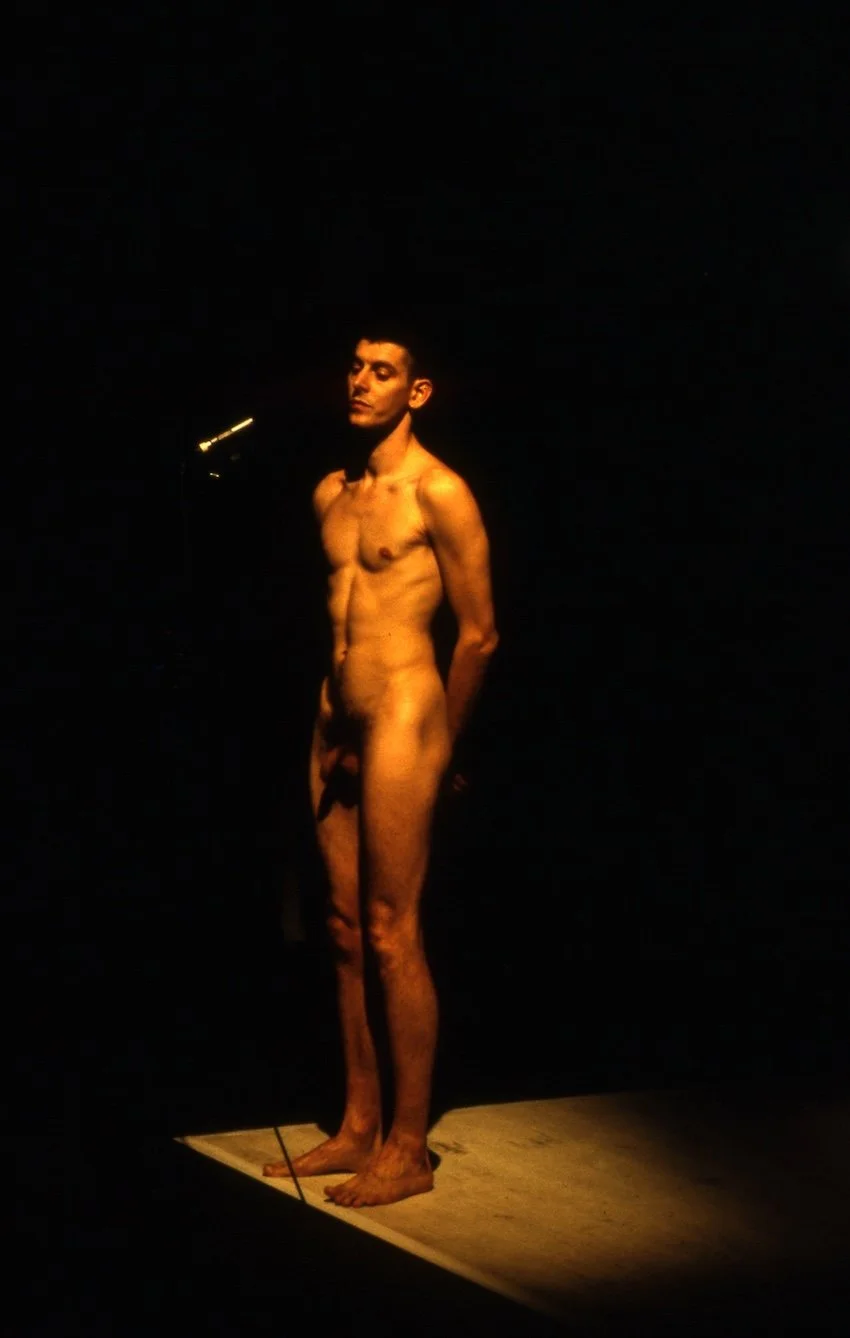
Robert Pacitti in Civil (1996). Photo by Roger Nelson.
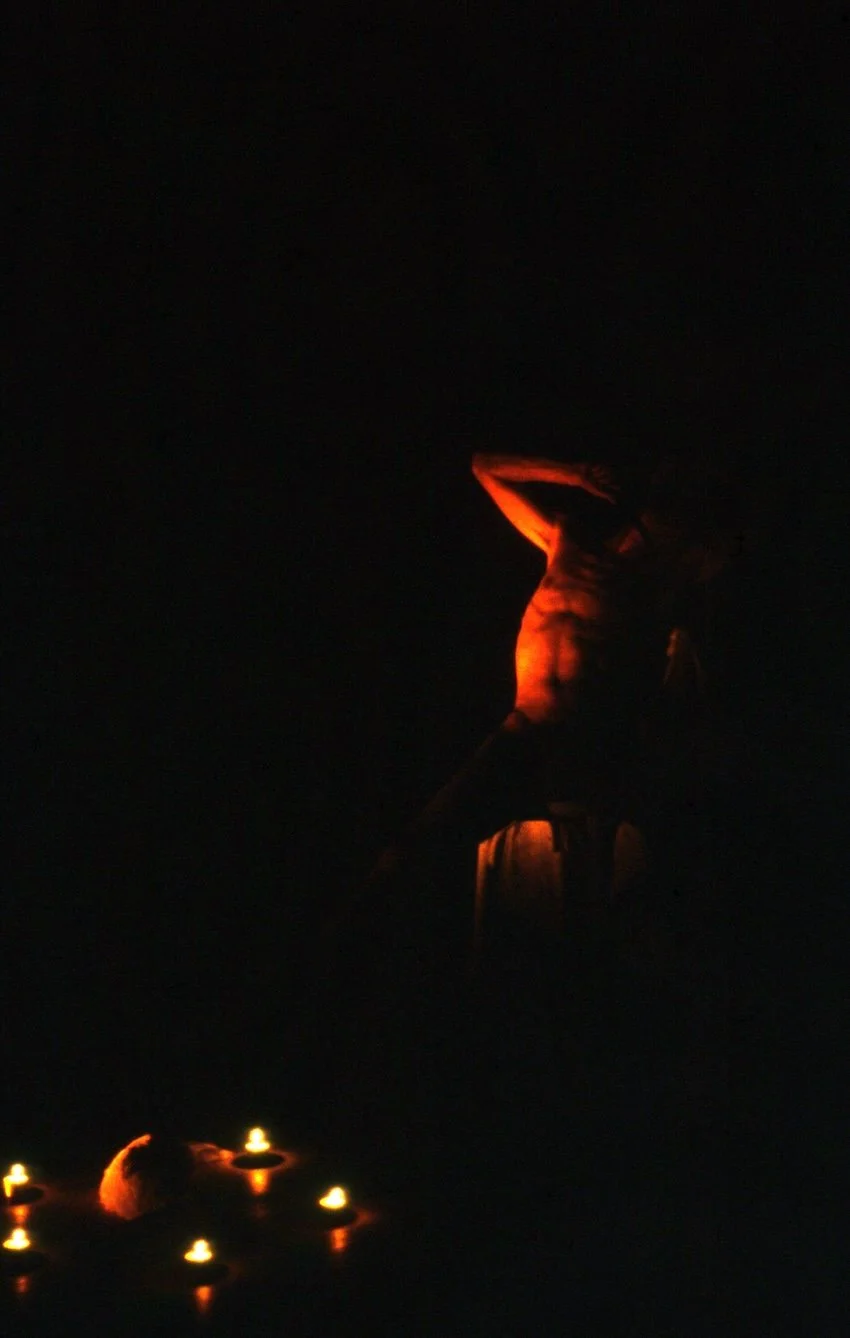
Robert Pacitti in Civil (1996). Photo by Roger Nelson.
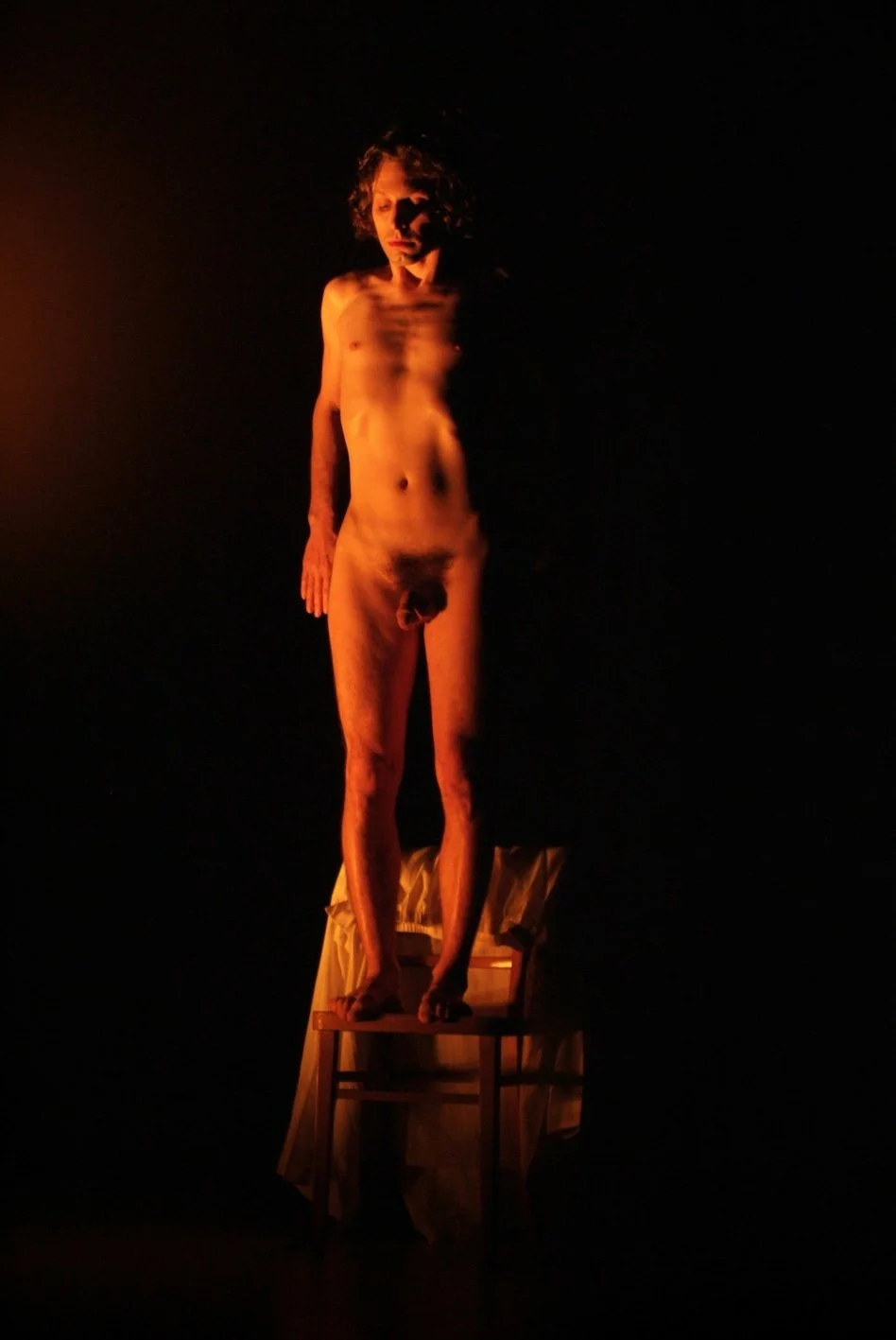
Richard Eton in Civil (2005). Documentation video still.
CREDITS
Premiere - Group version: April 1996
Place: It’s Queer Up North Festival, Dance House, Manchester
Duration: 60 minutes
Performers: Charlie Pulford, Helen Paris, Marcus McLaughlin, Robert Pacitti, Tracy Bickley
Premiere - Solo version: September 1996
Place: Institute of Contemporary Arts, London
Duration: 60 minutes
Performer: Robert Pacitti
Premiere - Legacy version: November 2005
Place: Chelsea Theatre, London
Duration: 60 minutes
Performer: Richard Eton
Concept, creation, texts, slides, original soundtrack: Robert Pacitti
16mm and Super 8 films (1995): Charlie Pulford
Transfer and post-production (1995): Blue, Soho
Legacy remake NYC film materials (2005): Mark Webber
Legacy remake NYC photography (2005): Harriet Warden
Original lighting design: Justin O’Shaughnessy
Technical Management: Emma Wilson (1996), Justin O’Shaughnessy (1996 - 2000), Marty Langthorne (2005 - 2008)
Administration: Jeremy Goldstein, Oyarzabal Projects, Roger Nelson, Michael White, Pacitti Company
Co-commissioned by: It’s Queer Up North, Manchester, Institute of Contemporary Arts, London
Funded by: London Arts Board; North West Arts Board; New Collaborations Fund of Arts Council England
Sponsored by: Believe Organisation; Roland UK
Supported by: British Council; Greenroom, Manchester, The People Show, London
Touring included: Arnolfini, Bristol; Barbican, London; The Junction, Cambridge; Chelsea Theatre, London; Colchester Arts Centre; Exeter Phoenix; Ex-Teresa Arte Actual, Santa Teresa la Antigua, Mexico City; Textuality Season, ICA, London; It’s Queer Up North Festival, Dancehouse, Manchester; Leibesvisitationen Festival, Tafehalle, Nuremburg; Live Works, Performance Space, Sydney, Australia; North Melbourne Town Hall, Australia; Now Festival, Nottingham; PICA, Perth, Australia; Theater Arsenic, Lausanne, Switzerland; Tramway, Glasgow; Trouble Festival, Les Halles de Schaerbeek, Brussels; Queer Zagreb, Croatia; Warwick Arts Centre, Birmingham.
Dedicated to Quentin Crisp