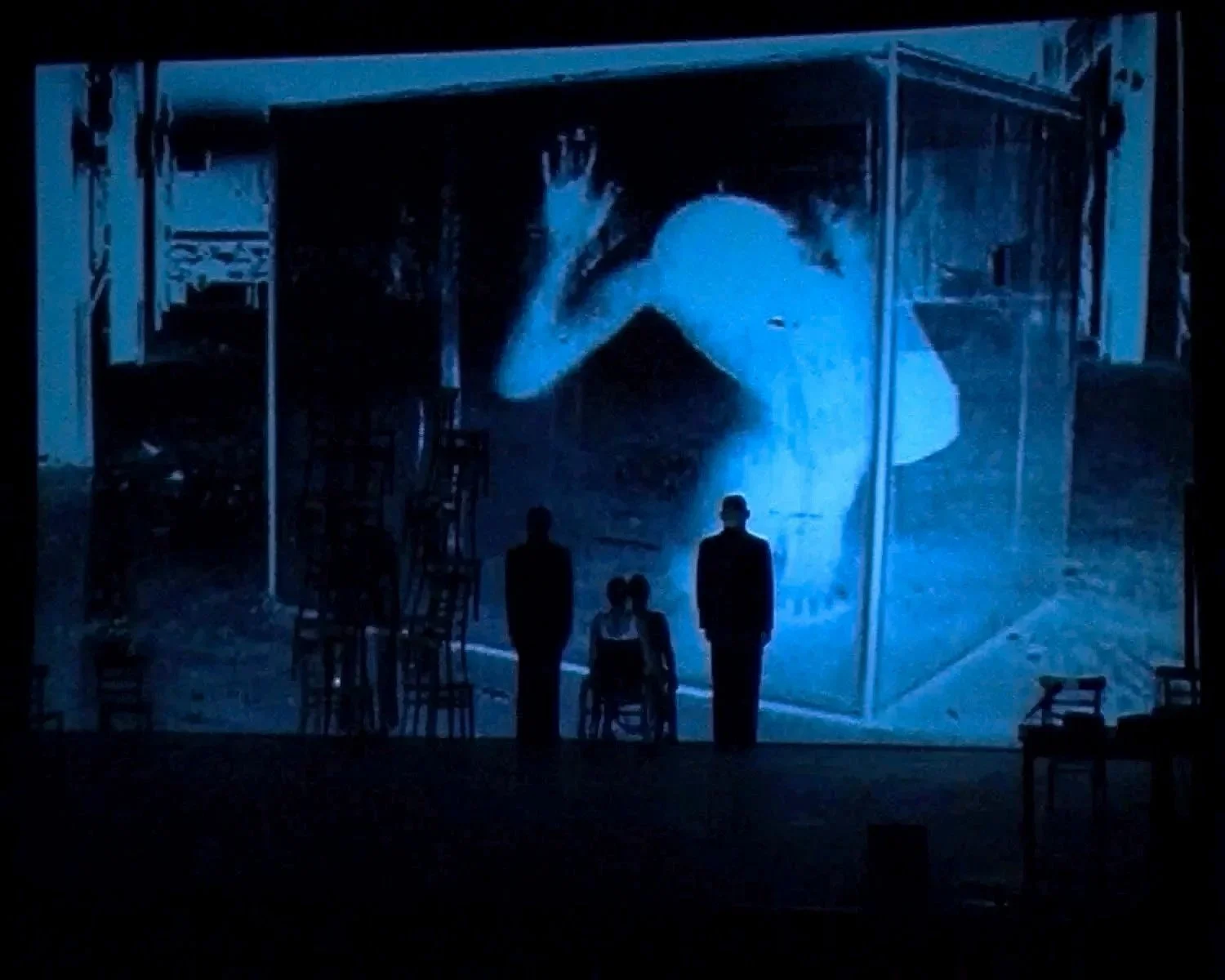
Carolyn Roy, Delroy Williams, Juliet Robson, Robert Pacitti in Evidence Of Life After Death (1999). VHS still.
EVIDENCE OF LIFE
AFTER DEATH
(1999)
Group performance • Death and dying • Publication • SoundEducate me in the science of my internal workings,
Show me all the seas and lands around my vital organs,
Tell me of my inside life, my chemical condition,
Show me how I manifest the passing of the seasons.
Walk me through my own intestine pointing out all landmarks,
Take me through the pulsing doorway and the valves of my heart,
Show me where the damage is, the bit too gone for mending,
Let me know myself, so I can understand my ending.
Opening text sung by Robert Pacitti
Evidence of Life After Death was a live work for a core cast of four and a chorus of women over 60, presented against an hour-long filmed backdrop and accompanying soundtrack. The performance formed one part of a larger project that also included a book and audio CD. The publication brought together texts and lyrics from the performance, research material, found and made images, and a commissioned essay by Andrea Phillips, who also edited the book. The accompanying CD contained twelve songs created for the work.
Premiering at Arnolfini in Bristol in June 1999, Evidence of Life After Death continued Pacitti’s sustained investigation into mortality, begun with Self-Elimination (1998).
The project brought scientific research, live performance, film, music and publication together in an unsentimental confrontation with mortality. Rather than offering consolation or conventional horror, Evidence of Life After Death asks what remains as the body fails: what is lost, what persists, and how might we learn to look directly at the processes we ordinarily prefer not to see?
“The best home-grown work to arrive all year.”
Mojo Magazine, on the Evidence soundtrack CD
RESEARCH
The work questioned the social conventions that surround death and dying, and the tendency to suppress or sanitise the physical realities of mortality. Rather than treating death as a single defining moment, Pacitti approached dying as a process: biological, social and psychological, extending from the cellular decomposition of the body to the persistence of memory and the effects of a life on those left behind.
The making process drew on visits to anatomical and pathology museums, conversations with medical and palliative-care professionals, and research into forensic entomology, examining the insects and microorganisms that colonise a body after death. These scientific enquiries were brought into collision with more intimate and culturally charged material: sexuality, reproduction, bodily functions, ageing, disability and the everyday processes through which the body continually sheds and transforms itself.
THE PERFORMANCE
The performance itself became a symbolic body in the process of dying. A digital countdown clock divided the hour into stages, while changes in temperature, light and sound marked the passage of time. Film, live action, projected imagery, music and spoken text combined medical and anatomical references with the domestic, the erotic, the grotesque and the absurd. Images of foetuses, bodies, offal, insects and sexual activity were layered with choreographed movement, Renaissance dissection imagery and fragments of popular culture.
I’M FALLING APART
Early in the performance, as a slow circling loop of sound begins to play, performer Delroy Williams leans over a small desk and speaks into a tabletop microphone:
My face pushes close to a cool brittle surface, peering out a window. Breath escapes. Particles form a cloud, the rain of my lungs pours onto glass. Microscopic imprints of my eyebrows lightly dust the edges of the frame I escape the room through. Skin shifts, traces left on a windowsill.
I move to the kitchen, pick up an apple. One bite. Another. I abandon my hunger placing the fruit to one side, dripping, large red, green, bitten. Chew marks are blurred at the edges, sloping sides made soft with my spittle, left alone. I move to the bathroom and brush my hair, shedding myself with each stroke. Curl after curl. An eyelash falls, unseen. Skin cells are left on a handle, invisible. I’m falling apart.
I take and light a cigarette, exhaling myself. Each waft of nicotine bound with my matter, mixed and cremated. Expressed. Relaxing now I sit and shed more hair. On the floor, on the couch. I drink coffee and leave a dead kiss on the cup.
Shit need. I move to the toilet. It occurs to me that shitting equates with childbirth. I can’t consider another action which removes a part of one’s insides without experiencing some sense of loss: an operation, a haemorrhage, miscarriage, abortion, these don’t equate. Babies and shit – affirmation. Then I contemplate menstruation, and question my certainty.
I feed the cats and cut myself on the can. They eat the unseen, to them it appears I manifest cat food through holes in my palms like stigmata. And today there is blood, and today they’re still hungry, and today they consume me unknowingly, internalise a different aspect of my cuddles and caresses, my very heart. I’m falling apart.
Back to the couch and back to the coffee. The telephone rings. Lifting the handset I start to mutate, begin connection, a robot. Without visual contact the phone becomes my guide, my ear, my mouth and my honesty. I lose myself through speech.
I’m falling apart
At the seams…
AFTER DEATH
At the midpoint of the performance, the women’s chorus prepares and shares tea - boiling kettles, pouring milk, clinking cups - briefly transforming the stage into a communal domestic space before the work returns to its inevitable countdown. After this moment of collective pause, a song begins: “Ooooh, I don’t want to die…” Everyone onstage dances with their arms wide open, swaying from side to side. Across the song, performer Juliet Robson speaks:
After death your body will decay in five stages. You will emit sounds, and gases. Unless in a completely sealed environment you will begin to play host to a wide range of insects. An odour will develop, then change.
This is how it is. There is no grand salvation.
These actions we execute for you, and for ourselves, to witness, to expel.
And when they lift us from our beds, when they pull us out of the rivers, untie the ropes from around our necks, gather us up off the pavements, when they turn off our support machines and allow us to gently fade away, let us not fear our own bodies.
As the clock reaches its final moments, the performance accumulates images of confinement, decomposition and disappearance. Led by performer Carolyn Roy, the cast gather around two towers of chairs stacked like a double helix, while Pacitti appears trapped inside a glass box on the projected screen. Light and sound intensify until, with the final seconds counting down, the visual field disappears in a blinding flash. In the darkness, the sound goes last.
No photographs from live performances are currently available. Extensive video, press, marketing and making documentation exists for this project and will become accessible, in due course, as part of the Robert Pacitti Archive held by the Theatre Collection at the University of Bristol.
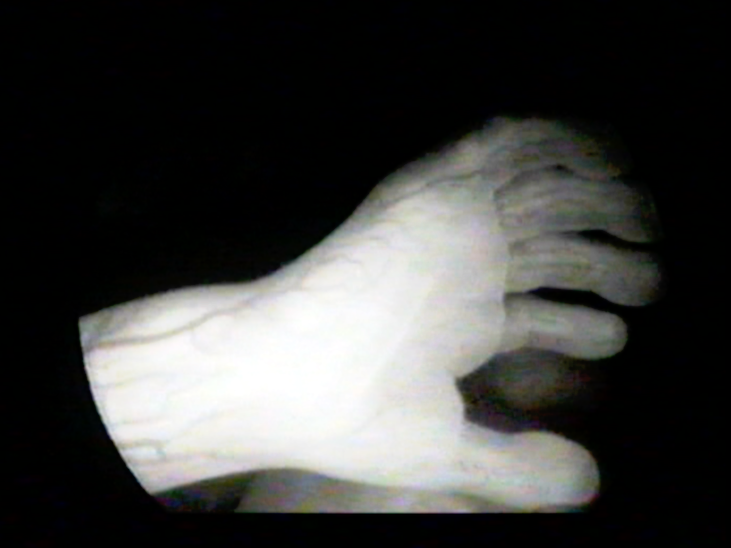
Evidence of Life After Death (1999). Film backdrop video still.
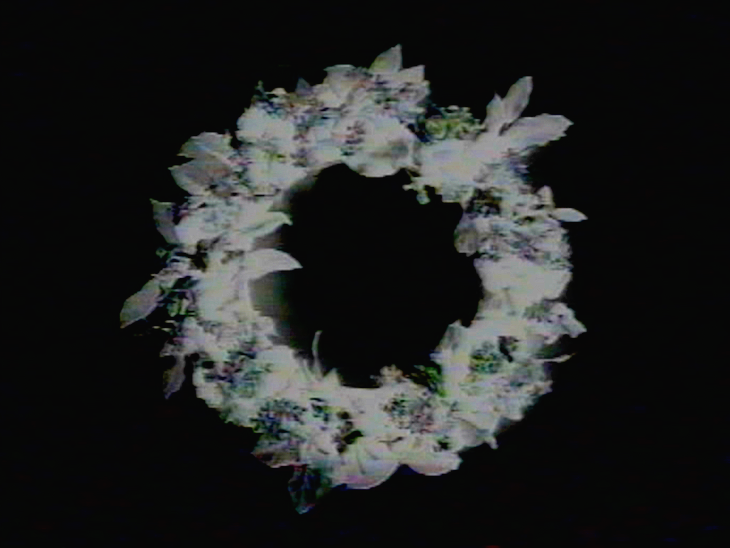
Evidence of Life After Death (1999). Film backdrop video still.
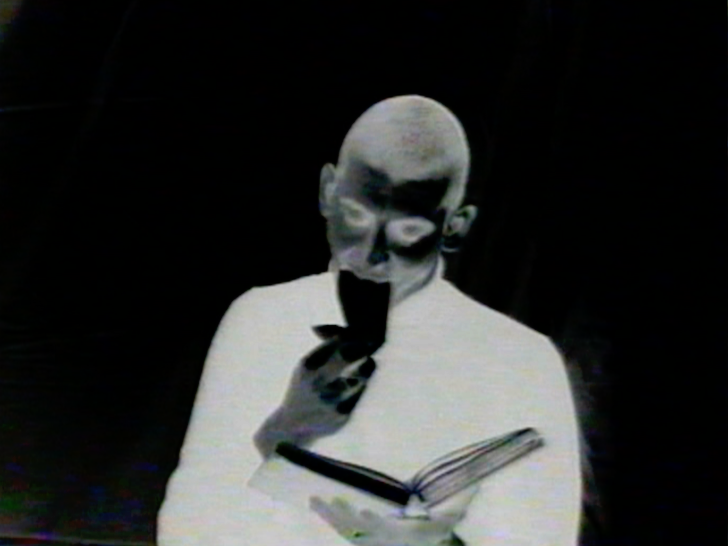
Evidence of Life After Death (1999). Film backdrop video still.
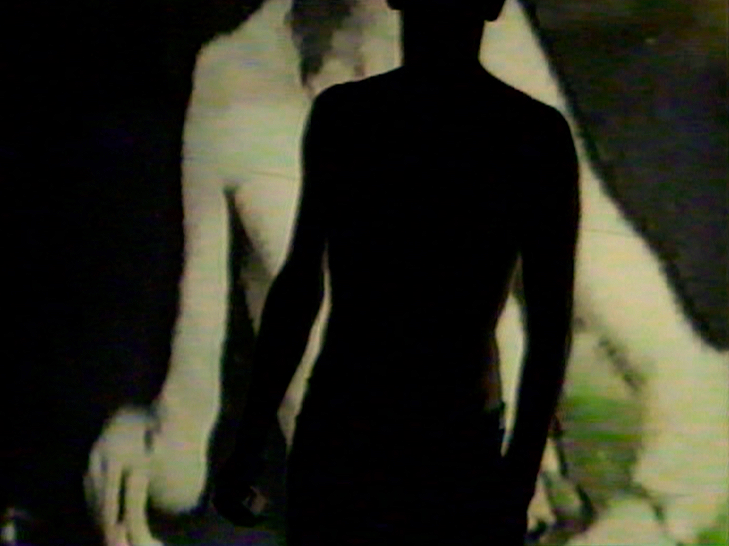
Evidence of Life After Death (1999). Film backdrop video still.
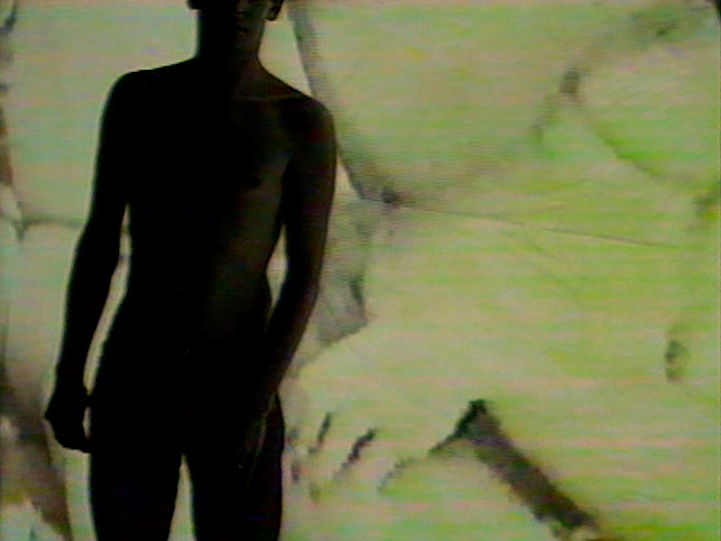
Evidence of Life After Death (1999). Film backdrop video still.
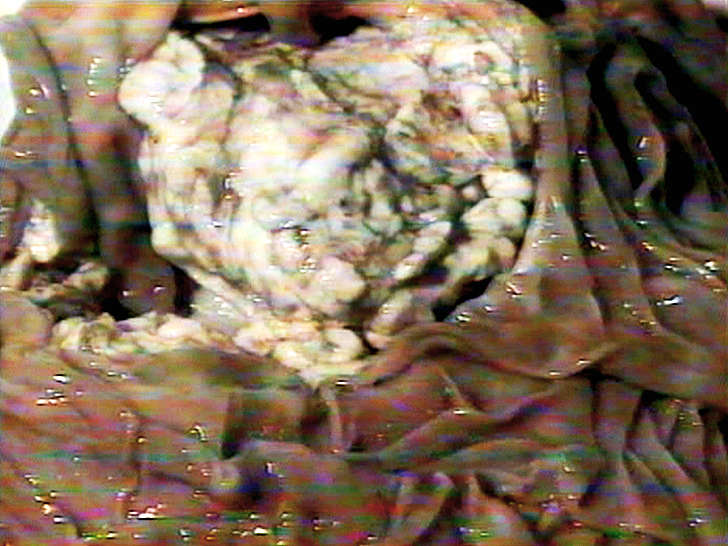
Evidence of Life After Death (1999). Film backdrop video still.
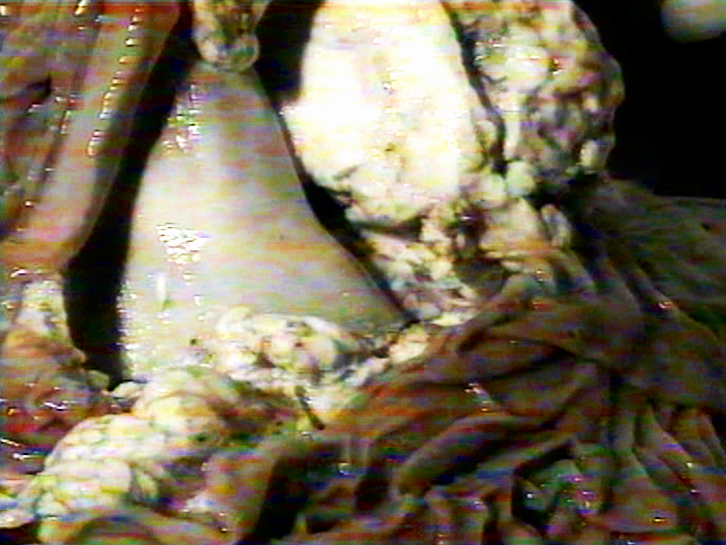
Evidence of Life After Death (1999). Film backdrop video still.
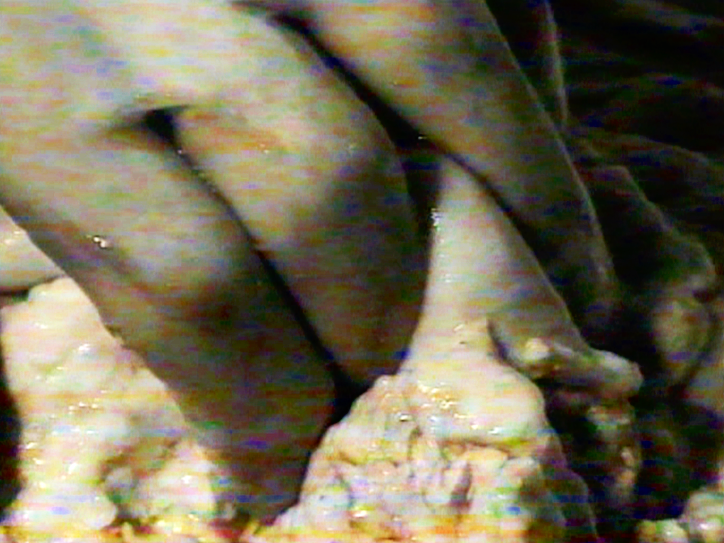
Evidence of Life After Death (1999). Film backdrop video still.
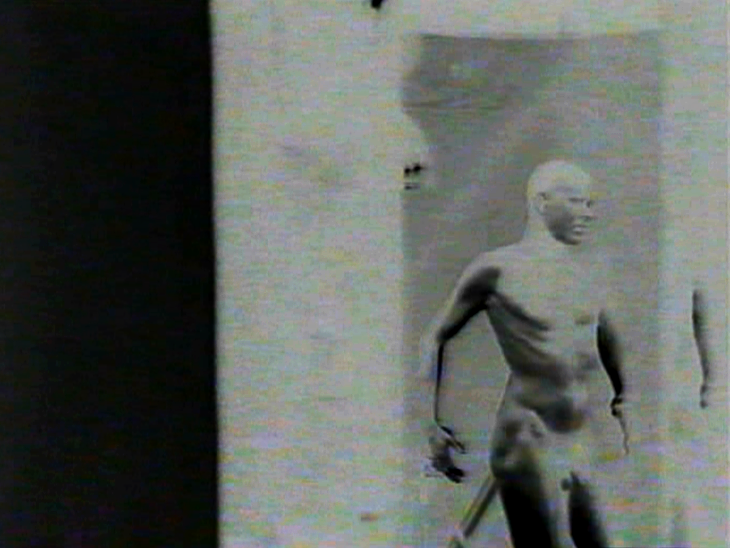
Evidence of Life After Death (1999). Film backdrop video still.
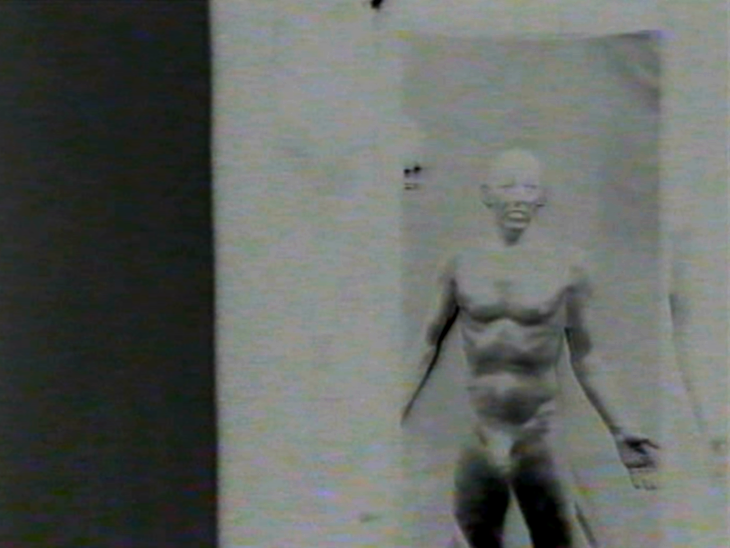
Evidence of Life After Death (1999). Film backdrop video still.
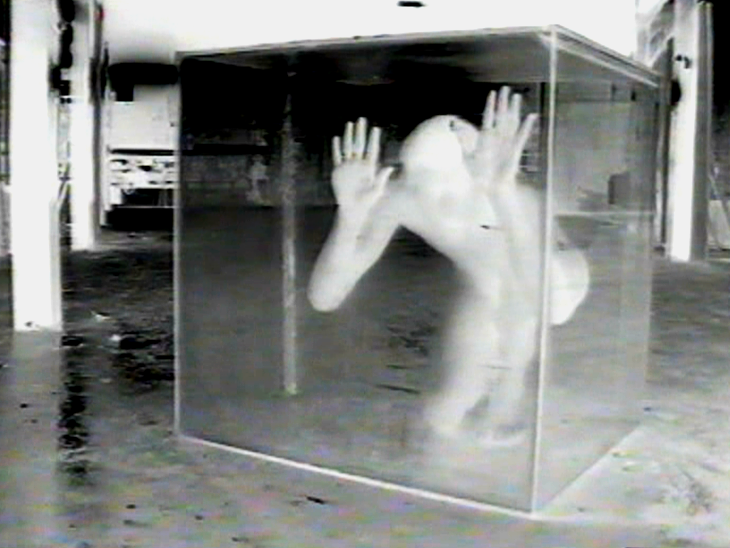
Evidence of Life After Death (1999). Film backdrop video still.
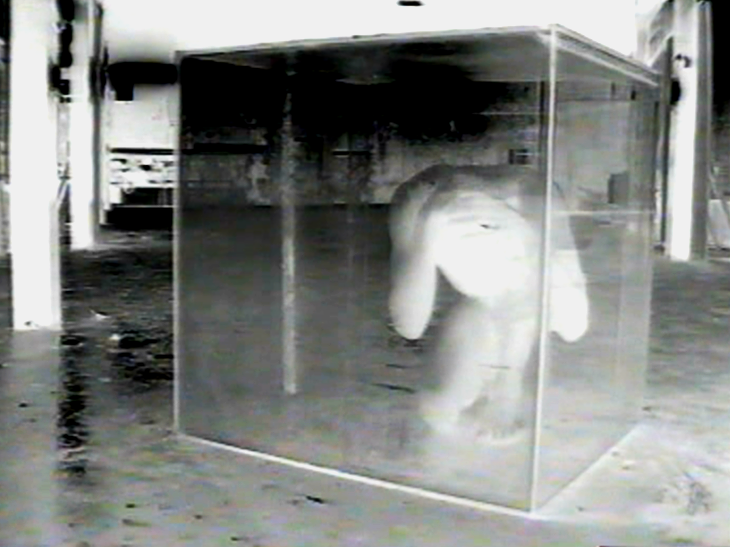
Evidence of Life After Death (1999). Film backdrop video still.
CREDITS
Premiere: 13 - 14 July 1999
Place: Purcell Room, Southbank Centre, London
Duration: 60 minutes
Concept and direction: Robert Pacitti
Performers: Carolyn Roy, Delroy Williams, Juliet Robson, Robert Pacitti
Senior chorus(Bristol and Birmingham): Pameli Benham, Cathy Coker, Elizabeth Davidson, Maureen Hamilton-Hill, Angela Rodaway
Senior chorus (London): Sadlers Wells Over 60’s performance group
Lighting design and technical manager: Justin O'Shaughnessy
Soundtrack - lyrics, vocals: Robert Pacitti
Soundtrack - music: Adrian Jones, Robert Pacitti
‘Hiding’ - vocals, music: Esther Pacitti
Film and photography: Robert Pacitti
Film editor: Romesh Aluwahire
Publication editor: Andrea Phillips
Publication design: Hoop
Props and costumes buyer: KT Vine
Digital countdown clock: Matt Mawford and Graham Clayton Chance
Project management: Richard Oyarzabal
Administrator: Roger Nelson
Board of Trustees: Mark Allen (Chair), Manick Govinda, Gill Graham, Helen Kirlew, Ali Zaidi
Funding: Arts Council of England; London Arts Board
Film support: Artsadmin Artists' Bursary Scheme.
Thanks to: Andrea; Ashley; Bish; Caroline; Cathy; Catherine; Claire; Daniel; Dorothy and all at Midlands Arts Centre; Esther; hAb; Helen; Hoop; Ian Leslie at Capitol; Justin; Lois; Louis; Mark; Mark at Queerfest; Octagon Theatre, Bolton; Rachel; Rig; Tamsin; Theatre Royal, Plymouth.