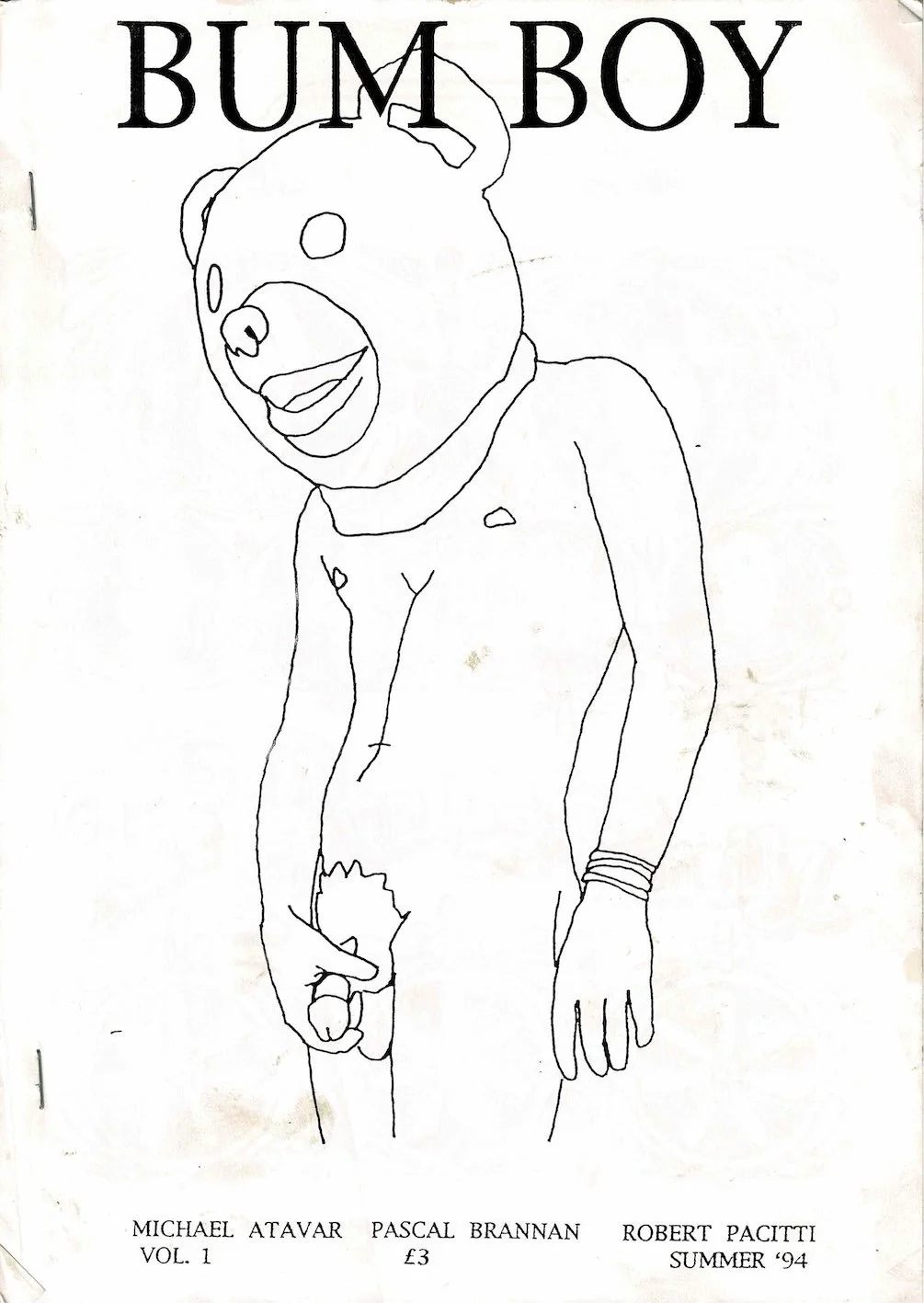
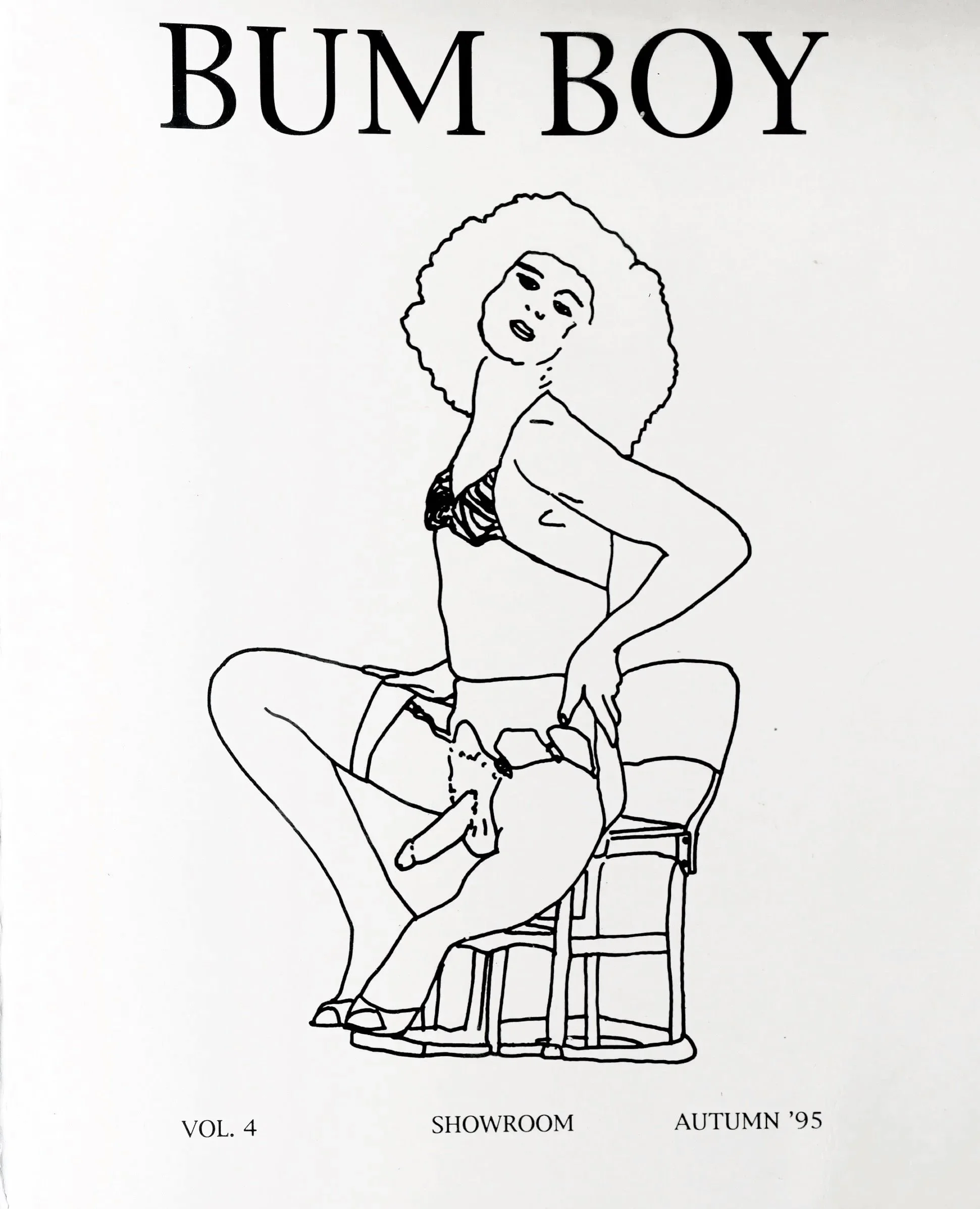
Bum Boy front covers (1994 - 1995). Illustrations by Pascal Brannan.
BUM BOY
(1994 - 1996)
Zines • Handmade • Objects • ExhibitionBum Boy was a collaboration between artists Michael Atavar, Pascal Brannan and Robert Pacitti that explored publishing as a performative act. Between 1994 and 1996, five editions of Bum Boy were produced. The project began as a queer zine through which the three artists - each primarily known for live and performance-based practices - experimented with collaborative forms of queer publishing. Working between their homes, they assembled photocopied materials by hand using scissors, sticky tape and glue.
The trio first encountered one another’s work in the early 1990s at the Institute of Contemporary Arts in London, where Michael presented Tiny Stars, Pascal created I Am A Bee, and Robert performed He Was A Scary Baby. Despite their distinct artistic approaches, they shared a commitment to political activism and experimental practice, which became the foundation of their collaboration.
BUM BOY 1
THE ZINE
The first edition of Bum Boy took the form of a deliberately raw, zine-like publication: a thick bundle of photocopied A4 pages stapled together by hand. Each artist contributed roughly a third of the content, while Pascal designed the cover - a line drawing of a naked man wearing an oversized bear head. Robert’s contribution consisted of handmade collages, and hand typed fabricated letters, ostensibly written by anonymous correspondents to unknown recipients. These imagined exchanges responded to real adverts placed in the lonely hearts and classified sections of gay magazines, blurring the boundaries between fiction, desire and documentary.
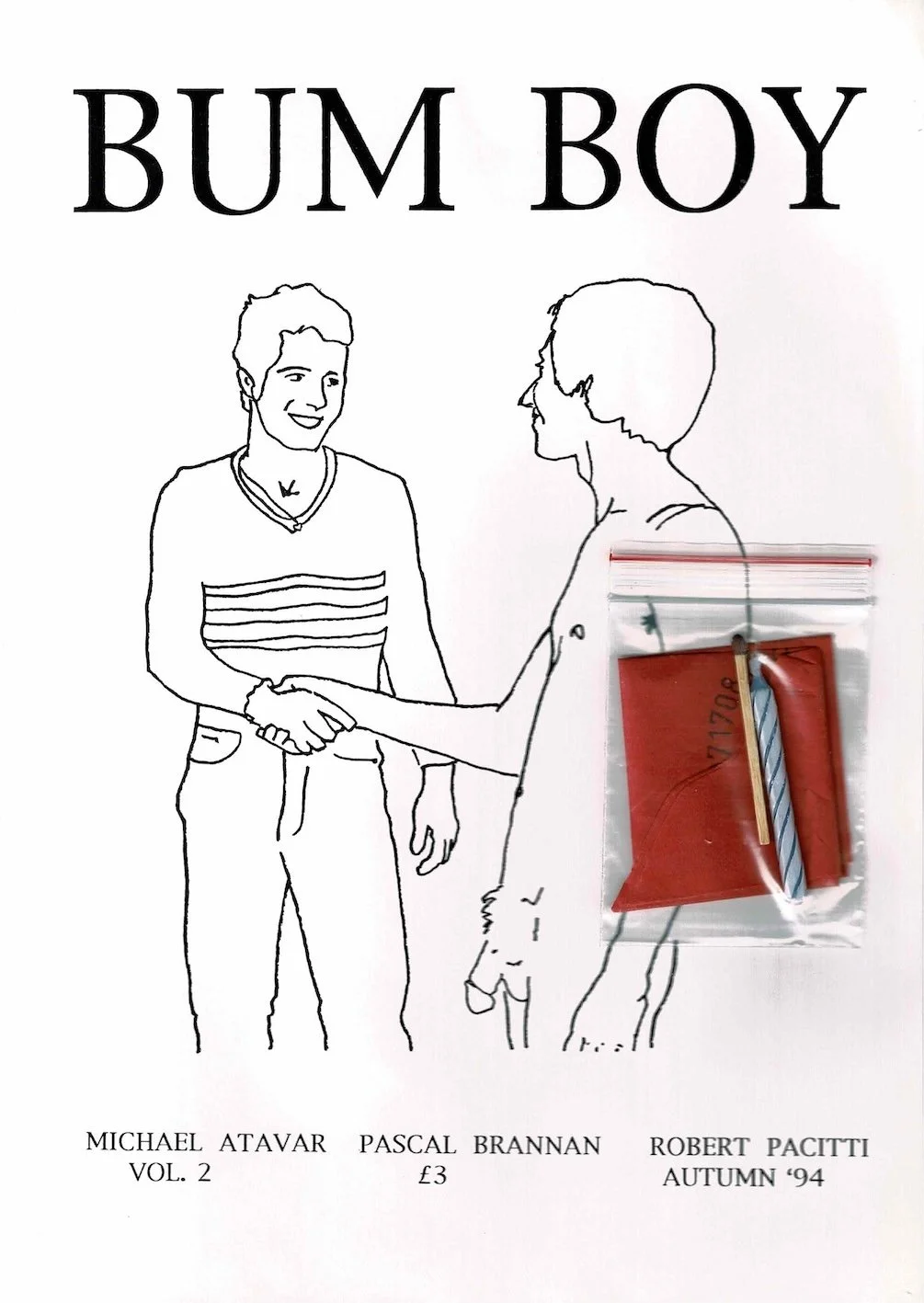
Bum Boy 1 was sold in a transparent ziplock bag containing an additional party bag filled with birthday candles, matches and paper hats - an invitation to “have your own party, babes.” The zine was independently distributed through gay bookshops and art centres across Britain, Europe and North America.
BUM BOY 2
WALLPAPER FOR FREEDOM
For Bum Boy 2, the three artists collaborated on a pull-out poster, created by folding an A0 sheet into 16 A4 pages. At its centre was a photocopied image of a deflated male sex doll, surrounded by texts and visual fragments contributed collectively by the artists. Like the first edition, Bum Boy 2 was packaged in a transparent plastic sleeve and accompanied by a selection of free gifts. Handmade and independently distributed, the publication circulated through gay bookshops and art centres across Britain, Europe and North America.
BUM BOY 3
THE CASSETTE TAPE
For Bum Boy 3, the trio decided to make a publicly sourced audio cassette. The Spring Open invited audio submissions through advertisements placed in the queer press, generating a strong response and some truly brilliant sounds - spoken word recordings and performance poetry pieces were sent in from all around the UK.
The selected material was edited into a continuous sequence and duplicated by hand, one cassette at a time. As with previous editions, the tapes were packaged in clear plastic cases containing free gifts, and independently distributed through outlets in Britain, Europe and North America.
What wasn’t anticipated as part of this project was that the open submissions format might produce a nasty surprise. One morning, among the packages delivered to Robert’s home address - which had been published as the contact point for submissions - was a cassette sent by the serial killer Dennis Nilsen, of music performed on an electric organ which he had been making in prison.
This made all three members of the collective feel very uneasy and the decision was quickly taken not to include it. But the cassette itself still exists: an object made and handled by the same person responsible for the murders of at least twelve young men and boys, mailed directly to Robert’s home and addressed simply to “Bumboy”.
SIDE ONE
Two Headed Baby (Sound Byte One) - Robert Pacitti
Ordinary Men - Michael Atavar
Sweetie / Birth of a Communist / 20th Century Myth / Untie Me - Viv Boot
When He Is 27 - William Brannan, Found Entrance / Pascal Brannan
Limited Edition - Bunny
Ghost Scene - Dorian Crates
Is Dorothy There? - Quentin Crisp, Found Entrance / Pascal Brannan
Come Inside - Daman’s Deviants
Pariah Bodies - Sue Golding
SIDE TWO
Baby Face - Lisa Gormick
The Most Depressing Teenage Existence In The History Of The Entire Human Race - Jonathan Kemp
To Remove Label Cut Here - Ray G. Miles
This Paradise Is Sour - Robert Pacitti, intro spoken by Esther Pacitti
I Bet You’re The Queer - John Panther
Everybody’s Got A Hungry Butt - Rude Butt
Poor Bianca - Tracy & Sharon
From Memory - David Wojnarowicz, Found Entrance / Pascal Brannan
Psychic Friends (Sound Byte Two) - Robert Pacitti
BUM BOY 4
THE SHOWROOM EXHIBITION
In 1995, Kim Sweet invited Michael, Pascal and Robert to create a new Bum Boy work for The Showroom in Bethnal Green - part of London’s East End art scene associated with the rise of the Young British Artists and a network of influential galleries.
For an eponymous group installation, Pacitti presented Family Portrait: a life-size photographic nude of himself, his mother and his sister, seated and facing the camera. Shot by photographic artist Sophy Rickett, the large-format image was mounted on MDF and presented leaned against the gallery wall - the point being it would take more than the three sitters and their family bond to move it.
Atavar produced a series of self-portraits as clones, displayed on a mantelpiece; while Brannan created a sequence of dances filmed on night vision surveillance cameras. These were hung on the wall as photographs and shown as video on small screens placed on top of funeral urns.
Two moments from this show are hard to ignore. First, a very prominent visual art critic took serious offence at being invited, reading the entire exhibition as a pointed (and, apparently, deeply personal) slight on his own sexuality. We thought the lady doth protest too much. The second came at the show’s close, when the director of the gallery realised Robert’s Family Portrait wouldn’t fit in the van they had organised to take it away and tried to matters into their own hands - quite literally - with a hacksaw.
BUM BOY 5
WALLPAPER FOR FREEDOM
Wallpaper for Freedom was a Bum Boy installation created for the Freedom Cafe, a queer café, theatre and bar in Soho supported by singer Marc Almond. Expanding their ongoing experiments with radical publishing, the collective transformed the walls of the venue into a form of enlarged printed matter, relocating the “page” into public space and challenging conventional modes of distribution. Each artist contributed distinct sections of wallpaper to the installation. Robert’s use of large-scale photocopied insect imagery introduced a deliberately stark, lo-fi aesthetic that contrasted sharply with the more polished interiors and commercial visual culture associated with Wardour Street at the time. No known documentation exists of this installation.
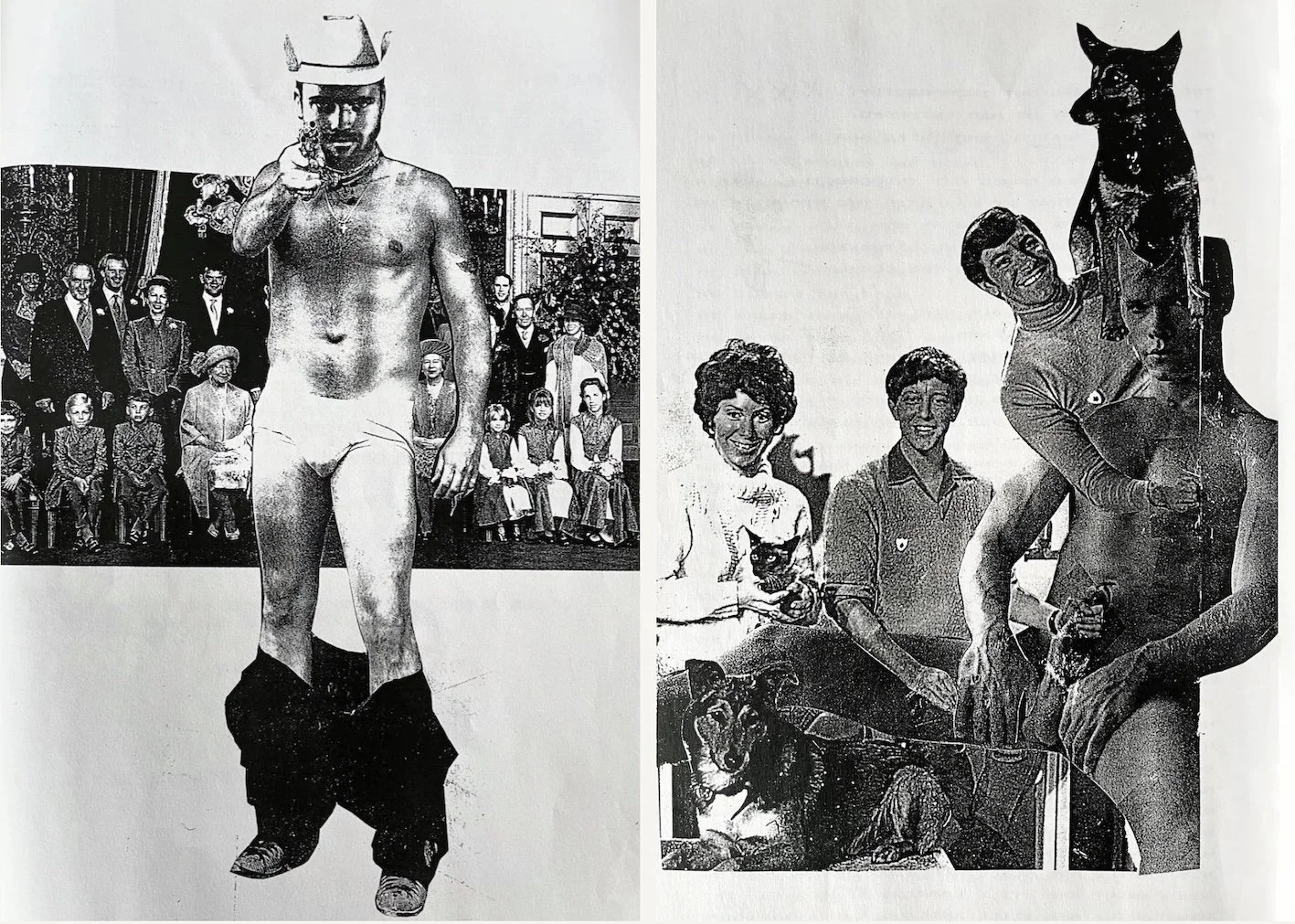
Bum Boy Vol. 1 (1994). Collages by Robert Pacitti.
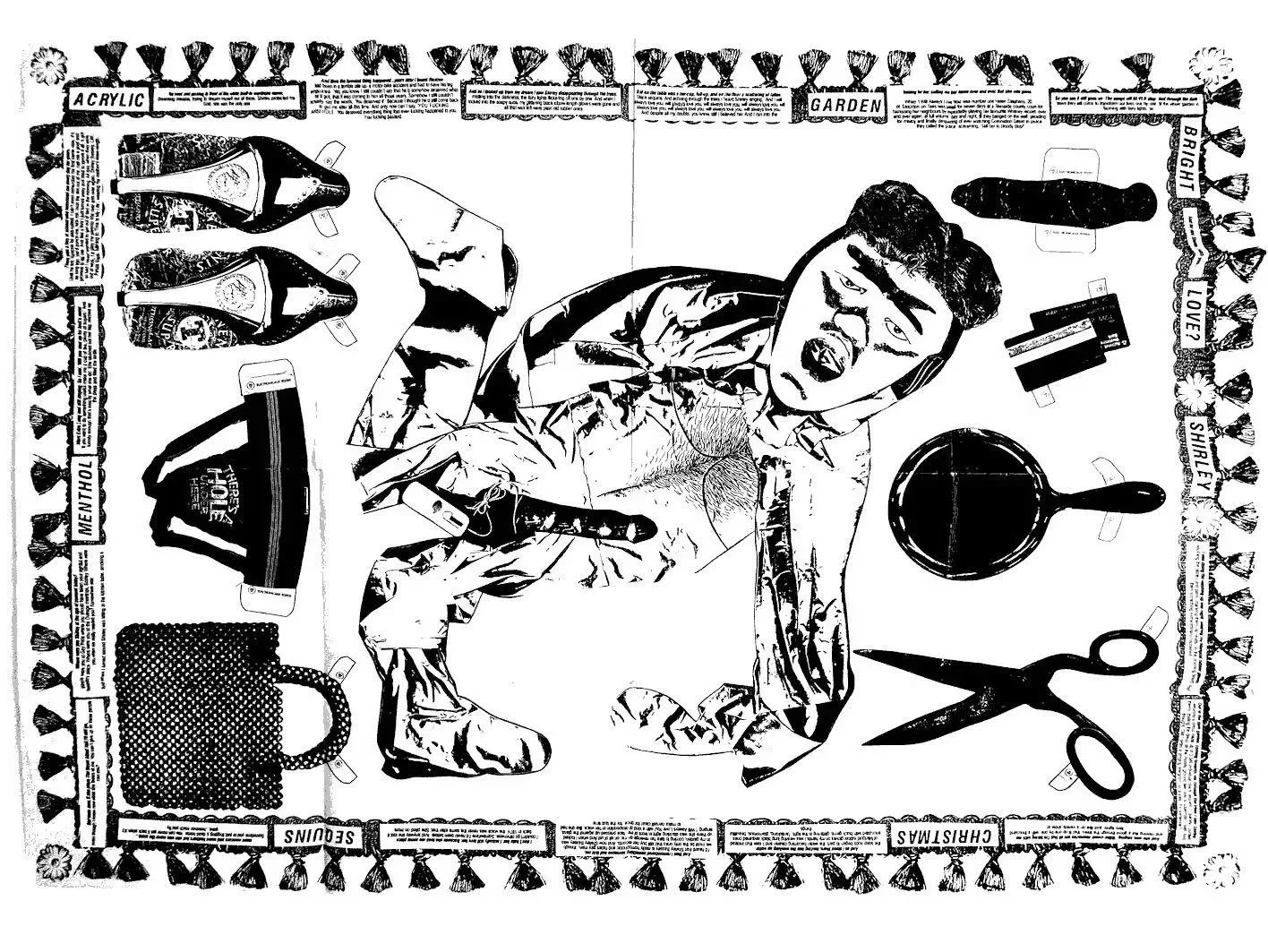
Bum Boy Vol. 2 (1994). Poster insert by Atavar, Brannan, Pacitti.
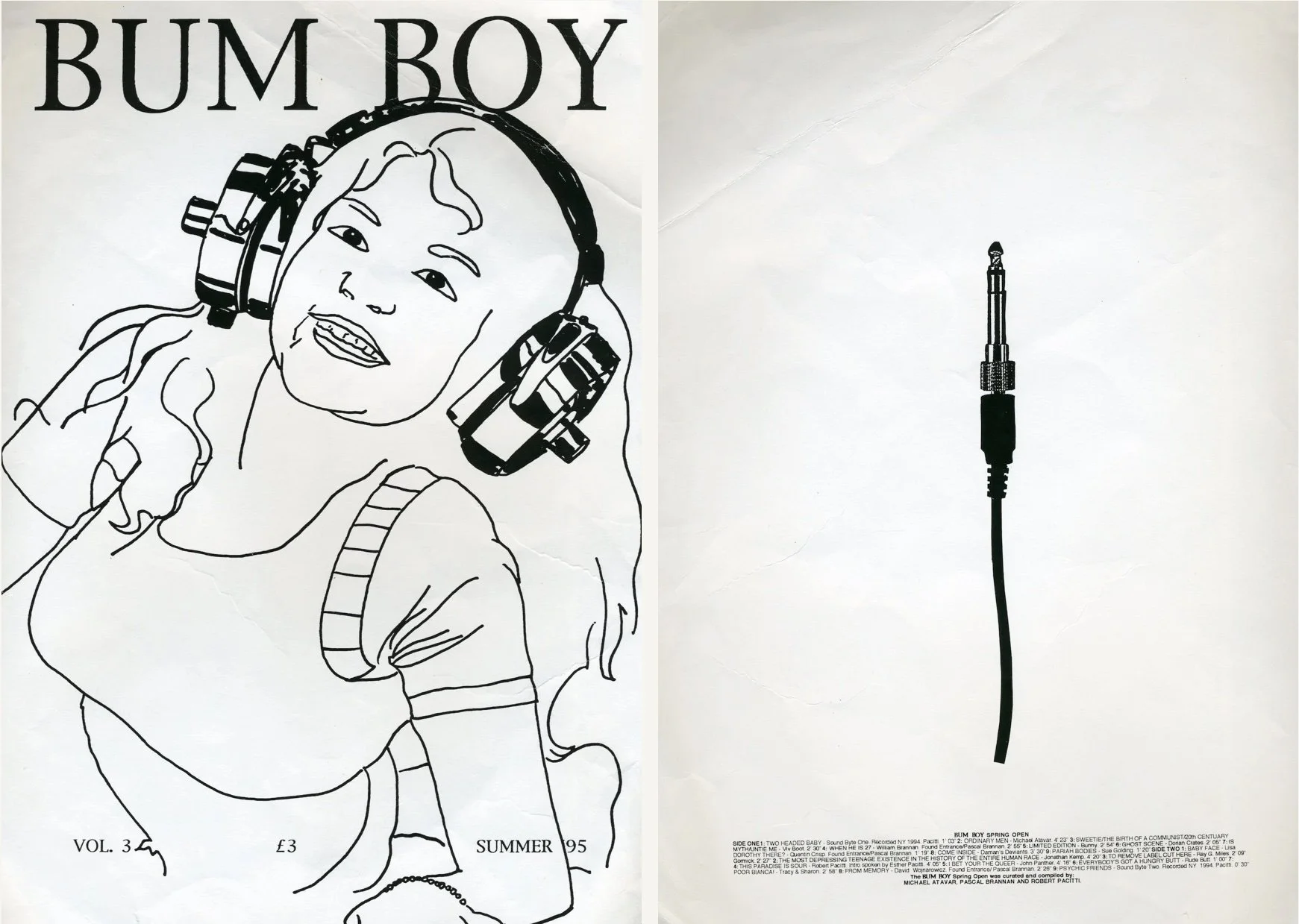
Bum Boy Vol. 3 (1995). Cover illustration by Pascal Brannan.
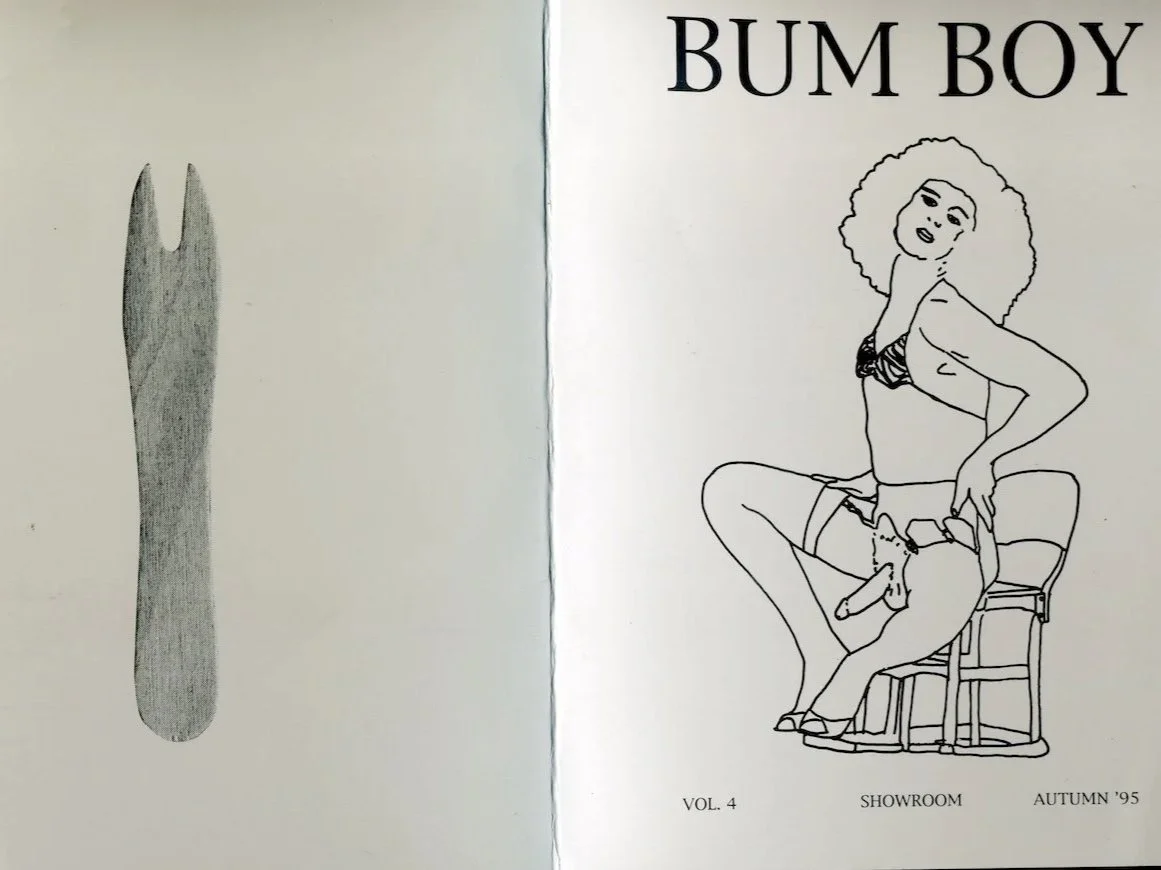
Bum Boy Vol 4. (1995). Showroom Gallery invite, illustration by Pascal Brannan.
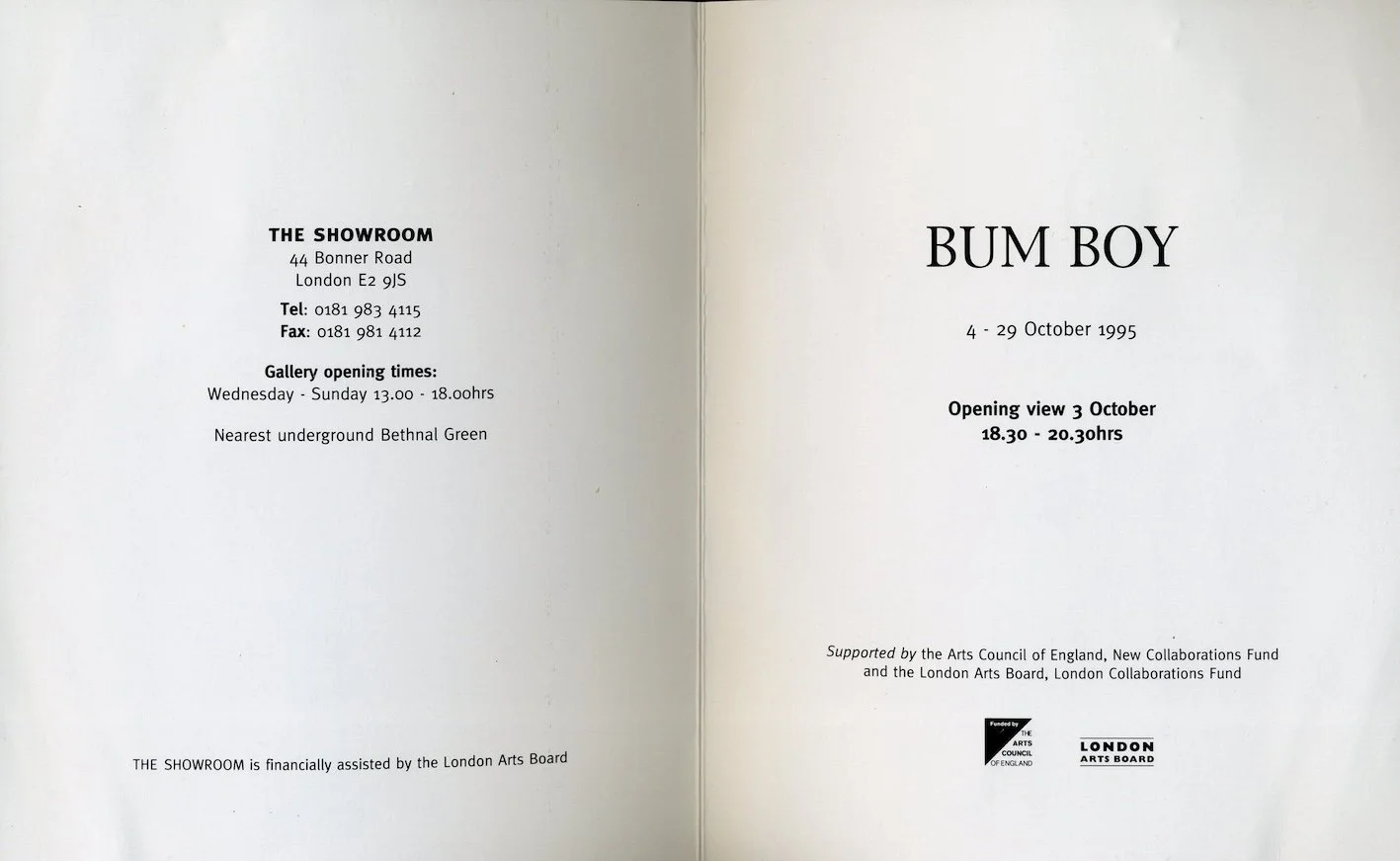
Bum Boy Vol 4. (1995). Showroom Gallery invite.
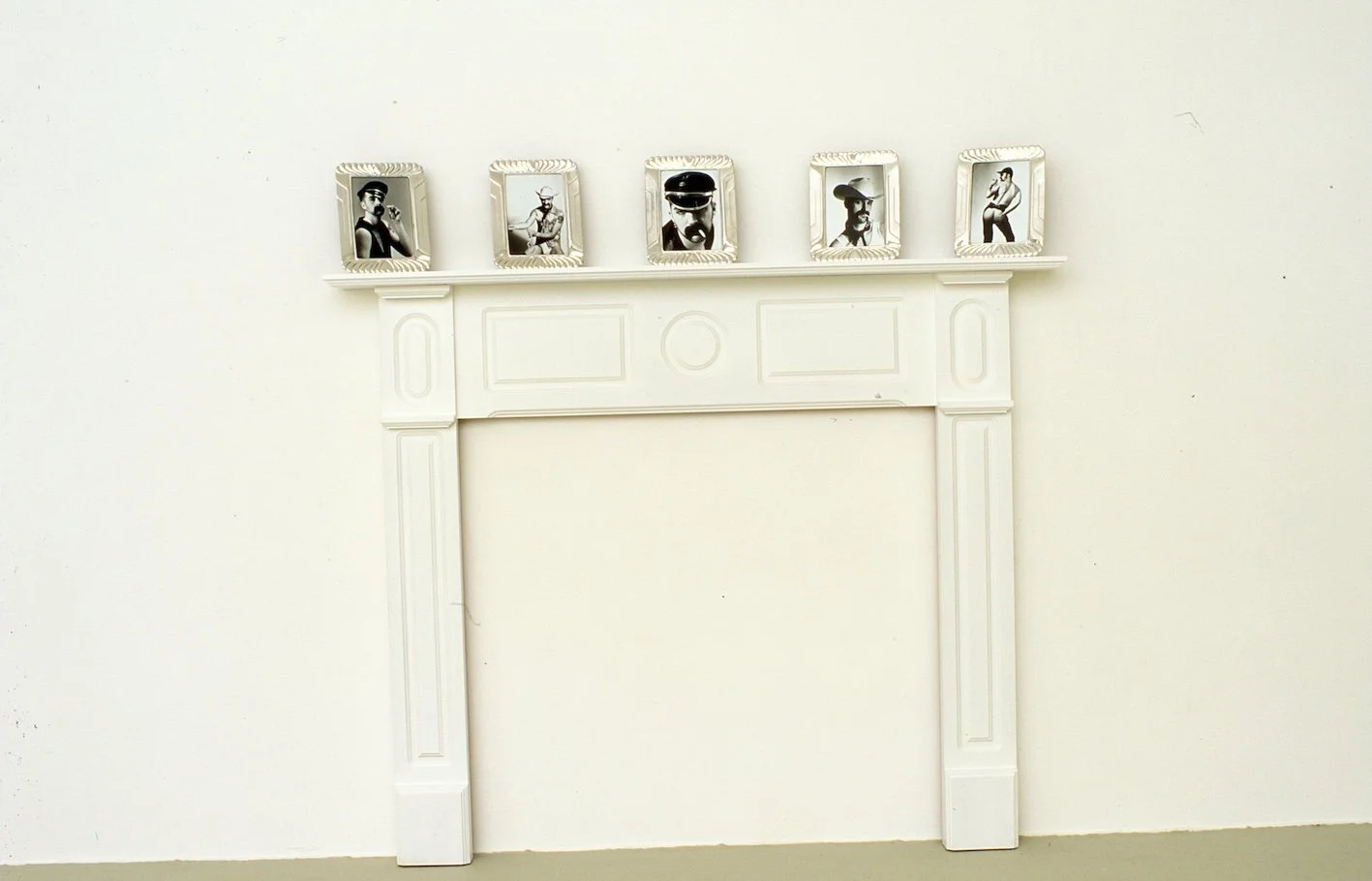
Bum Boy Vol 4. (1995), Michael Atavar. Photo by gallery.
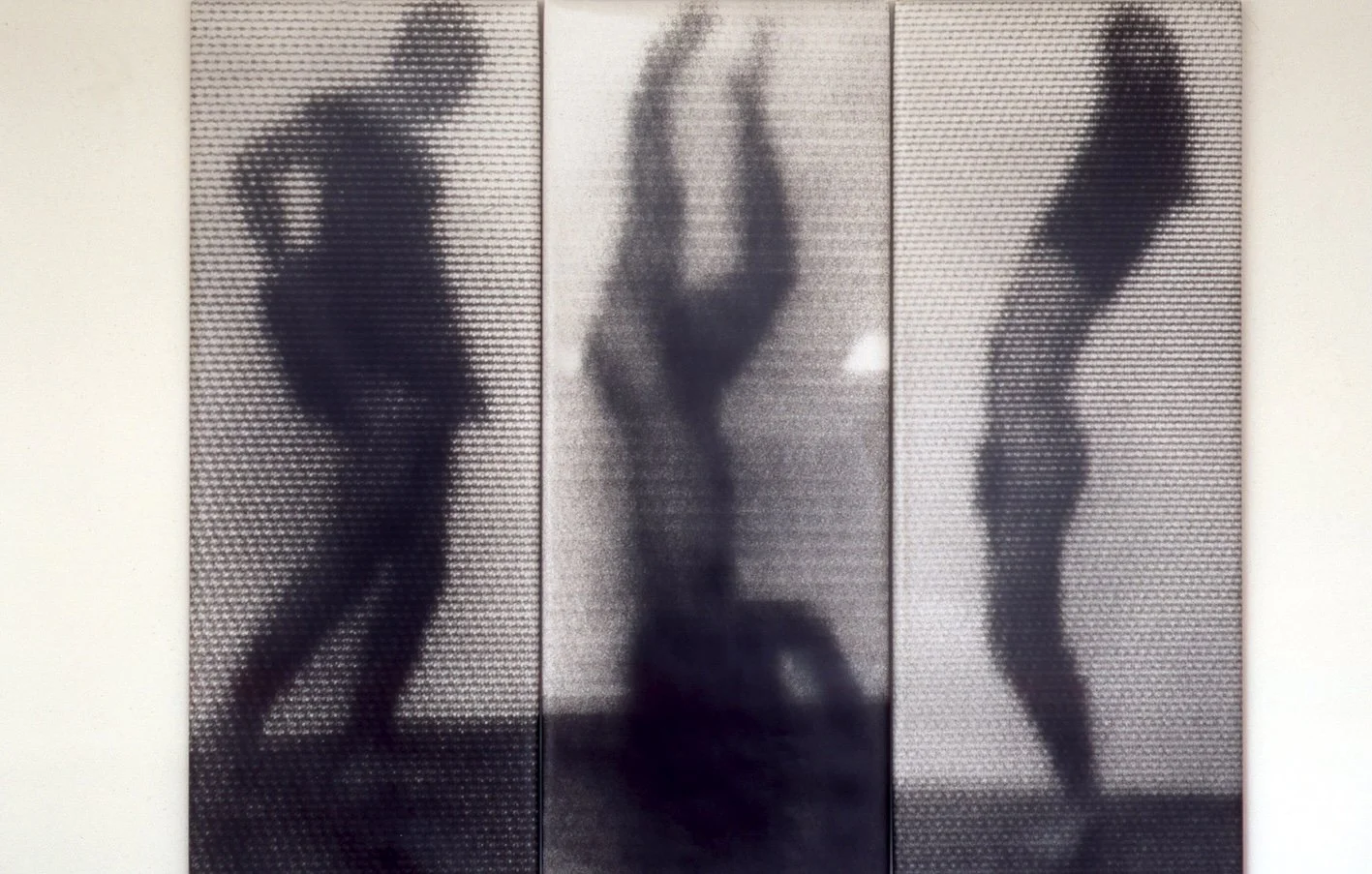
Bum Boy Vol 4. (1995), Pascal Brannan. Photo by gallery.
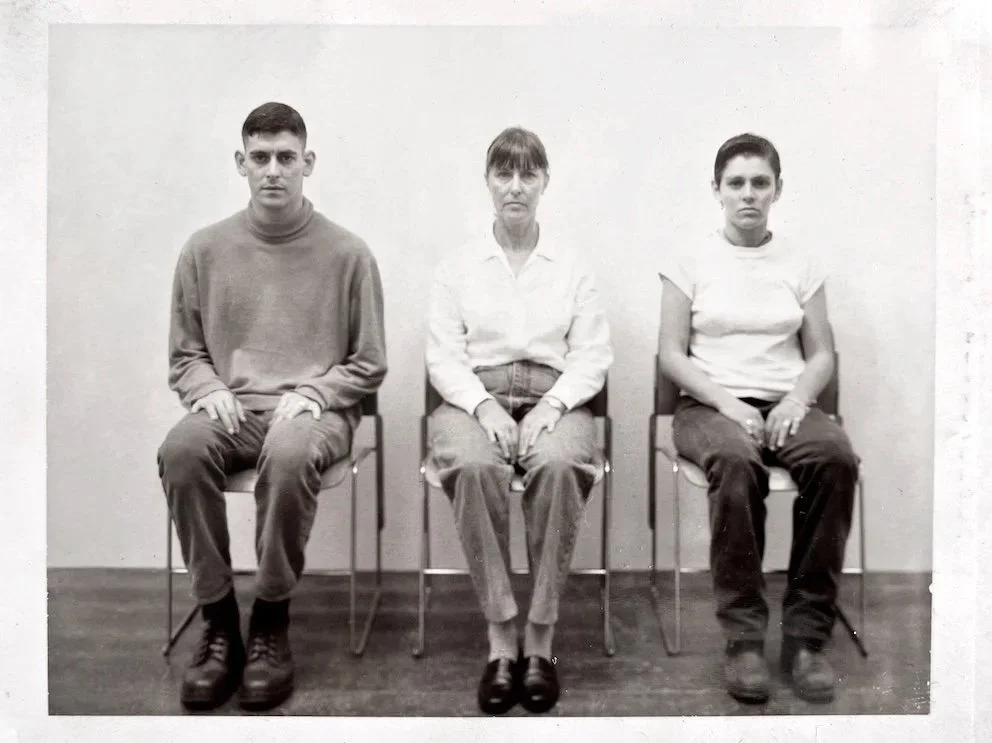
Family Portrait (1995) by Robert Pacitti. Test shot by Sophy Rickett.
CREDITS
Dates active: 1994 - 1996
Creation: Michael Atavar, Pascal Brannan and Robert Pacitti
Distribution: Independently distributed in the UK, Europe and USA
Funding: All editions self funded by the artists, except Bum Boy Showroom - supported by The Arts Council of England New Collaborations Fund, and the London Arts Board London Collaborations Fund
Thanks to: All contributors, supporters, stockists and readers.