
The Porcelain Project (2007) by Grace Ellen Barkey / Needcompany. Photo by Miel Verhasselt.
SPILL FESTIVAL OF PERFORMANCE
ON AGENCY
(2009)
Live • International • Artist-led • LondonFor three weeks in April 2009, SPILL presented the work of exceptional artists and companies from around the world in some of London's top venues and unusual spaces, including the Barbican, Southbank, National Theatre Studio, Soho Theatre, Shunt Vaults, Shoreditch Town Hall, Greenwich Dance Agency, Laban, Soho Square and Toynbee Studios. Artists in the programme travelled from Australia, Belgium, Germany, Italy, the USA and, of course, from across the UK. There were around 100 live performances, some of which were SPILL Commissions, lots of world premieres, plus a brand-new SPILL National Platform strand for early-career makers.
SPILL 2009 saw Pacitti Company partner with the Barbican to present Romeo Castellucci's scale-busting trilogy, Inferno, Purgatorio and Paradiso. That was also the site for The Porcelain Project by Grace Ellen Barkey and Needcompany. Jan Fabre and Troubleyn showed Orgy of Tolerance in the Queen Elizabeth Hall, where Victoria and Tim Etchells also presented That Night Follows Day, performed by kids. Gob Squad gave Saving the World their best shot at Greenwich Dance Agency, and Julia Bardsley strutted her best trickster stuff at Laban with Aftermaths: A Tear in the Meat of Vision. And, on Easter Sunday, Ron Athey and Lee Adams curated Visions of Excess, a 12-hour art-sex party-cum-magical pathway set within the dark, sprawling tunnels and nooks of the Shunt Vaults.
The SPILL Feasts - a hot ticket in 2007 - were back, and bigger than ever before. Rachel Lois Clapham and Mary Paterson, collaborating as Open Dialogues, ran a writers' boot camp to train a group of new writers keen to write about live performance, who went on to share their thoughts online on every event in the programme. Kira O'Reilly, SPILL's first Thinker-in-Residence, looked at some of the overriding themes within the festival and convened a series of public salons where experts and aces from a range of different territories discussed diverse issues affecting performance, culture, counterculture and more. Special film screenings peppered the festival, and alongside all of this there was the launch of the SPILL Tarot Pack - a specially commissioned limited-edition pack of tarot cards, with each image specially remade and portrayed by a contemporary maverick.
Due to a seat-of-the-pants situation in which a significant funding gap was only fully confirmed three weeks before the festival, SPILL Festival 2009 did not have a printed brochure. However, the festival website, partner venue websites, extensive press coverage and word of mouth still saw tickets sell out. The lesson learnt, however, was to never push financial uncertainties quite that late again.
TIME OUT MAGAZINE
The week before SPILL 2009 opened, Time Out published the feature below, accompanied by a gallery of images of the artists and works featured in the article. (NB: The claim that SPILL was Britain’s first festival of experimental performance was made by the author and Time Out, and not by Robert or Pacitti Company).
THRILLS AND SPILLS
The SPILL Festival showcases a host of experimental theatre practitioners. Is the UK ready to embrace them? asks Time Out’s Caroline McGinn - April 2009.
‘SPILL - Britain's first experimental performance festival - flings open its doors again in London this week. With almost a hundred live events, some conceived especially for the festival, it’s hard to predict what exactly will slither out into the light. As its name implies, you might stumble upon something that lights all your fires, or a bit of a mess. But our only artist-led experimental festival is an exceptional opportunity to take a trip into the kind of high-vis, high-concept performance-led theatre that gets spectators excited at the big European festivals.
Experimental theatre is a genre that we Brits have been more sceptical about than our continental frères: we like to stick to a script and a story. But there are plenty of signs that this is changing, particularly for younger audiences. The cult popularity of Punchdrunk’s immersive shows is one indication that, when the quality is there, the crowds will follow. The willingness of the Barbican to host the UK premiere of Romeo Castellucci's disturbing, extravagant three-part version of Dante's The Divine Comedy as a centrepiece of SPILL is another. Castellucci - the state funded giant of Italian theatre - doesn't come cheap, as Robert Pacitti, artist and founder of the festival points out. ‘It's huge. Sixty-five people on the road. Dogs. Horses. Kids. Fifty extras in every city. All power to Louise Jeffreys at the Barbican for bringing it on.’
Castelluci's triptych of Inferno, Purgatorio and Paradiso is an epic, often wordless theatre-installation which takes on Dante's themes of catastrophe, innocence and evil and paints them in stage-tableaux. The tableaux are drawn from a human palette of professional performers and local volunteers, all dressed in flowing block colours. Apocalypse, murder and rebirth are themes which the uninhibited and largely secular world of experimental performance dwells on just as much as the religious right. But few practitioners can express them on the scale available to Castellucci, whose Inferno begins with a group of children playing inside a glass cube, menaced by a vast billowing cloud of darkness which the audience can see but they cannot. The prologue is equally disturbing. Castellucci comes on, introduces himself, straps on protective clobber which transforms his trim frame into that of the Michelin Man - and is attacked by several guard dogs. They drag him to the ground, sinking their teeth into his padded limbs, while their pack-mates strain at their handlers' leashes and bark, desperate to join the attack.
The attack-dogs are one of several coups de theâtre of the boundary-pushing, technically ingenious kind which Castellucci's Societas Raffaello specialises in. There's a tide of humans onstage who embrace, fight and murder each other without displaying any apparent particularity or feeling. The human spectacle seems endless, meaningless and cold. But the fire is in the set pieces: literally, you feel your face redden in the backdraft from the grand piano which is torched onstage. And the mechanical skeleton which crawls towards the impassive crowds is a more melancholy memento of death than the doomed procession.
Many of the tableaux are distorted echoes of The Divine Comedy (not that you'd divine that if you didn't happen to have a volume in your back pocket). ‘Dante put himself in his story. I put myself in mine’, explains Castellucci, when I meet him backstage before a show in Poitiers. The Italian has also replaced Dante's figure of his fellow-countryman Virgil (who acts as the poet's spirit-guide to hell, purgatory and heaven) with an actor dressed as Andy Warhol who takes photos of the audience and eventually crashes himself into a crumpled, burnt-out car. Why? ‘Warhol levelled art and society. This is his hell.’
This high-concept, large-scale approach is one thing that Castellucci shares with Jan Fabre, the other big European artist who's coming to London under the SPILL umbrella (his Orgy of Tolerance, a series of absurd sketches, is at the Queen Elizabeth Hall on April 15 and 16). ‘We're unable to grow large-scale work in Britain that has an experimental origin’, argues Pacitti. ‘Fabre's work hasn't been seen here for 17 years. His status has been totally validated by the establishment: he had his own island at the Venice Biennale.’ Bringing international work to London is in some ways SPILL's least important role. It provides a vital ground on which British experimental work can grow. The likes of Gob Squad, Forced Entertainment and Julia Bardsley are familiar to speculative theatre fans, though they're far from household names. But one of the things that Pacitti is most proud of is the fact that the festival will showcase 20 emerging artists as well. SPILL’s programme, which mixes in conceptual and reflective pieces with fetish-led extravaganzas, will be heaven for fans. It may look off-puttingly like hell or purgatory to the general theatregoer, but it will reward the intrepid. And, with the majority of events costing less than £10, there's little to lose-apart from your inhibitions.
TIM ETCHELLS
Forced Entertainment turns 25 this year. But Tim Etchells's extraordinary company refuses to let itself - or its audiences - rest easy. From April 21 Soho Theatre will host Void Story, in which a live graphic novel meets a radio play. Etchells fills us in on the other, astonishing project that SPILL will showcase, That Night Follows Day (at the Queen Elizabeth Hall from April 7), performed and partly conceived by children.
‘In 2007 I made That Night Follows Day with Victoria, a Ghent-based organisation with a history of doing projects with children as performers. It opened in Brussels with a group of 16 young people aged between eight and 14. I'd wanted to make something for adults with kids for a long time. The thing that I focused on was the idea of the school photograph: kids in a line, arranged in an orderly fashion, on their best behaviour, there for posterity and display. At the heart of the piece there is a chorus of kids who stand in an orderly way and speak in unison. They turn the mirror on the adult audience - the text is about the way adults make, frame and shape the world for them.
‘The text grew in the making process, out of five months working with the 16 kids. Out of their mouths comes a very thorough catalogue of many of the things adults do by way of kids -"You dress us, you feed us, you sing to us while we're sleeping. You tell us that the world is round." Some are very banal, but once you amass them in one place then they become uncomfortable. Adults make the world for kids: they frame its possibilities and its restrictions. There's a whole chunk about the way in which adults say "no" to kids. “You tell us 'no, not now, later', you tell us 'no, maybe tomorrow'." The performers have a lot of fun with that bit. You end up thinking a lot about your own actions as an adult and your own experience as a child.
‘Fundamentally, you spend time with 16 kids who are good at just being there in front of you in a relaxed, easy way. There's something generous abut spending 80 minutes being able to look at these people and getting to know them. They play with you. They have a lot of fun pushing the audience. I think it does good by them, I hope it does. It’s about the power adults have over kids and about what adults need from children - and what audiences need from performers. The paradox is that I'm an adult, and I’m responsible for the text. I made it with them, but there's a lot of it that's from me. Kids are trapped inside a big machinery called childhood which is made by all sorts of forces they have no control over. But adults are trapped too: it's hard not to have the power that you have. You have the knowledge, responsibilities and duties.’
JULIA BARDSLEY
Julia Bardsley started off in conventional theatre - so was co-director of the Young Vic before leaving to make performance art. Aftermaths (at Laban Theatre from April 1) is the third part in The Divine Trilogy. She explains what, exactly, is involved in its bacchanalian reading of Revelations.
‘Aftermaths is an optimistic reading of the apocalypse, which is appropriate for our times! It's very tongue-in-cheek.“Apocalypse” means vision, being able to see. It's a piece for a congregation of 100, so people are engaged as a mass. It’s structured along five sermons, which move from a feeling of mourning to an ecstatic state, which is what I'm hoping to achieve. I want it to be quite celebratory, with people coming into a live space, in proximity to a ritual. Ritual is embedded in the theatre experience which is a gathering at a particular moment which will never happen in the same way again.
‘I'm very interested in the experience of going to gigs where audience reach a state of abandon. Audience participation is the worst possible thing and fills me with dread. But I want to make the audience aware of their role in the work: they're not passive, they bring something to it.
‘I'm asking everyone to bring a small black object with which they are willing to part: something to contribute to the economy of the piece. I play the hostess - an androgynous trickster. The audience is all contained in a box which has a continual stream of images projected on four sides, with a catwalk running cross-ways on which the action unfolds. So much of everyday life is banal and devoid of magic and wonder. That's what I'm interested in with the arena of theatre. We all know it's not real, but we all want to have that experience where we know it’s a construct but appreciate what the magic has to offer.'
ROBERT’S TIPS
'If you don't want it hardcore don't come to Visions of Excess! Mem Morrison's Turkish wedding piece (Ringside at Shoreditch Town Hall) is a reflective work about memory, family and heritage. The trilogy at Shunt by Richard Haynes, Carla Esperanza Tommasini and Harminder Singh Judge explores identity. We flooded one of the vaults in milk for Harminder's piece: at the end it's made into ceremonial cheese.’
TIM’S TIPS
'I'm super excited about Romeo Castellucci - I've only seen one piece before but it's enough to make you know he's a genius. It's work I don't fully understand and that's the best kind! Also Rajni Shah - I'd love to see her 'Dinner With America' (at Soho Theatre)'.
JULIA’S TIPS
‘There's Robert Pacitti's own work (A Forest at the Barbican Pit from April 7). And Ron Athey's epic durational piece (the 12-hour Visions of Excess at Shunt). Jan Fabre hasn’t been to the UK for such a long time that he's a real coup. And I'm fascinated to see what Kira O'Reilly does as SPILL's thinker-in-residence.’
SPILL: VITAL STATISTICS
When SPILL opened in 2007, 65 per cent of the audience was under 26. This year 16 children under 14 will perform in Forced Entertainment's show and 20 emerging artists are programmed. There are 91 events over 22 days involving 65 volunteers, ten dogs, ten babies and one horse. There are three feasts in which 100 people will pay £6 to eat dinner and discuss the work at Toynbee Studios, which is one of nine venues hosting the festival. 250,000 2p pieces were involved. The technicians at Shunt will be trying not to SPILL any of the 1,500 litres of milk which will fill one of Shunt's vaults. And 2,000 hand-made pieces of china in The Porcelain Project at the Barbican on April 14 and 15.‘
Time Out London, April 2009
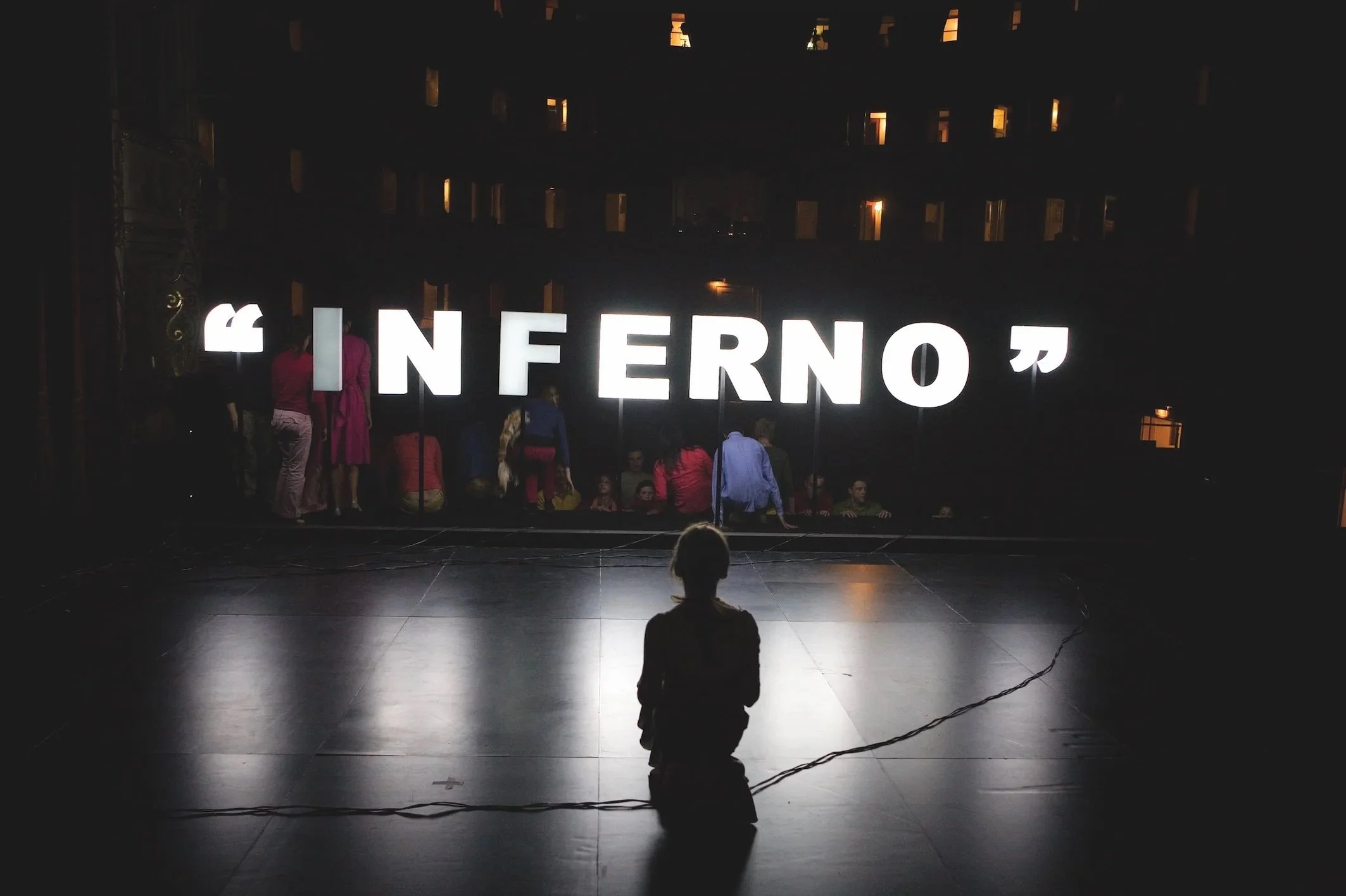
Inferno (2006) by Romeo Castellucci & Socìetas Raffaello Sanzio. Photo by Luca Del Pia.
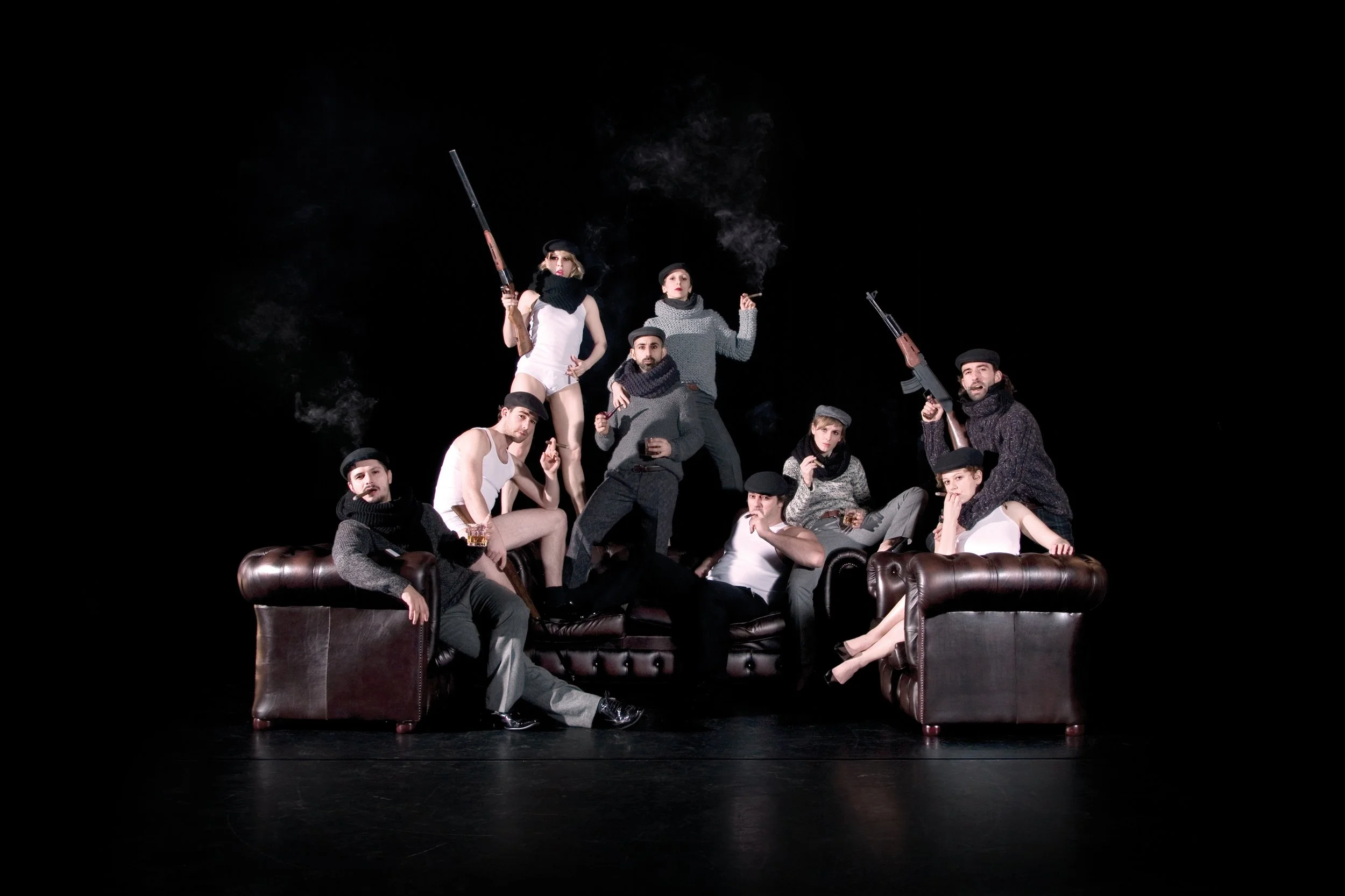
Orgy of Tolerance (2009) by Jan Fabre / Troubleyn. Photo by Jean-Pierre Stoop.
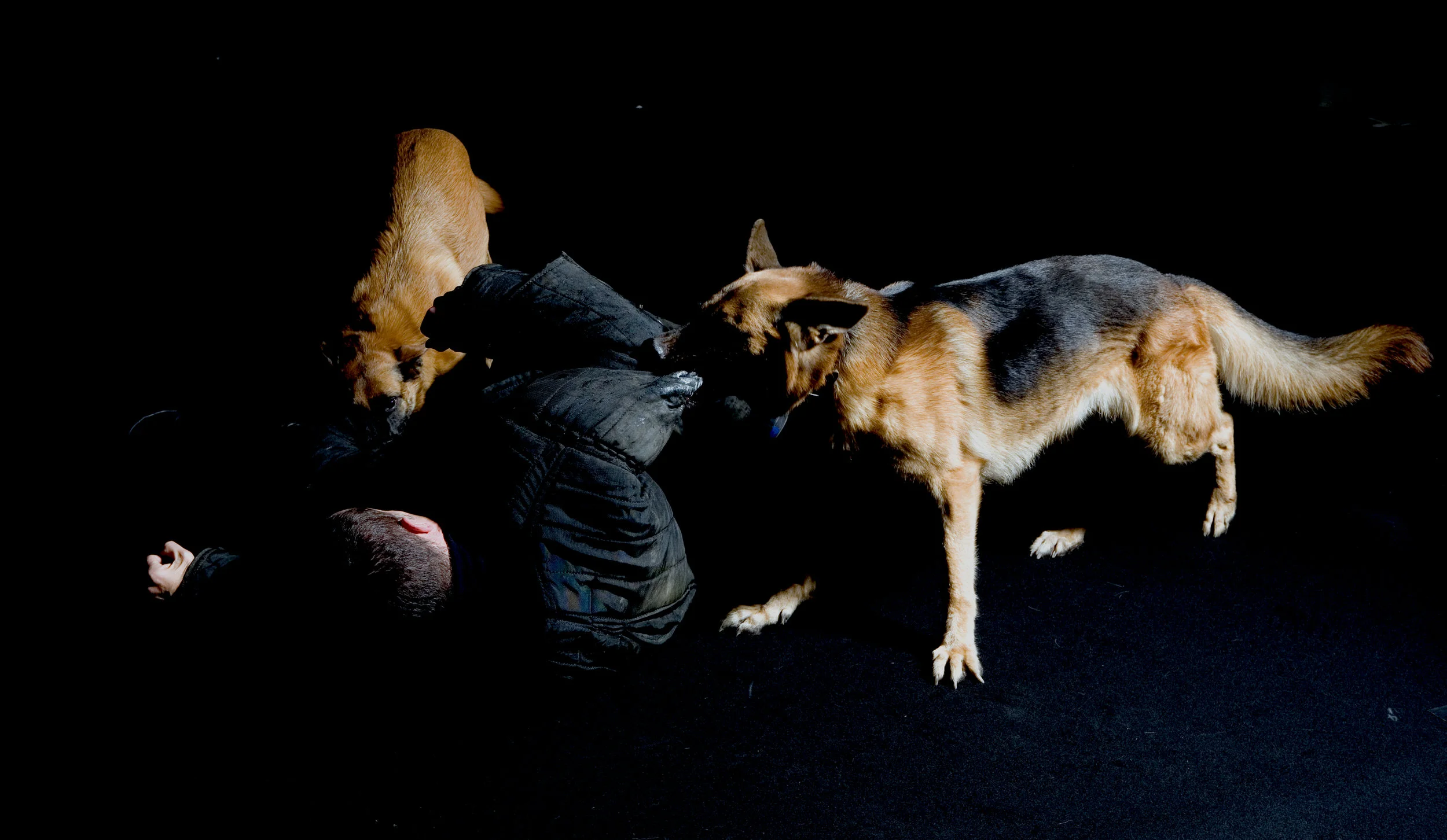
Inferno (2006) by Romeo Castellucci & Socìetas Raffaello Sanzio. Photo by Luca Del Pia.
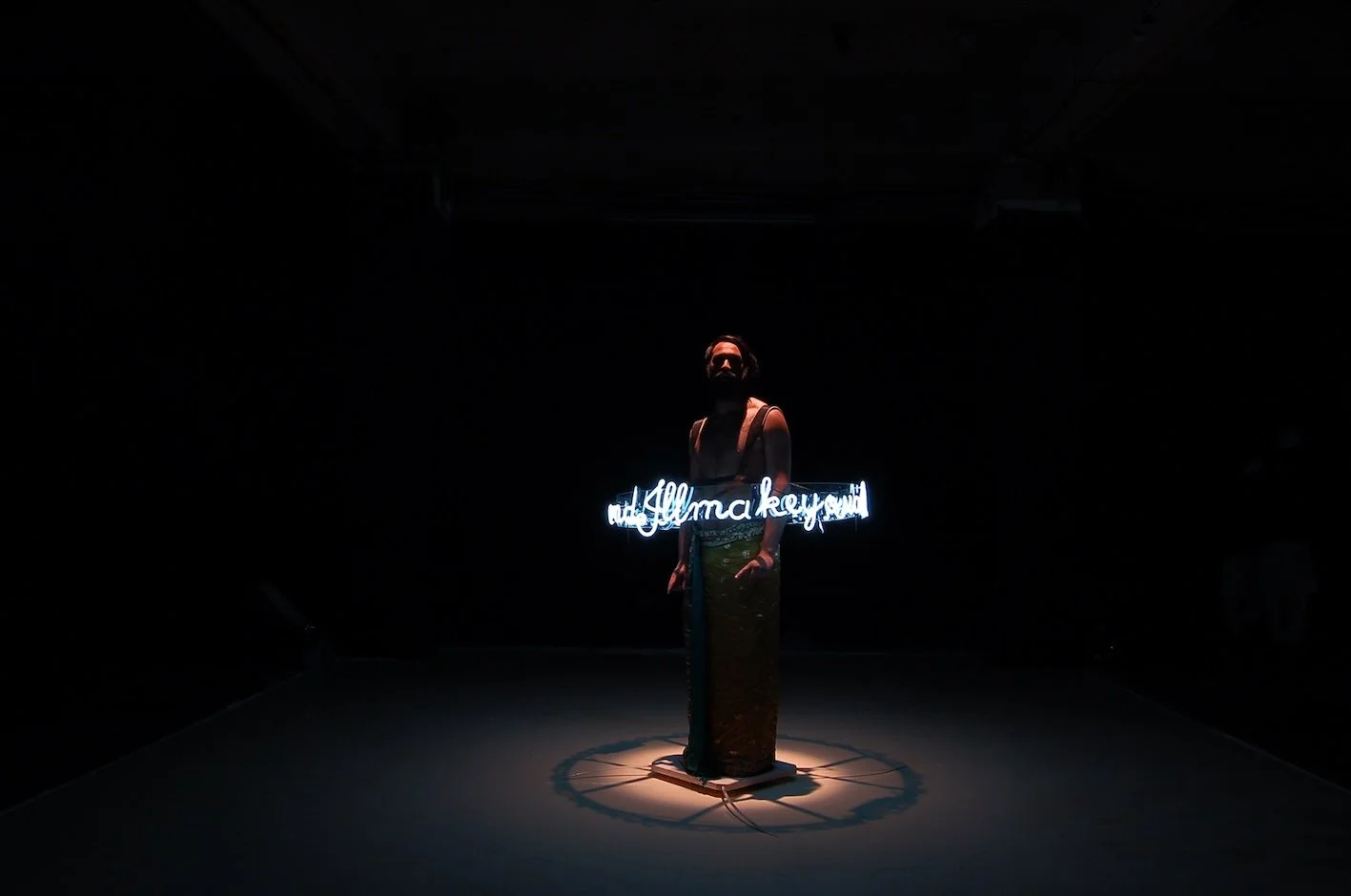
The Modes of Al-Ikseer (2009) by Harminder Judge. Photo by Manuel Vason.

Suka Off in Visions of Excess (2009). Photo by Richard J Anderson.
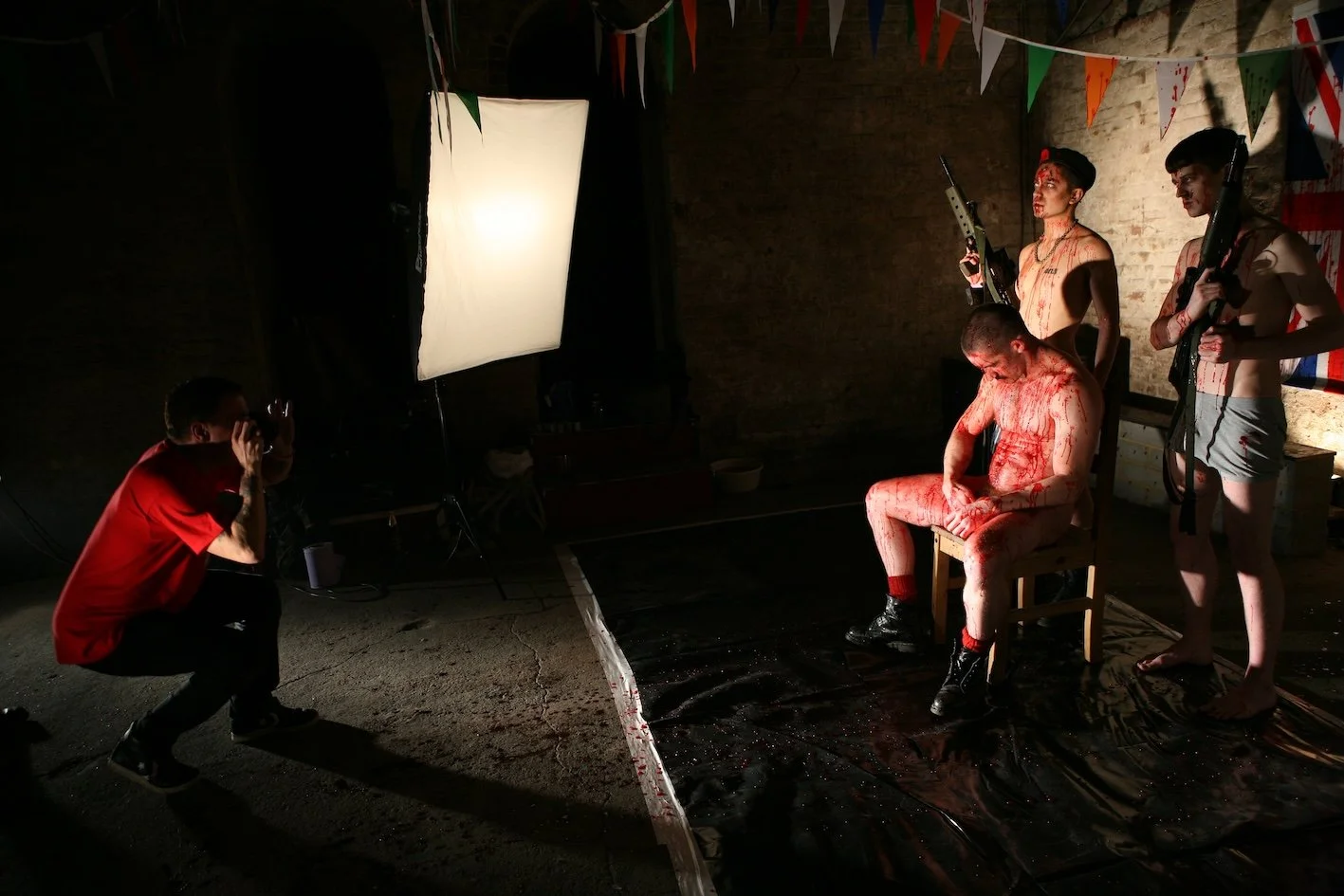
Bruce La Bruce in Visions of Excess (2009). Photo by Richard J Anderson.
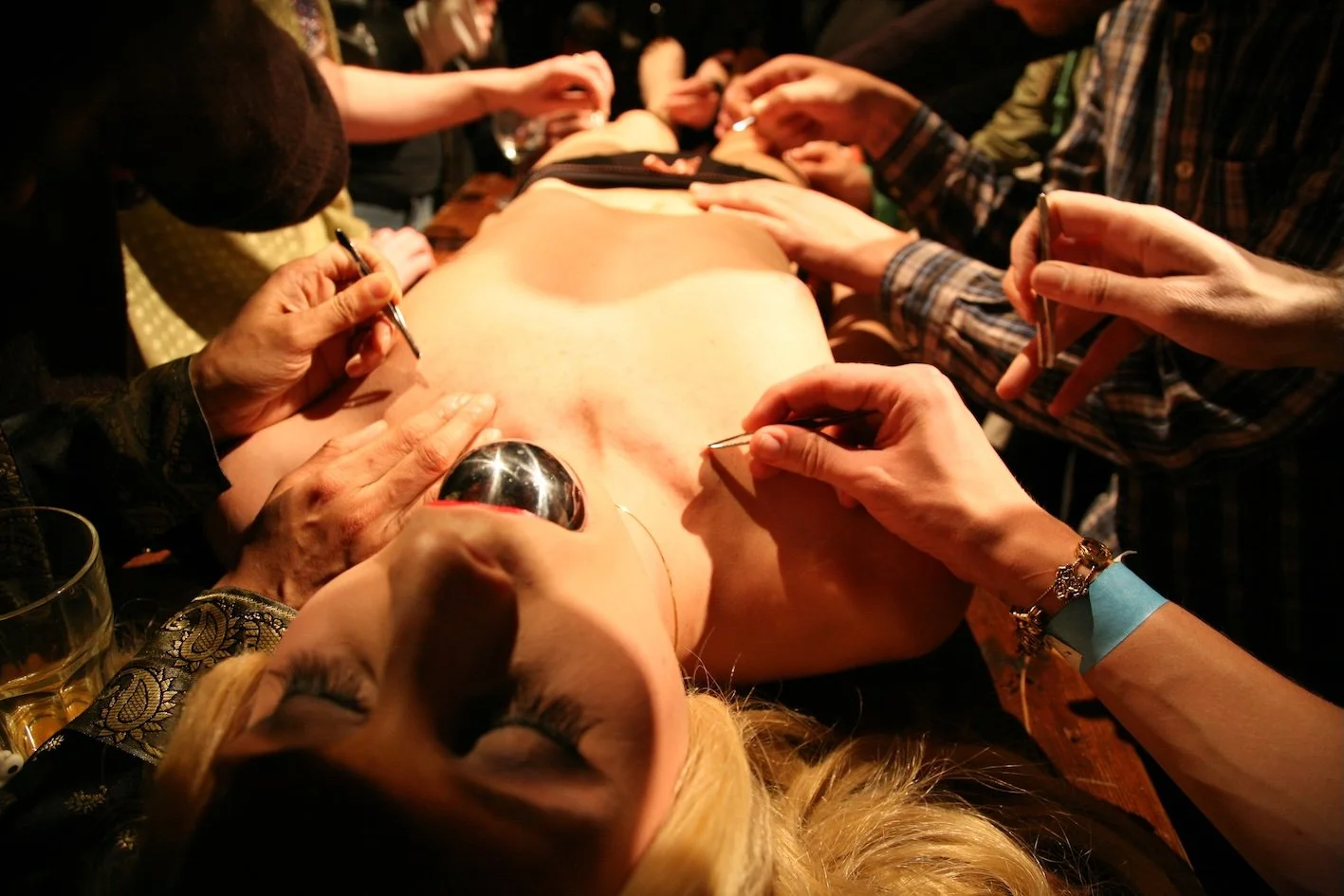
Zackary Drucker in Visions of Excess (2009). Photo by Ashley.
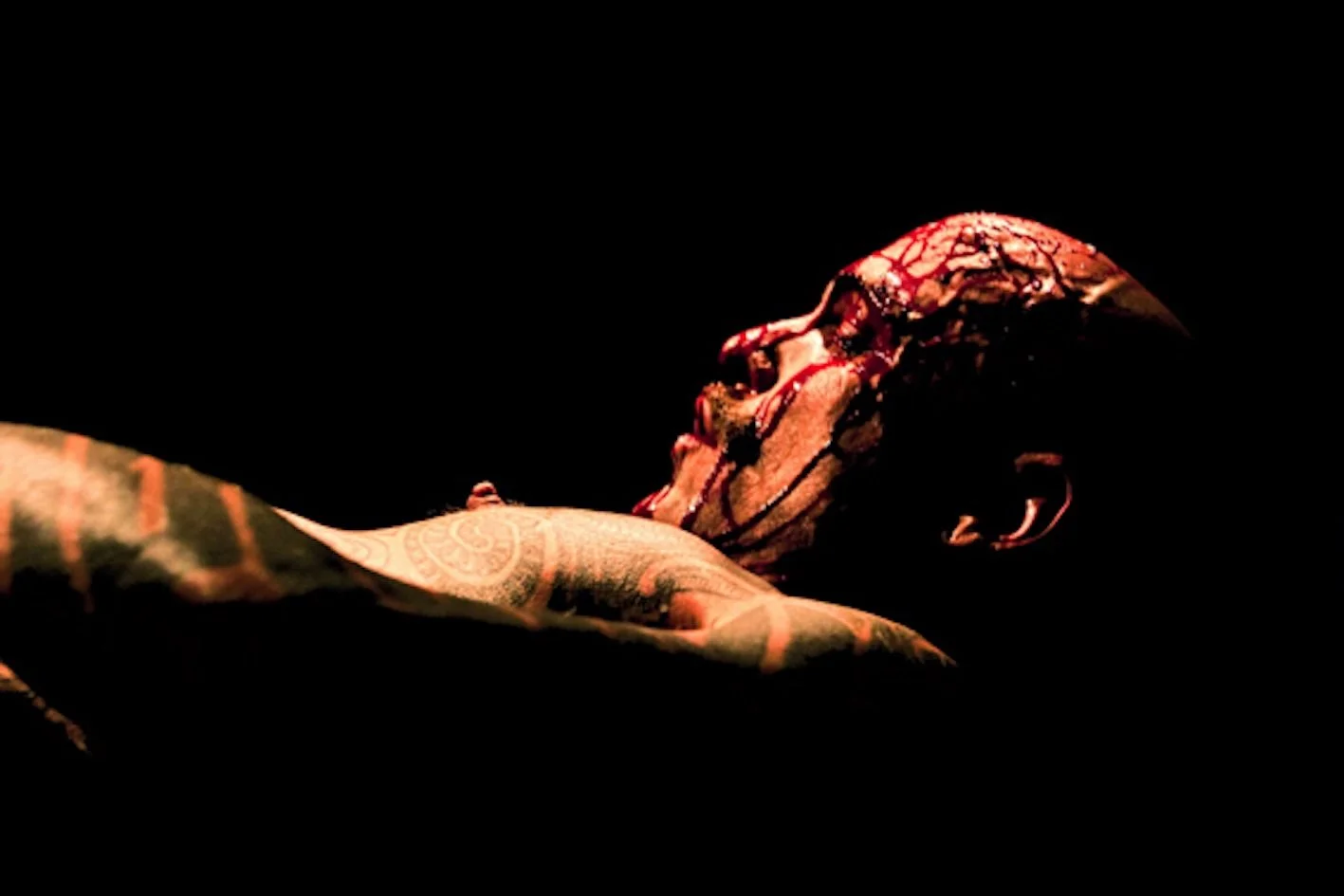
Ron Athey in Visions of Excess (2009). Photo by Regis Hertrich.
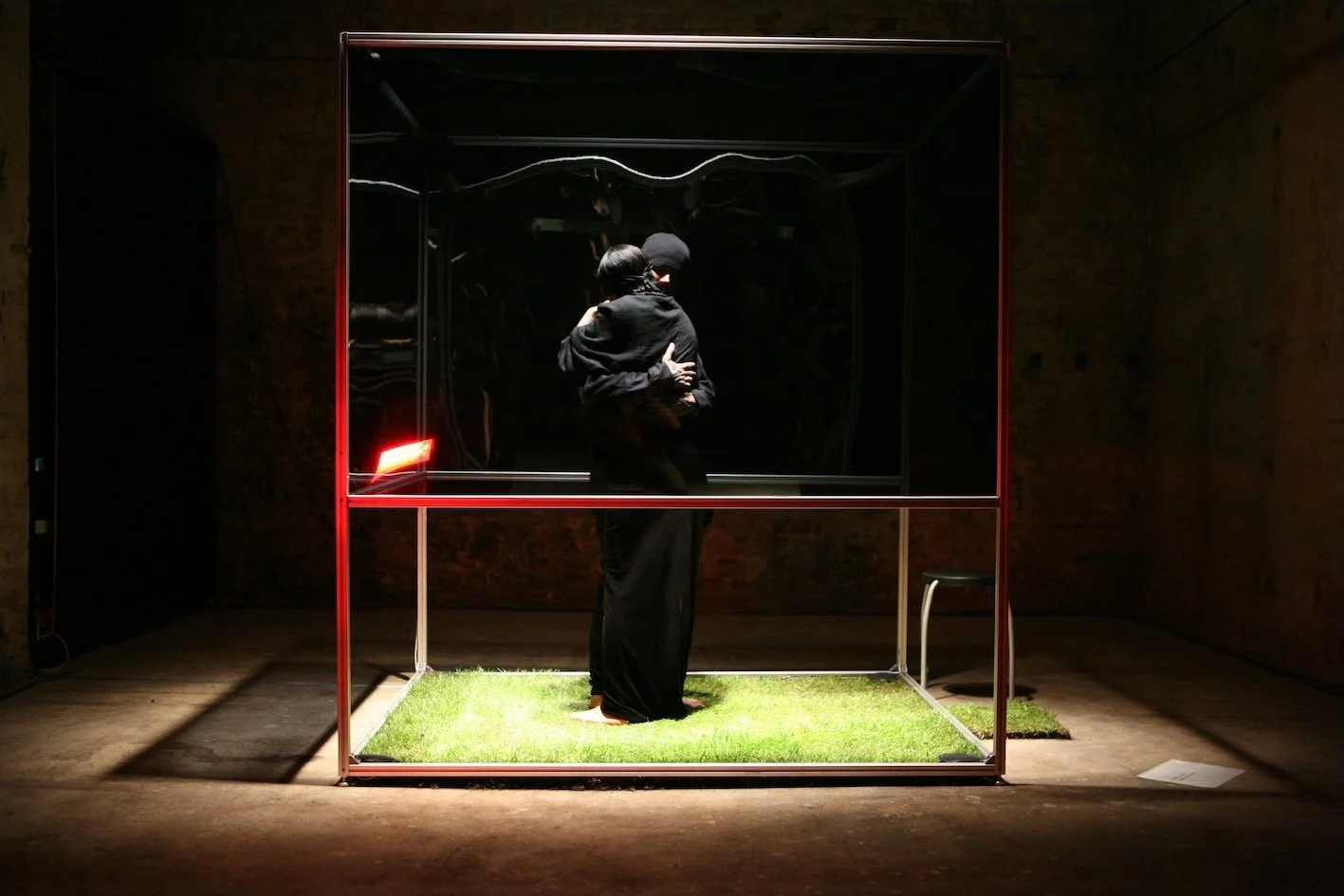
Julie Tolentino in Visions of Excess (2009). Photo by Richard J Anderson.
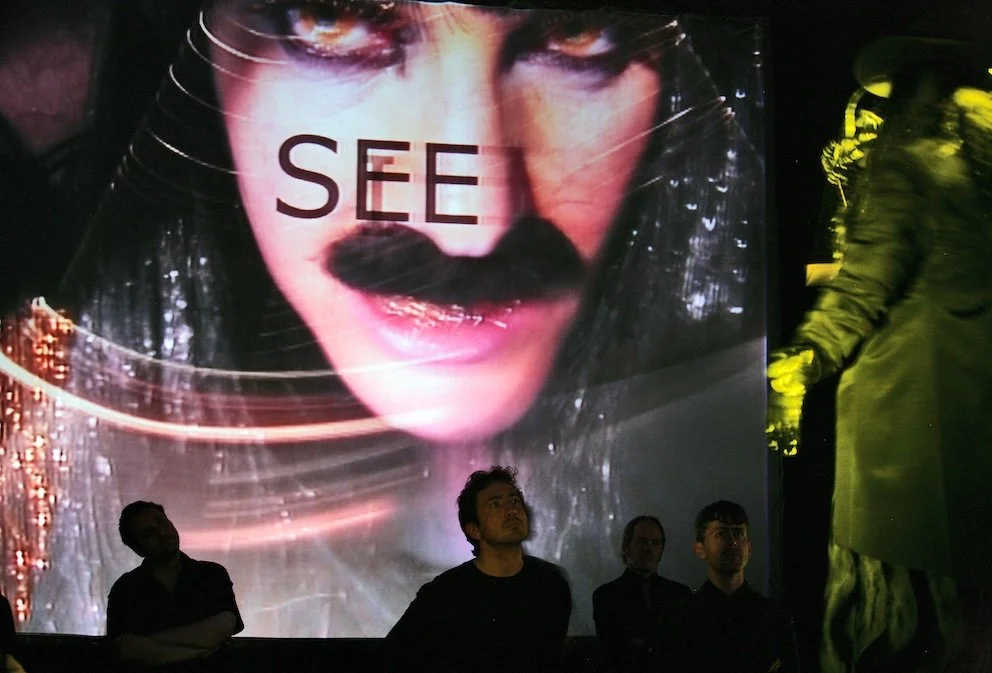
Aftermaths (2009) by Julia Bardsley. Photo by Simon Annand.

Aftermaths (2009) by Julia Bardsley. Photo by Simon Annand.
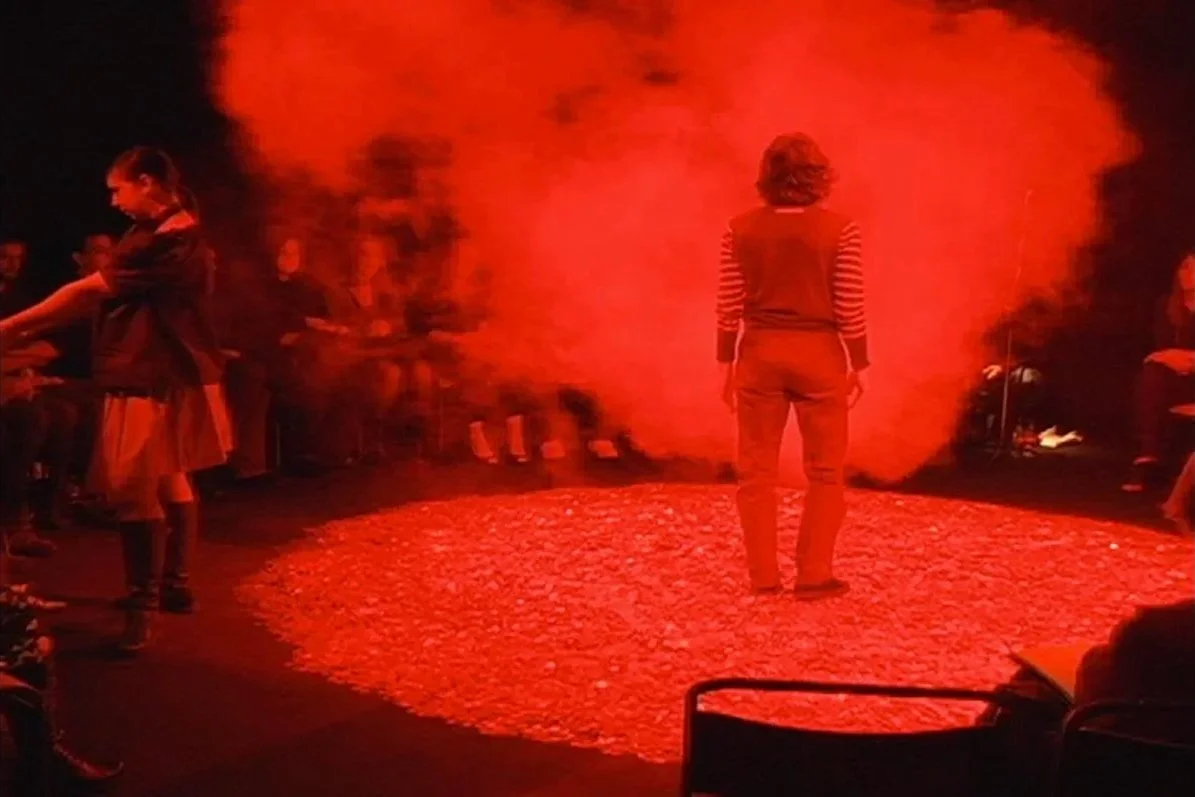
A Forest (2005) by Pacitti Company. Video still.
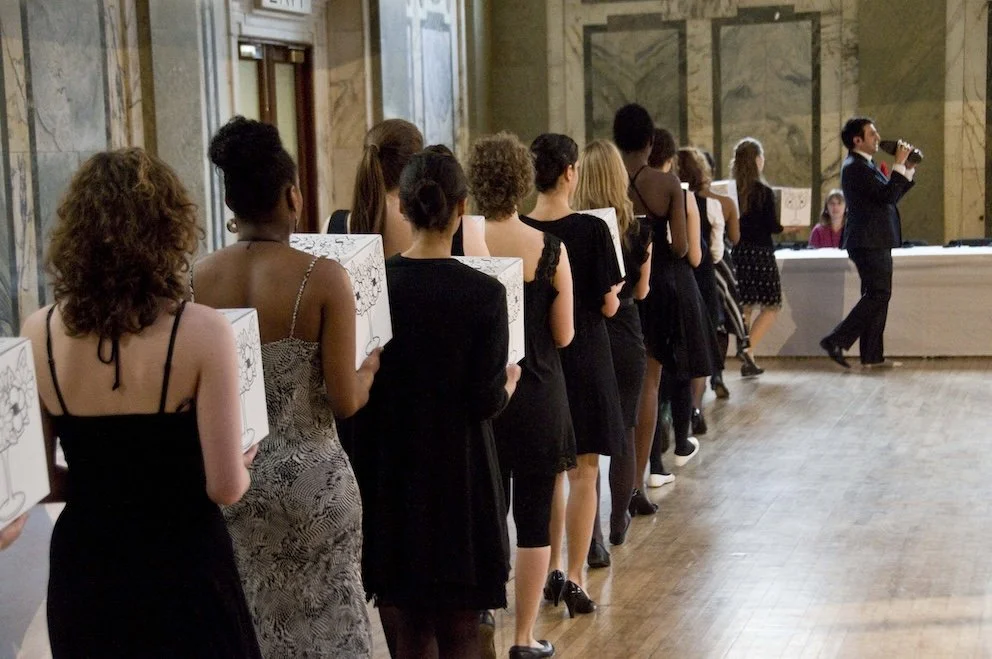
Ringside (2009) by Mem Morrison. Photo by Andrew Whittuck.

Saving The World (2009) by Gob Squad. Photo by Peter Empl.
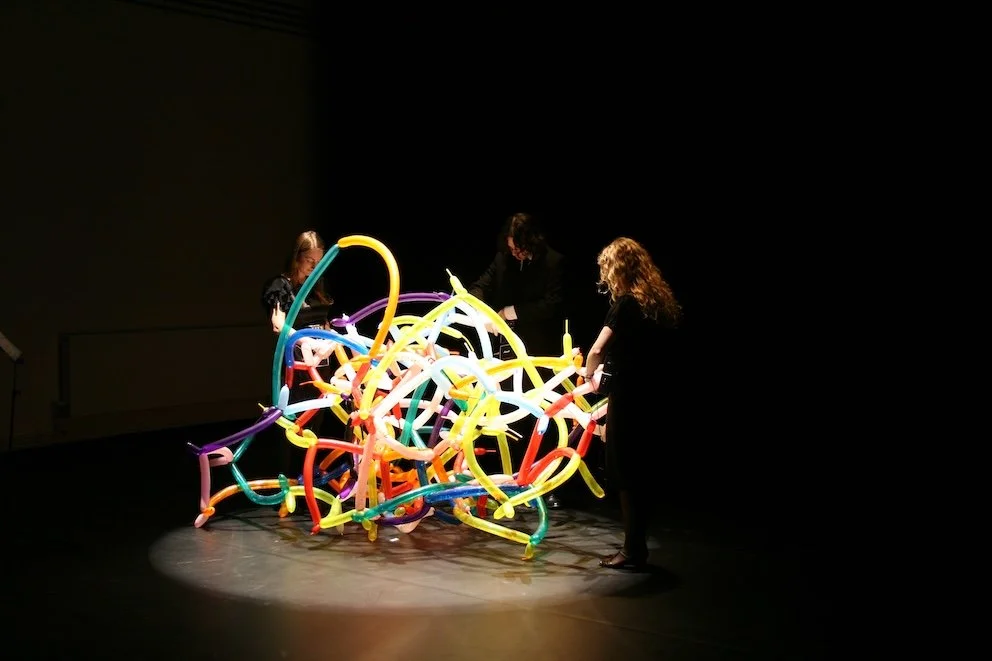
Long Winded in Five Parts (2009) by Other Other Other. Photo by John Boursnell.
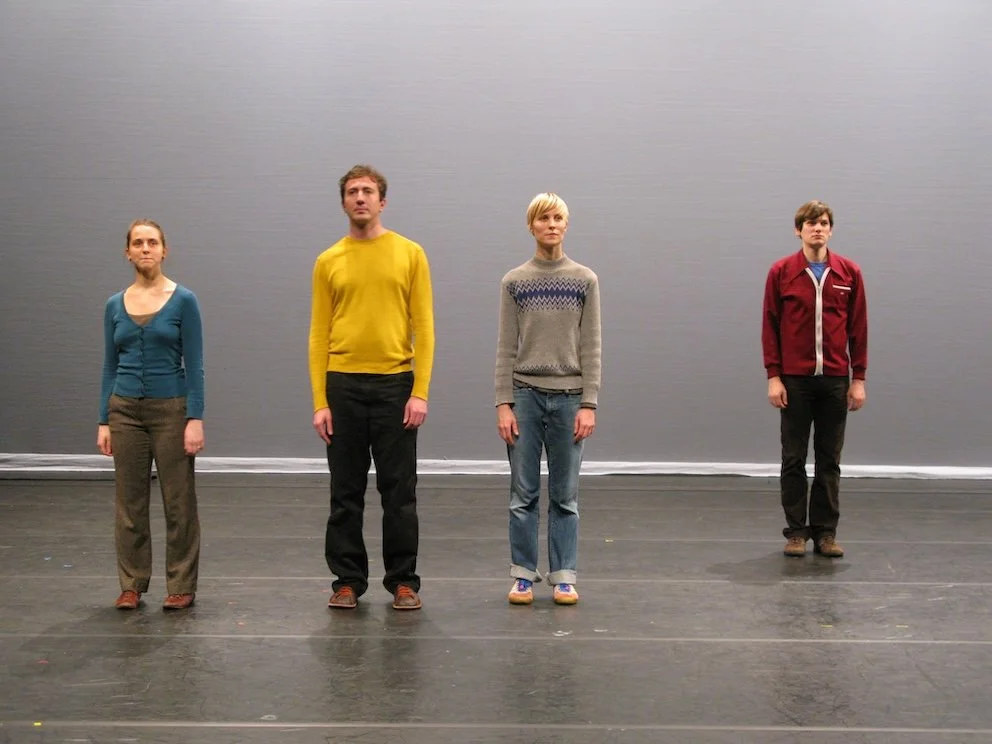
Count One (2006) by Nicola Conibere. Photo by Nicola Conibere.
DOCUMENTS
As SPILL 2009 did not have a brochure, the festival was promoted through its website, venue partners and word of mouth. Here are selected pages from the book SPILL Festival: On Agency, which document the festival and its programme of events. The full publication is also available to read in the Library.
SPILL Festival 2009 - Brochure replacement