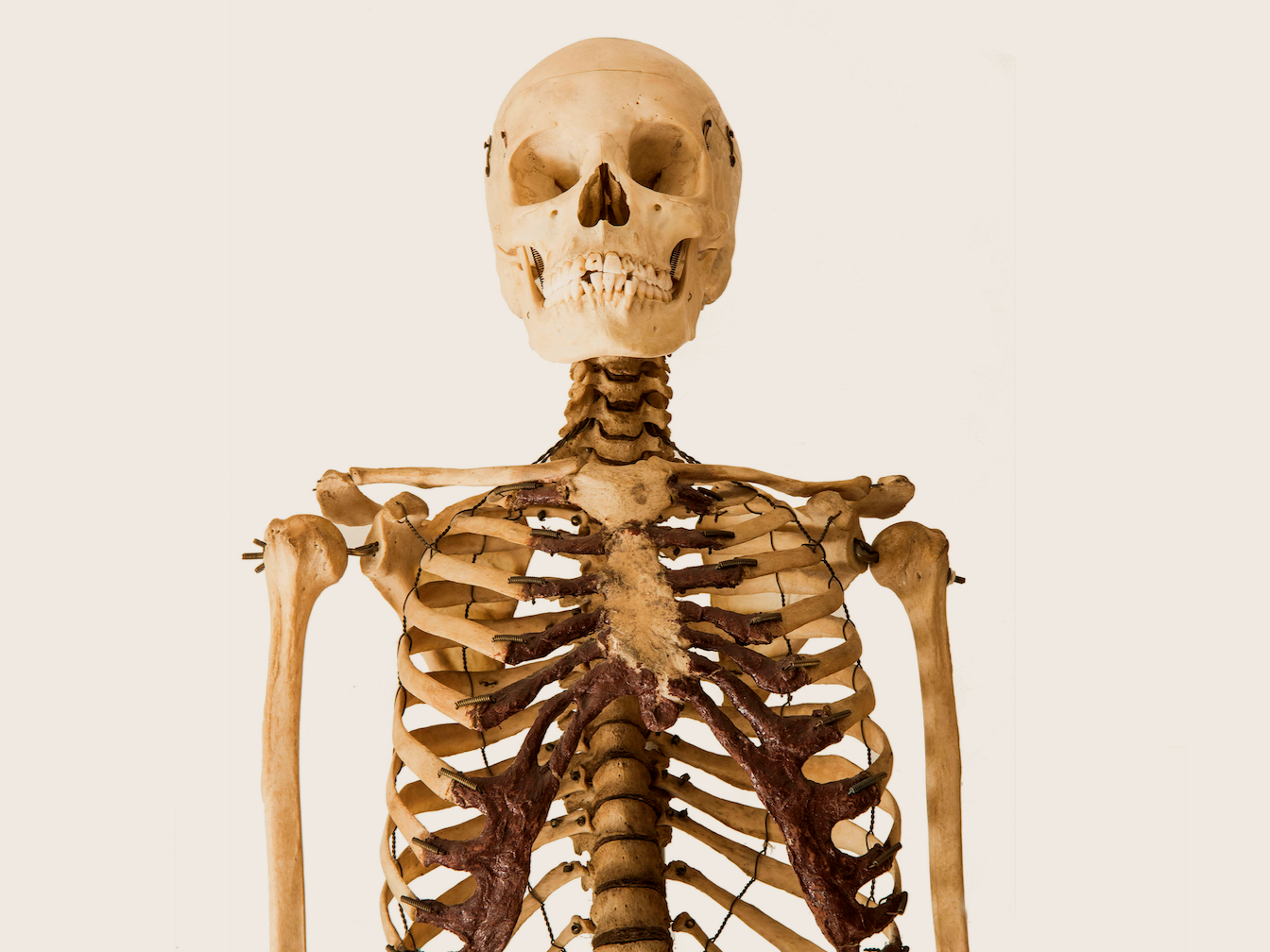
Shared Frameworks (2018) Robert Pacitti and Lucy Walker, photo by Susan Elaine Jones
SHARED FRAMEWORKS
(2018)
Death • Community • Talking • WellbeingTalking about death and dying can be difficult, especially if the subject of that conversation is our own mortality, or that of our loved ones. Shared Frameworks seeks to ease this in a super accessible way - by doing a jigsaw together. To create the work, a life-sized photograph of a human skeleton was taken, set on a plain white background, then laser cut into a large-scale puzzle. Wherever the work is presented, the invitation to join in is open to all, be that in galleries, community centres, cafes, youth clubs, or conferences. And each session of Shared Frameworks is facilitated by a person whose role is to gently start shared conversations with puzzlers about end-of-life. By creating a relaxed space to talk about death and dying in this way, with a focus on the puzzle - hard to do, but easy to understand how to take part - conversations are started which sit outside traditional modes of information exchange.
To date, facilitators have included artists and scientists, anthropologists, archaeologists, bereavement counsellors, health and care professionals, death service providers, and faith leaders. This has meant Shared Frameworks can provide space to collectively explore death and dying in our society, and the diverse science, language, policy and cultural beliefs which support that.
RESEARCH
Shared Frameworks was the first public participatory work to come out of The Art and Science of Living and Dying, a Pacitti Company research strand exploring living, dying, language, place and memory. A rolling collaboration between Robert and landscape historian and Think Tank Associate Lucy Walker, the research was undertaken over a five-year period as a loose form of public inquiry into how we live and how we die. Targeted research areas spanned dying, both in cellular and somatic terms; where we die; end-of-life care; euthanasia and human rights; body disposal; burial traditions, ceremonies and rites around the world; issues of remembrance and legacy; plus the role played by new technologies in all of the above.
A set of six initial Art and Science of Living and Dying research questions were honed:
What is it to be human?
What is it to be alive?
How do philosophies of death shape our actions?
Body disposal: why do we decide to inter, cremate, or other?
Do we have any choice about how and when we die?
How do place, memory and communication fit into our decision making?
Responding to these questions garnered a broad range of current thinking and contemporary views on death and dying. This research was then applied to shaping a range of new art projects, public conversations, artistic and academic publishing, creative exercises, content made for digital formats, installations, and participatory public projects.
Public artworks generated through The Art and Science of Living and Dying include the single-channel video installation Thread (2014), a Death & Dying Think Tank Salon on the research objectives (2017), the creation and public installation of the life-sized human skeleton jigsaw puzzle Shared Frameworks (2018), and the creation of the beer Zombie (2018). A child-friendly version of Shared Frameworks titled These Bones was also developed (although not made), to get younger people learning and talking about death and dying early, prior to facing these topics only when first experiencing bereavement.
THESE BONES
The research period of Shared Frameworks underlined that many people’s first encounter with death and dying is when faced with the death of a loved one. Whilst this is often difficult for adults to deal with, for children it can be unfathomable and lead to lifelong trauma. A plan was hatched to adapt Shared Frameworks to raise issues of death and dying with children and young people. It was decided to do so under the more age-appropriate name These Bones.
These Bones was designed to educate children and young people with age-appropriate concepts, language and data, to empower them in thinking and speaking about death and the physical body, and to talk with agency from a young age about these vital subjects. The project sought to improve young people and children’s death literacy, knowledge about the death of the physical body, and to explore these issues when young, in order to be more resilient adults in the future.
Robert and Lucy rigorously researched talking about death and dying with children and young people and its relation to mental health. In dialogue with Child Bereavement UK, the pair learnt that British people are not as culturally poor at talking about death and dying as is often assumed, but in fact findings suggest we primarily fear banging into social mores and the repercussions this may then have. Similarly, Hospice UK said in an exchange that children and young people are often fed ambiguous language (‘passed away’ or ‘gone to sleep’) and are not often involved in grieving processes or funerals, due to an adult concern that children do not have the emotional maturity to cope with the reality of death, thus often feeding directly into poor mental health and wellbeing.
In May 2019, a day-long public showing of Shared Frameworks at the Think Tank was used as an opportunity to trial the work with some young people. A group of 15 pupils from Chantry Academy aged 11 and 12 spent two hours with the puzzle, during which time they met with Robert and Lucy, and a Child Bereavement Counsellor from St Elizabeth’s Hospice. This session demonstrated that young people are more than capable of engaging with death and dying as topics.
As a result of these conversations and testing, a plan was hatched. A photograph of a human child’s skeleton would be made into a jigsaw puzzle, showing bones that to untrained eyes could be of any gender, age or heritage. Piecing together this inclusive image would allow for conversation between participants and experts at live jigsaw sessions, to deliver key project concepts and learning from a range of experts and specialists.
These Bones would enable kids and young people space for contemplation and relaxed exchanges around death and dying. Like joining a table to eat, the puzzle format is easy to understand, meaning participants are able to understand straight away how to get involved and join in. Gradually, information about the death of the physical body would be introduced, sharing that this is a natural process we will all undergo. The conversations would then carefully expand age-appropriately, for example, introducing bioscience, or ethical and medical elements. The jigsaw sessions were proposed for delivery in schools by trained professionals. A dedicated resource pack would be designed and left with teachers after the sessions to enable a continued dialogue with students.
Whilst fully researched, These Bones was not realised as a live work by the time Robert folded Pacitti Company. If supporting the creation and presentation of it is of interest to anyone reading, please email.
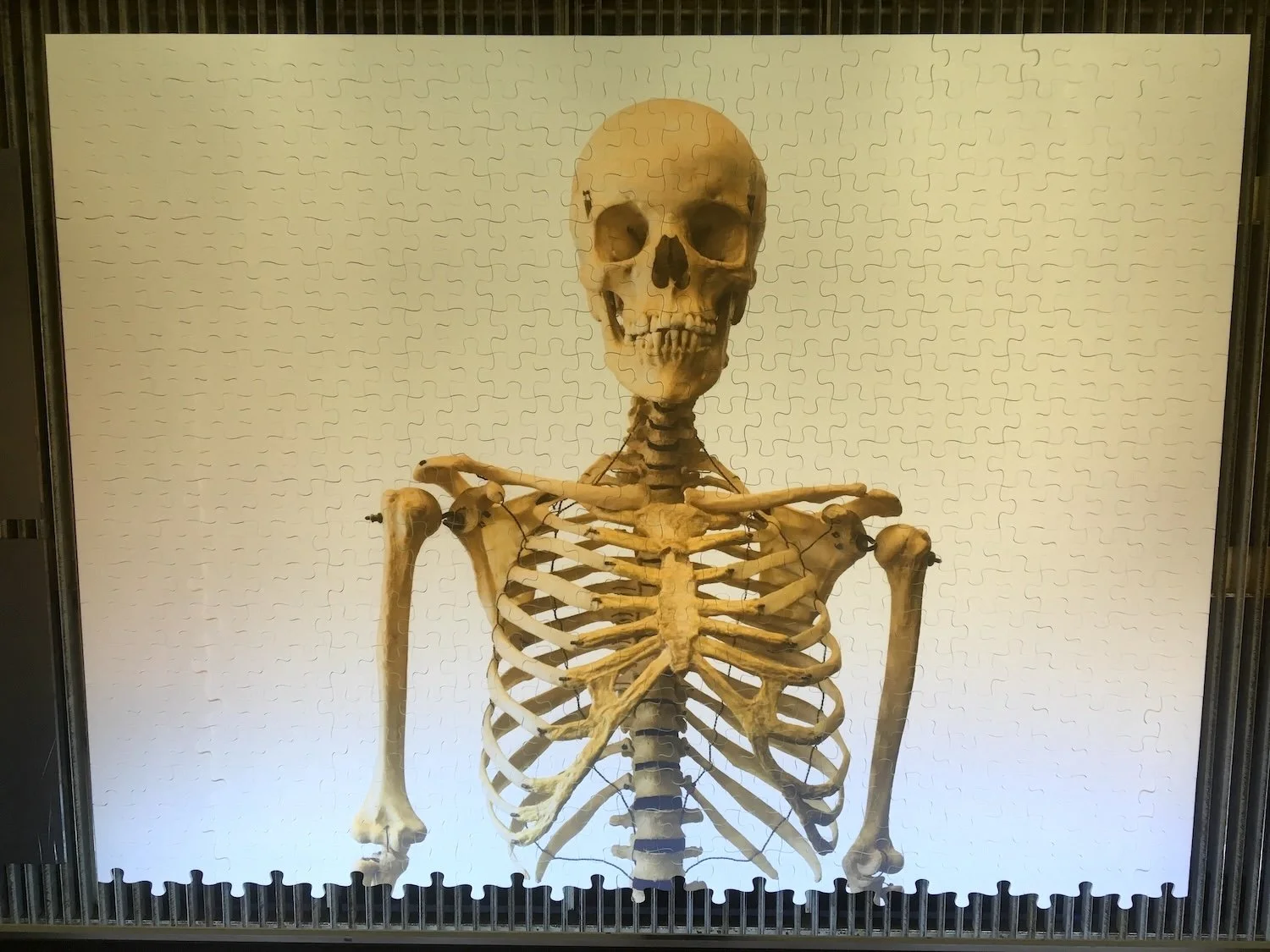
Shared Frameworks (2018) being laser cut as a puzzle, photos by Lukas
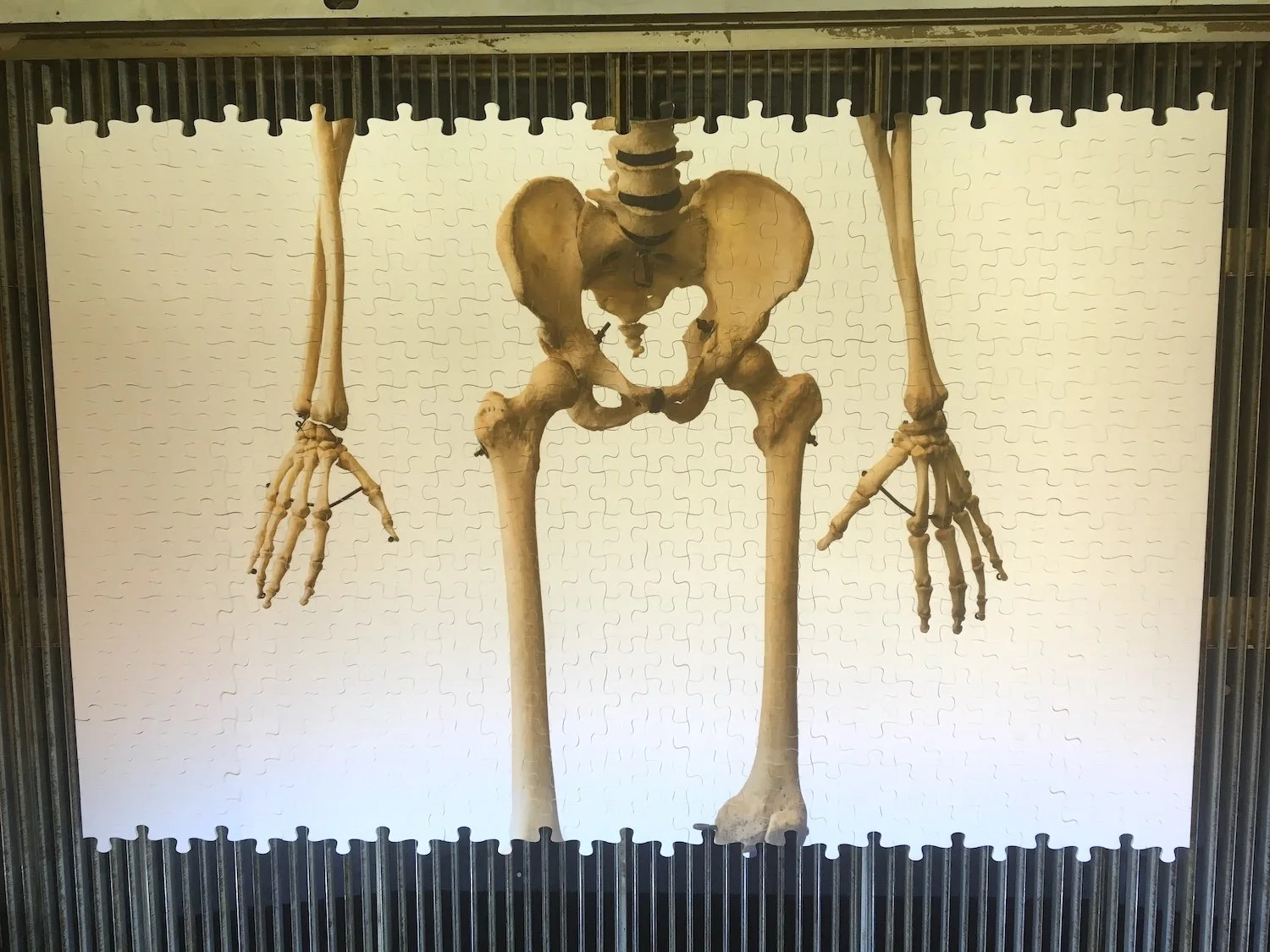
Shared Frameworks (2018) being laser cut as a puzzle, photos by Lukas
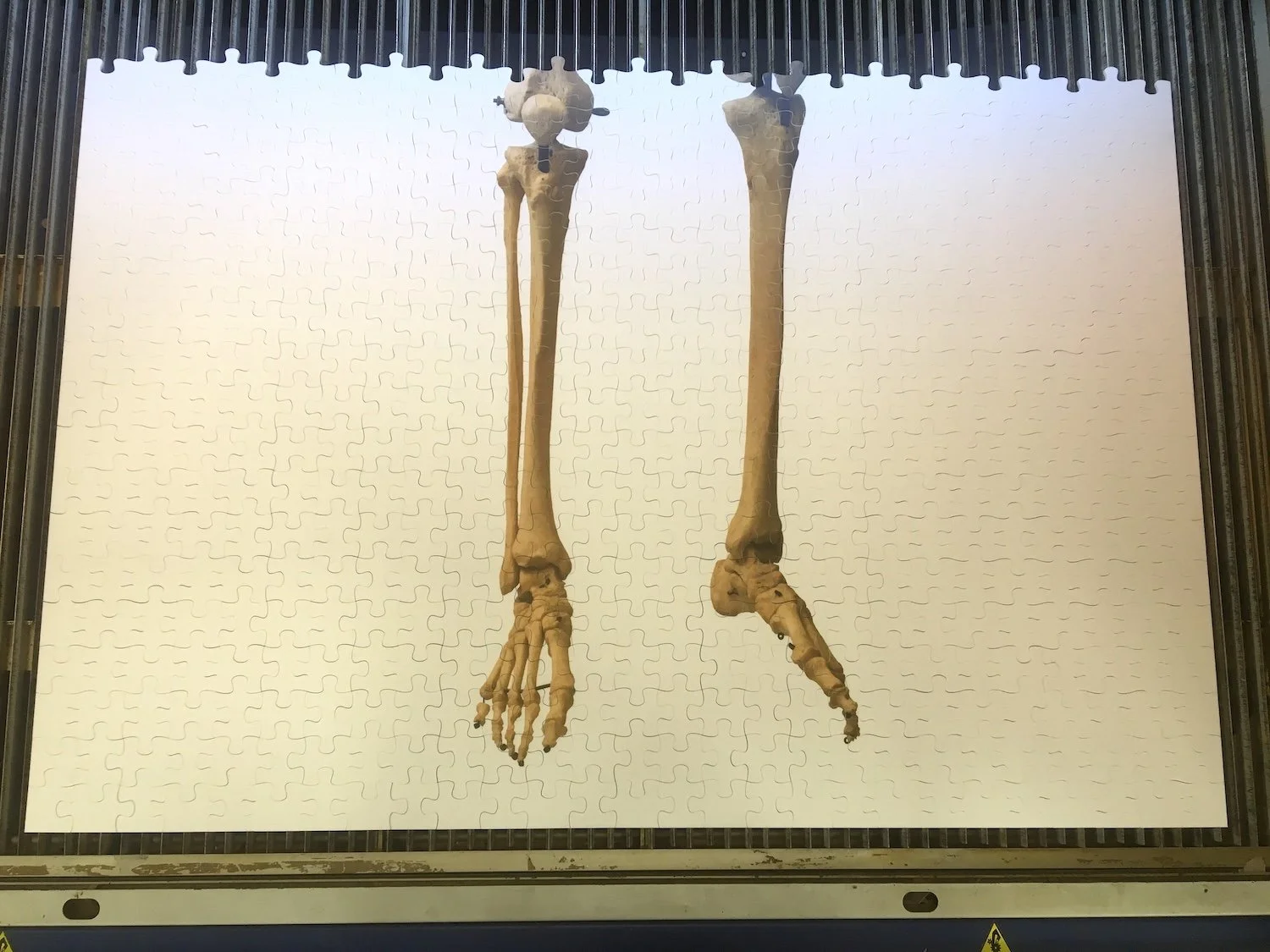
Shared Frameworks (2018) being laser cut as a puzzle, photos by Lukas
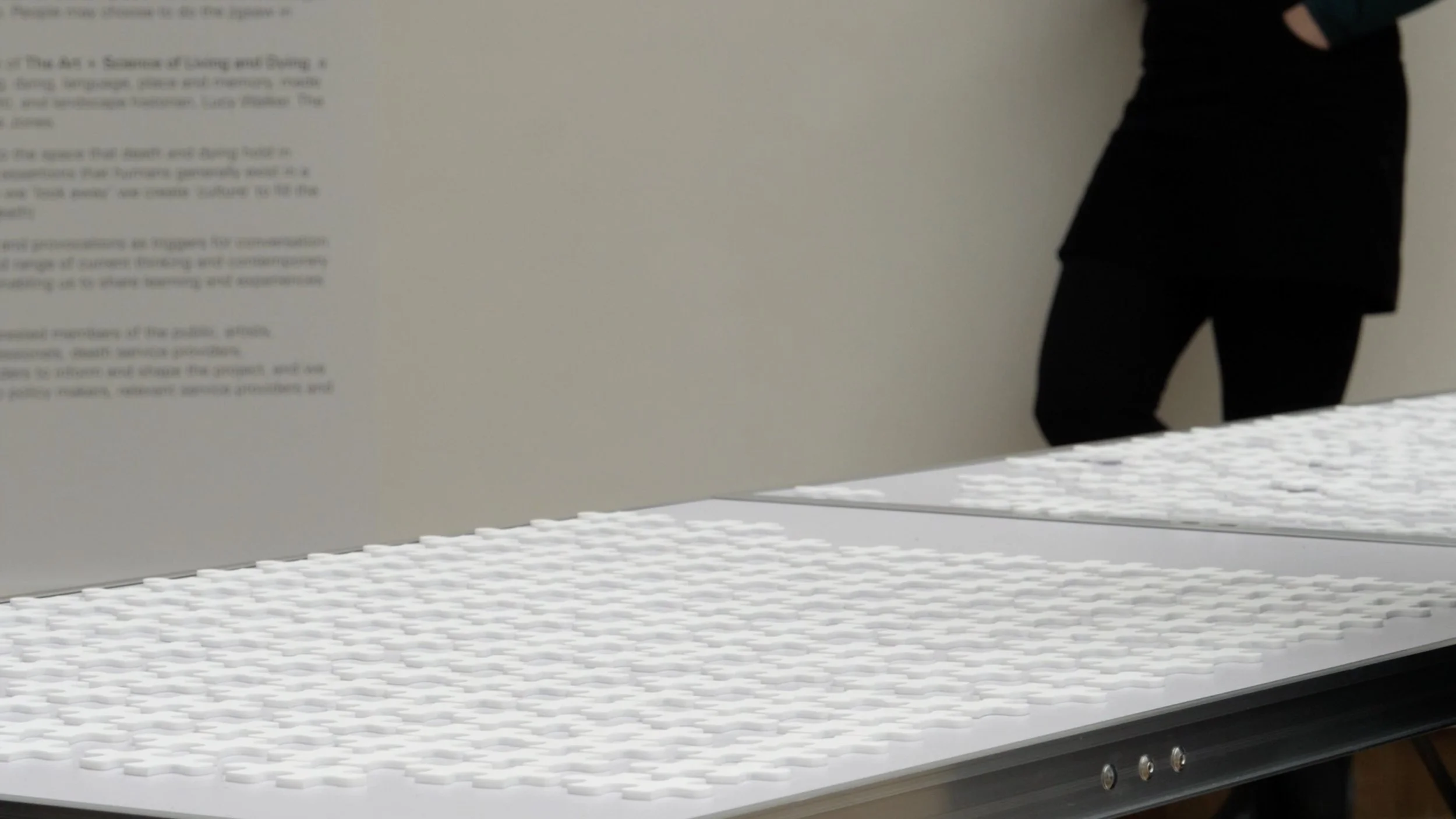
Shared Frameworks (2018), Ipswich Art Gallery, photo by Christa Holka
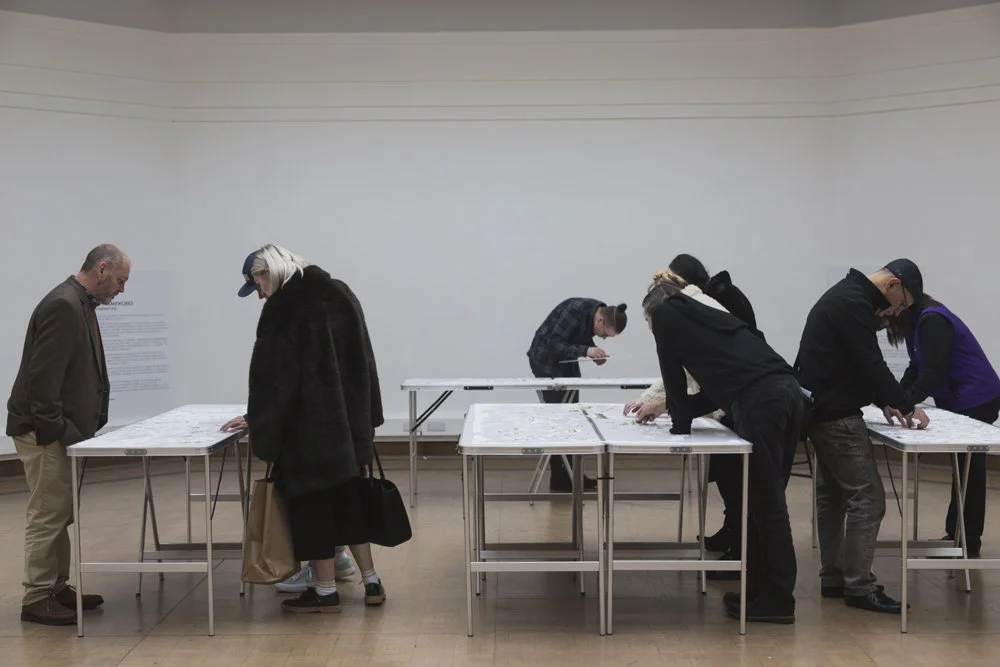
Shared Frameworks (2018), Ipswich Art Gallery, photo by Christa Holka
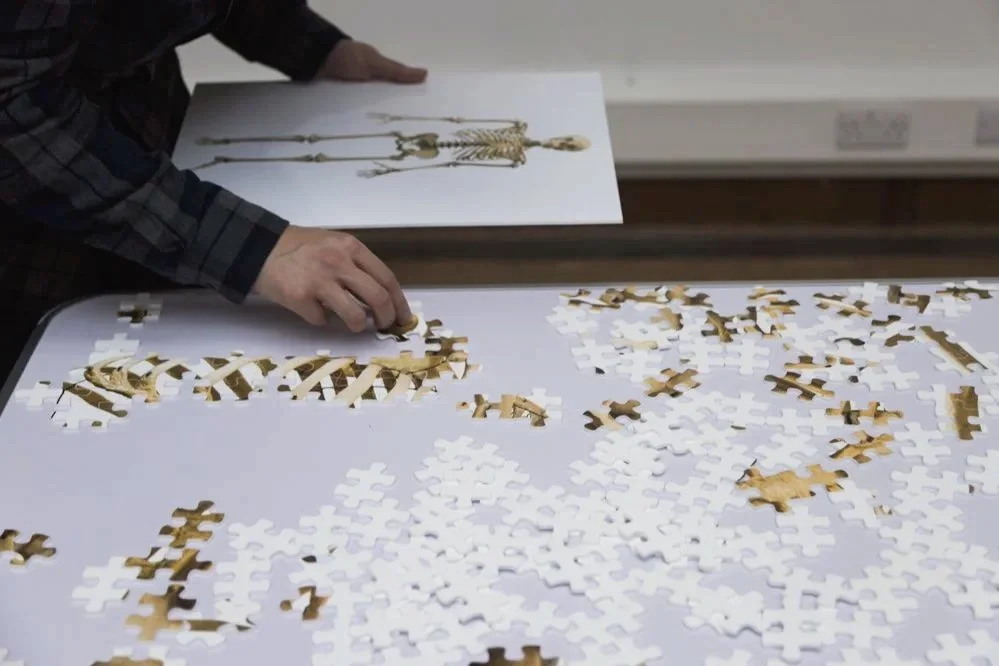
Shared Frameworks (2018), Ipswich Art Gallery, photo by Christa Holka
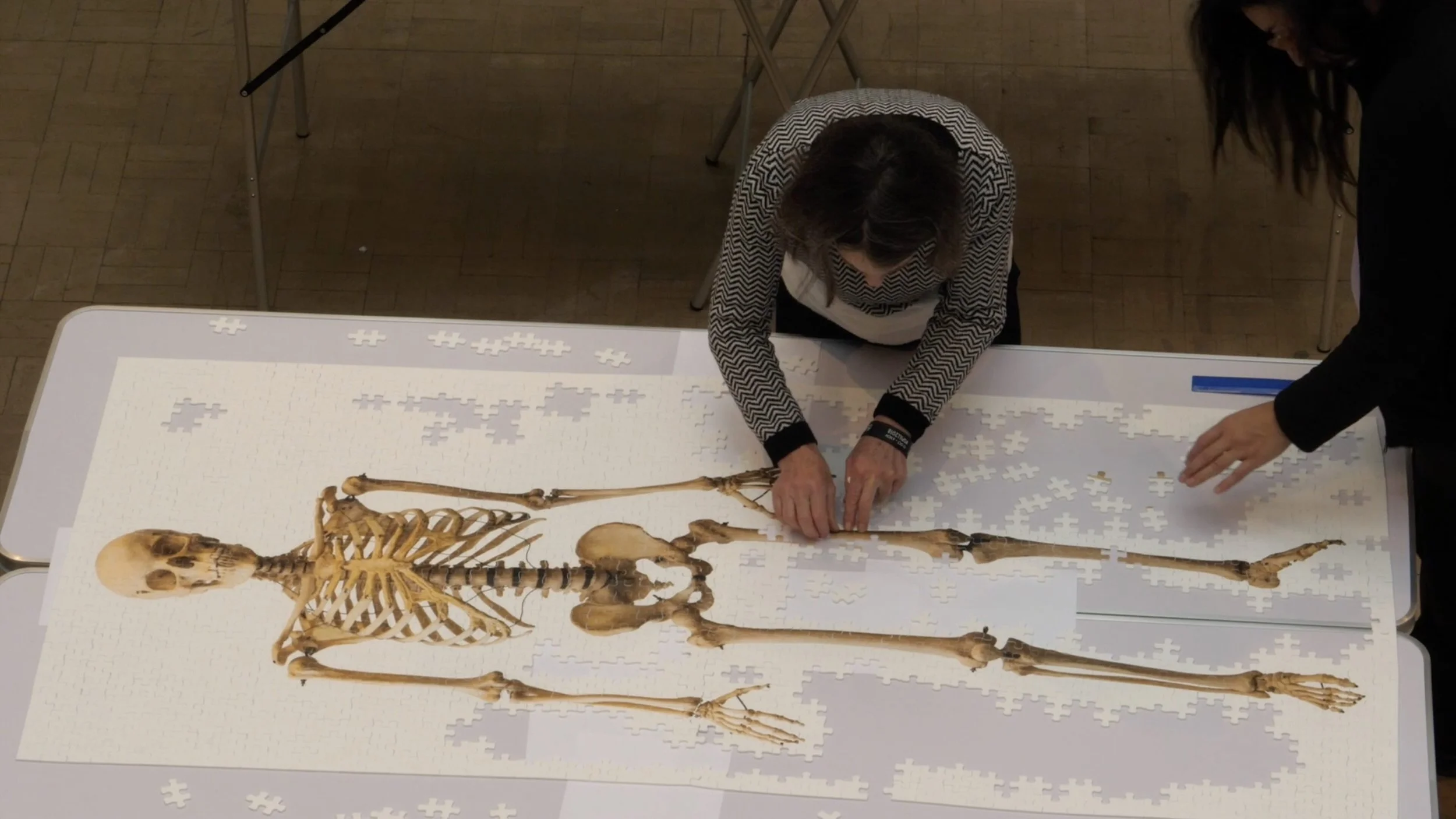
Shared Frameworks (2018), Ipswich Art Gallery, photo by Christa Holka
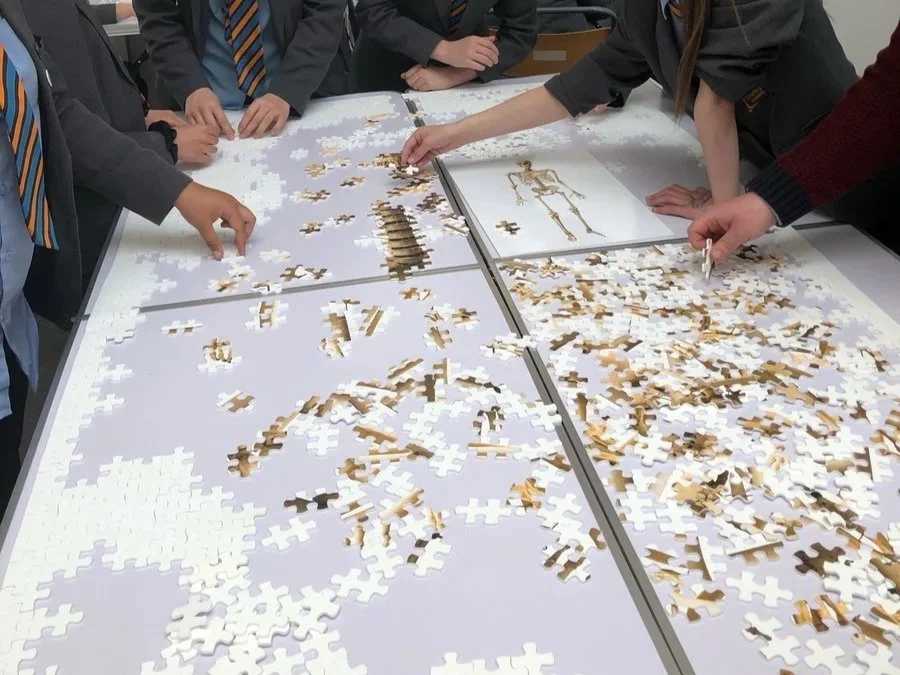
These Bones research with students from Chantry Academy, Ipswich (2019)
CREDITS
Date: October 2018
Duration: 5 days
Place: Ipswich Art School
Created by: Robert Pacitti and Lucy Walker
Skeleton photography: Susan Elaine Jones
Producer: Pacitti Company
Context: Part of The Art and Science of Living and Dying Think Tank research
Funding: Pacitti Company core funding, supported by Arts Council England, Ipswich Borough Council, and earned income.