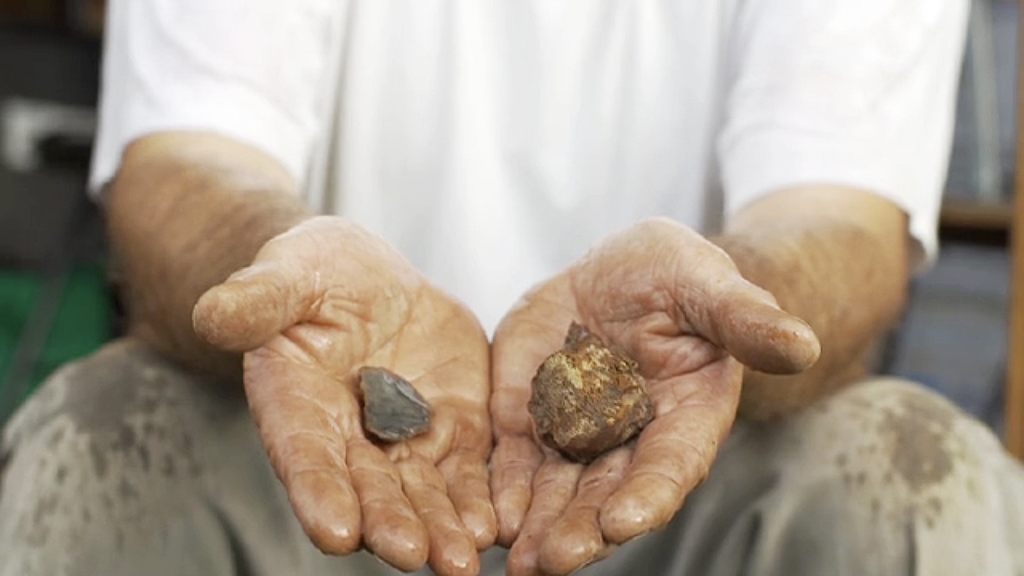
On Languard Point (2012), film still
DIG & SOW
(2011)
Community • Archaeology • Heritage • PlaceDig & Sow was created as part of On Landguard Point, inviting members of the public to become participants in a mass archaeological excavation across the east of England, searching for traces and fragments of home.
During the development of On Landguard Point, Robert began an exchange with British archaeologist Dr Carenza Lewis, based at the University of Cambridge and known for her appearances on Time Team. Their conversations explored the relationship between archaeology and ideas of home - particularly the ways in which heritage is shared, constantly shifting, and connected across generations through people and place.
Robert was especially influenced by Carenza’s description of archaeology as “creating an umbilical link between the homes and the residents of the present, and those of the past.”
This idea became central to Dig & Sow - a project that connected archaeological excavation with performance, transforming private gardens, allotments and shared public spaces into sites of discovery. Through 205 specially commissioned archaeological digs across the region, thousands of people took part as both participants and witnesses, uncovering new relationships between landscape, memory and belonging.
At the centre of each excavation was one of 205 silver charms created for A People’s Peculiar. Rather than just uncovering relics from the past, each dig also created an archaeological discovery for the future: a hidden archive of contemporary stories, symbols and ideas of home, buried beneath the landscapes where people lived and gathered.
The excavations took place in locations ranging from domestic gardens to community spaces, including allotments and other shared land. One charm was buried by Robert himself in the garden of chef Jamie Oliver - just one of many new traces of the present planted into the landscape for future generations to discover.
Although rooted in participation and community, Dig & Sow existed beyond conventional definitions of community art. It was an act of collective imagination - creating connections between past, present and future, and transforming ordinary places into landscapes of possibility.
REFLECTIONS BY CARENZA
On Landguard Point by Carenza Lewis (2013).
Medieval Settlement Research, 28 pp. 90‑92
Writing about her role in the journal Medieval Settlement Research, Carenza reflects on the interactions between archaeologists, performance artists, and public participants, and highlights some of the positive effects working in the community had on all involved:
‘Watching [the final film of On Landguard Point] in Cambridge, I found it beautiful, moving and thought-provoking, magnificently complimented by Nyman’s musical score. As the combined result of so many projects, it was inevitable that little of the film was given over to the archaeology, this was never going to be an ‘art house’ take on Time Team. But where the archaeology did feature, it had considerable impact, and it provided the last, lingering images of the entire film: after a charm in the shape of a dog (representing Black Shuck, one of the best‑known East Anglian legends), was deposited in the bottom of a completed test pit, the camera lingered on in close‑up as shovelful after shovelful of soil was thrown in on top, in a visually beautiful, deeply‑textured, compelling, contemplative sequence which lasted several minutes. It was as unlike Time Team as anything could possibly be.
[…] Dig & Sow introduced many people to archaeology, of course, and gave them an unforgettable experience they would not have had otherwise, while providing valuable new information about the past which advances wider research into historic settlements. It added an extra dimension to the On Landguard Point film which significantly enriched it. But more broadly, by involving archaeology in a cultural project focussed on performance art, our involvement with On Landguard Point also underlined the diversity and inter‑connectedness of ‘culture’ in all its different manifestations. It showed how archaeology can contribute to a broader range of community cultural and arts programmes than it usually does, and reinforced the links between archaeology, heritage, museums, culture and the arts. The demonstration that the inclusion of archaeology enhanced and broadened the appeal of the primarily arts‑based On Landguard Point project should be a useful lesson for the future — many people took part who would not have been interested were it not for the hands‑on archaeology, and it reached parts of the community that On Landguard Point would not have done otherwise. […]
On Landguard Point is a project from which everyone involved will doubtless gain something different. We are all individuals, and this was a project that made everyone think. Perhaps the final words about its capacity to speak to those involved should be given to one of the East Anglian residents who took part in the digging:
‘I was given the silver rifle charm yesterday to bury in a test pit my team dug in my back garden. As I lay the rifle in the bottom of my pit I had a sudden rush of emotion: my son is in Afghanistan at the moment serving in our armed forces. I snatched the rifle from the pit and put it back in the envelope I had freed it from two minutes earlier. My promise to you is, in October when my son returns safely home I will place this charm in the ground at a depth of 500mm. My son, and my family, make my Home......’
(PP, Dig & Sow participant in Potton. June 2012)’
THE INDEPENDENT
Feature: On Landguard Point offers culture that anyone can dig
Nancy Groves - Friday 02 September 2011
‘From Freud's Civilisation and its Discontents to the Indiana Jones films, digging has long been a metaphor for cultural and psychological processes. From tomorrow, archaeology and art will become one when the performer Robert Pacitti curates Dig and Sow, a series of public digs across eastern England.
The man whose biennial SPILL Festival has presented the likes of the Italian live artist Romeo Castellucci being mauled on stage by eight Alsatian dogs will collaborate instead with senior bowling teams and scout groups at 205 excavation sites across six counties, in the hope of uncovering hidden treasure. The digs will be part of On Landguard Point, the east of England's Cultural Olympiad offering and will be conducted under the watchful eye of Dr Carenza Lewis, a Cambridge University archaeologist and Time Team regular.
"Carenza talks about digging as an umbilical link to the past," says Pacitti. "She predicts some of the things we'll find, like clay and pipe ware. But it's also a giant metaphor. I've spent my career not making new things but editing a load of stuff that's already on the table, or in the ground. And in the physicality of a 'dig' there’s a real sense of performance. It's as far away from culture-house culture as you can get."‘
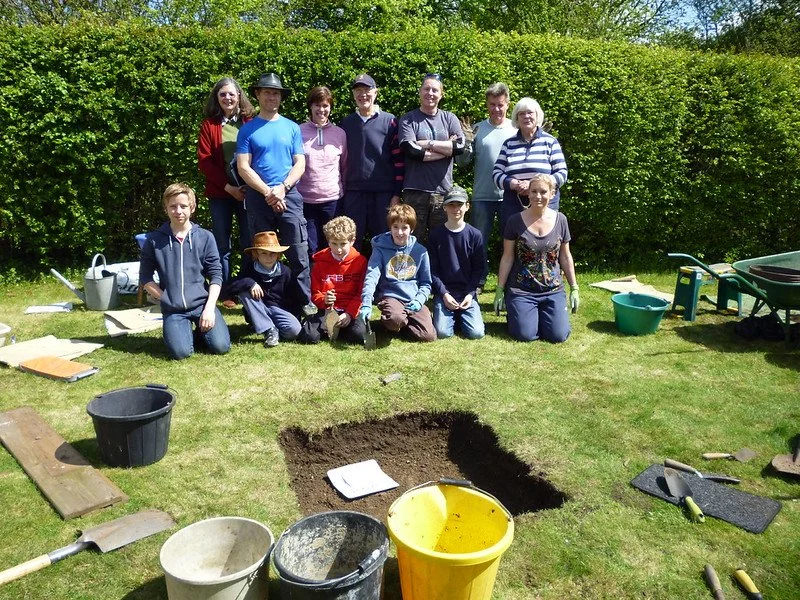
Clavering Dig & Sow (2012), photo by Access Cambridge Archaeology
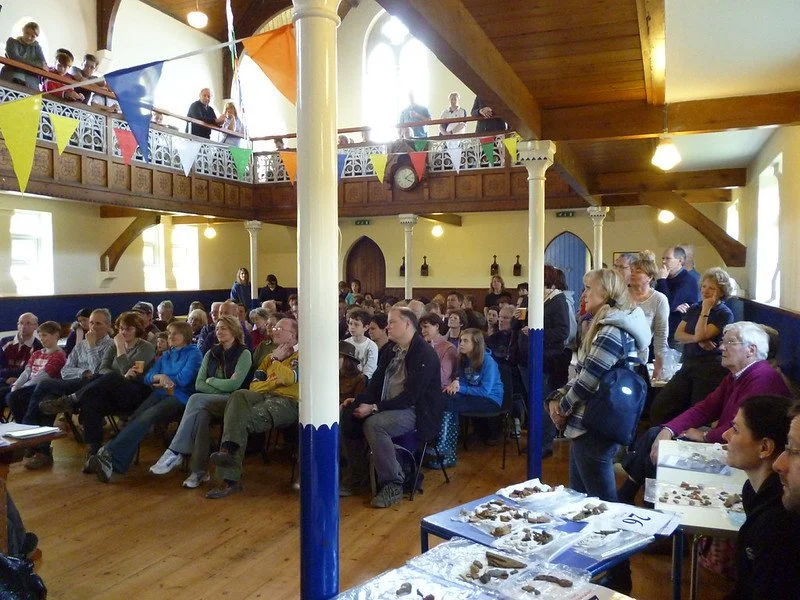
Clavering Dig & Sow (2012), photo by Access Cambridge Archaeology
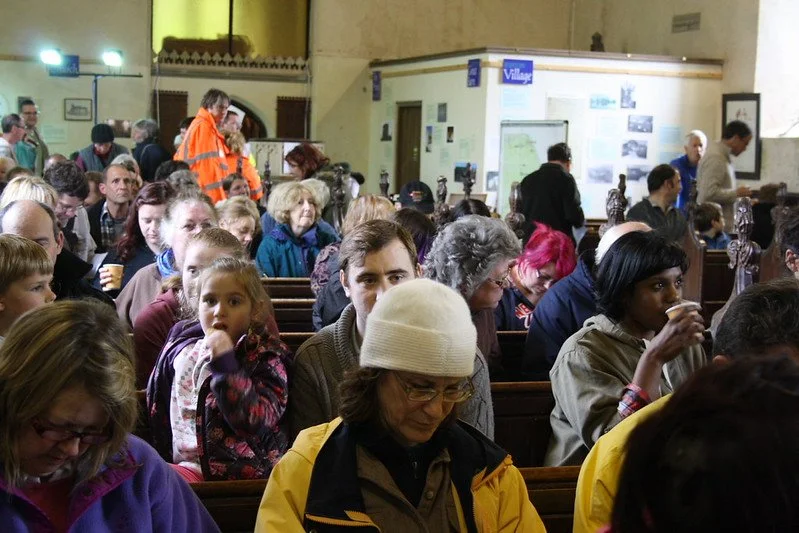
Paston Dig & Sow (2012), photo by Access Cambridge Archaeology
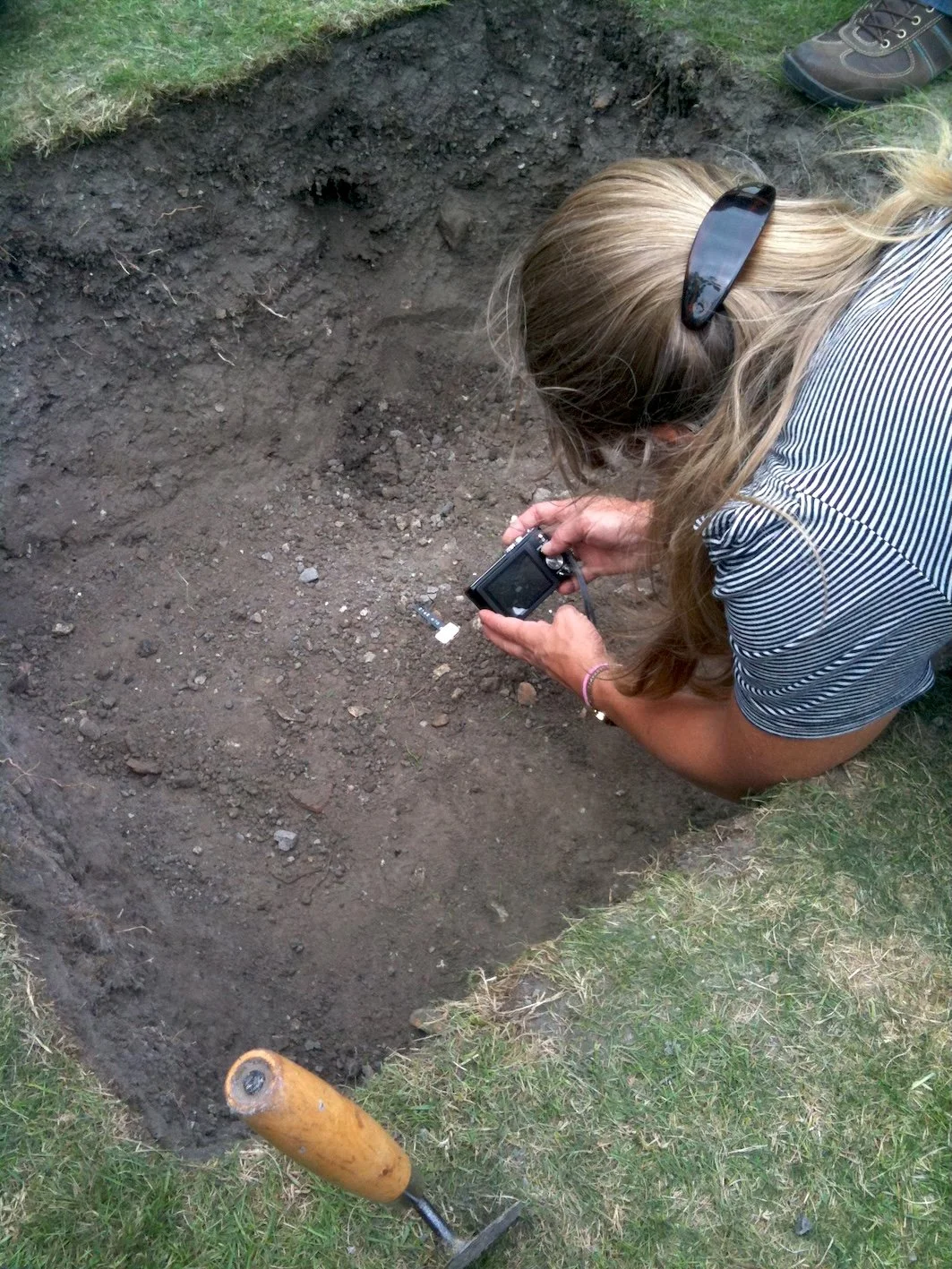
Carenza Lewis, Dig & Sow (2012), photo by Robert Pacitti
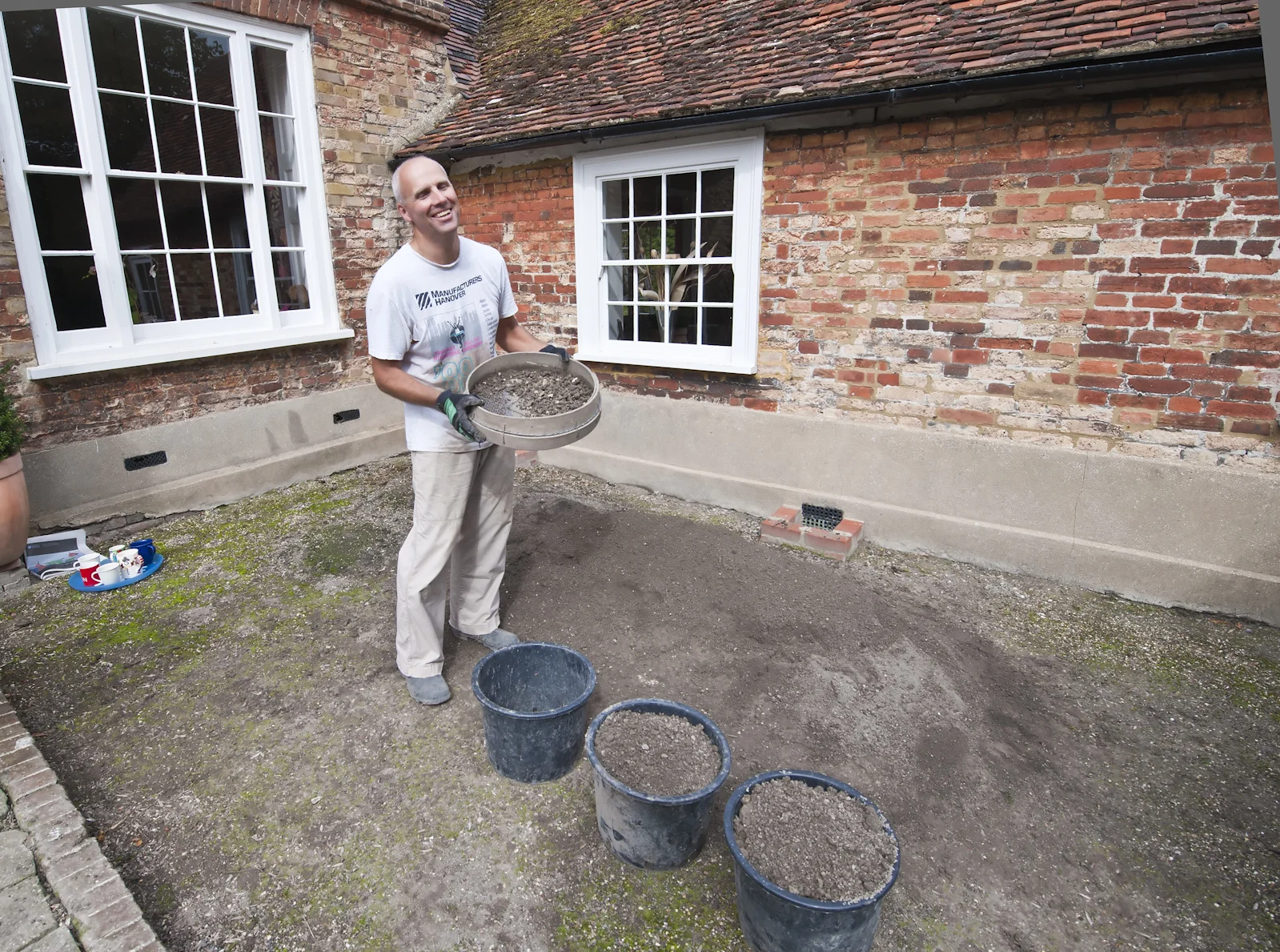
Potton Dig & Sow (2012), photo by Robert Pacitti
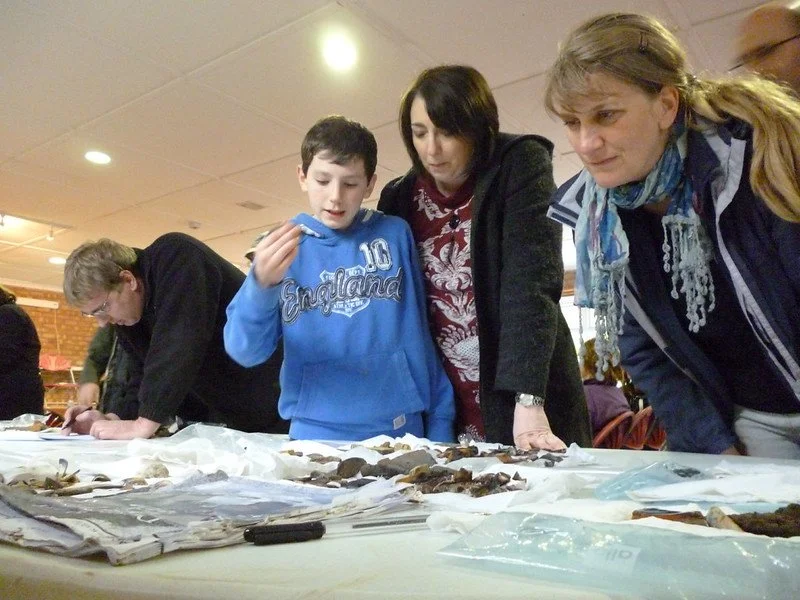
Carenza Lewis at Peakirk Dig & Sow (2012), photo by Access Cambridge Archaeology
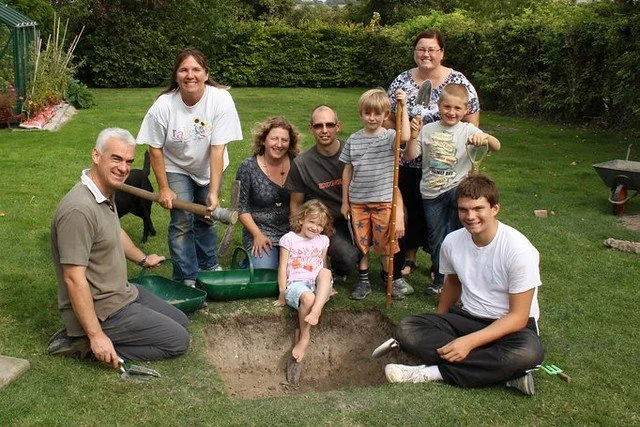
Ashwell Dig & Sow (2011), photo by Access Cambridge Archaeology
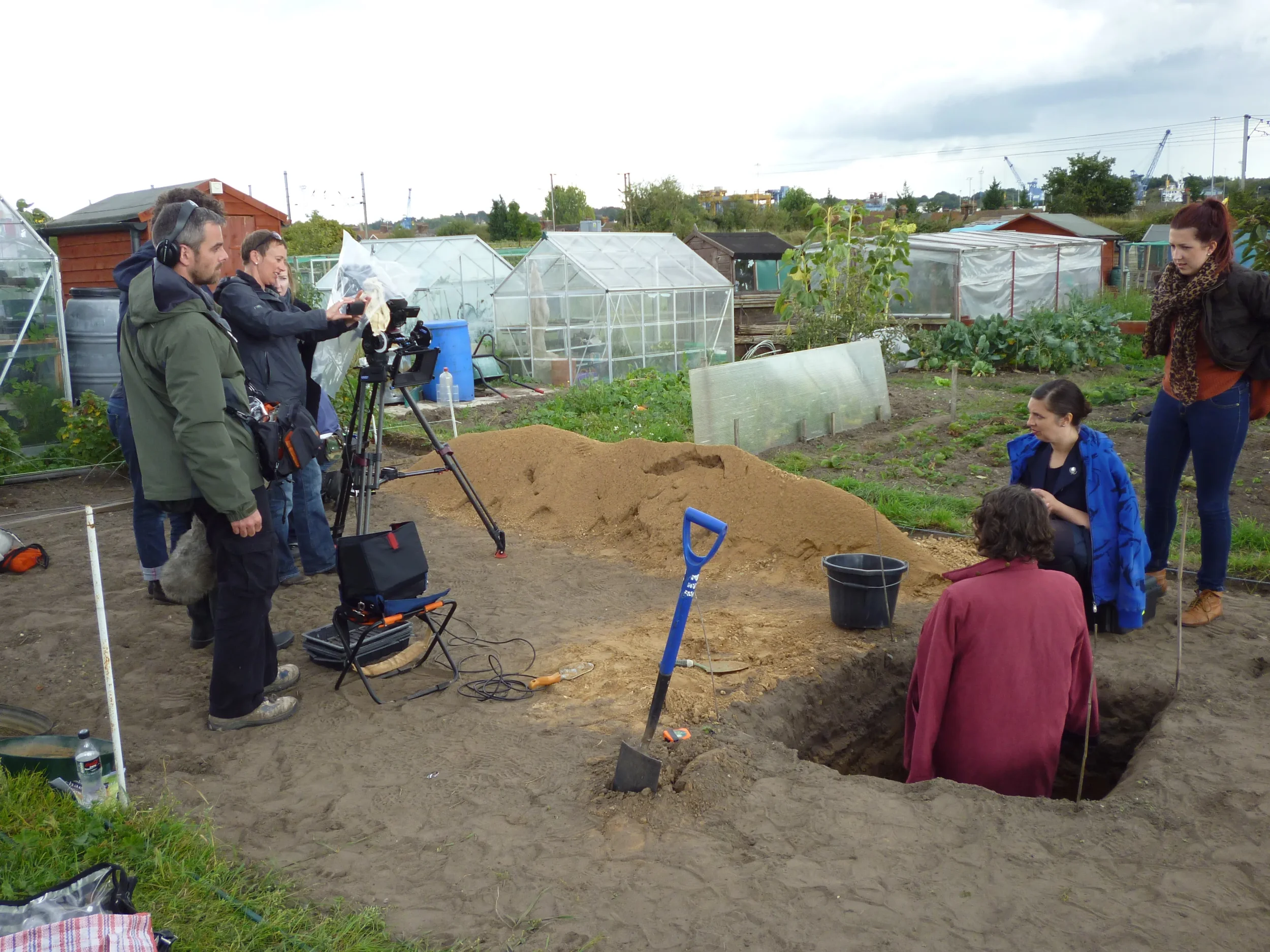
Filming the Ipswich Dig & Sow (2011), photo by Access Cambridge Archaeology
CREDITS
Date: 2011 - 2012
Duration: 12 months
Dig sites: Ashwell in Hertfordshire, Clavering in Essex, Ipswich in Suffolk, Paston in Norfolk, Peakirk in Cambridgeshire, Potton in Bedfordshire,
Concept: Robert Pacitti
Research: Richard Eton, Robert Pacitti, Sheila Ghleani
Lead Archaeologist: Carenza Lewis
Delivery Partner: Access Cambridge Archaeology
Context: Part of On Landguard Point, the East of England’s contribution to Artists taking the lead, a major commissions project at the heart of the London 2012 Cultural Olympiad funded by Arts Council England.
Special thanks to: Carenza, Prof Martin Jones for introducing us, and to everyone who dug up their back gardens and common ground.