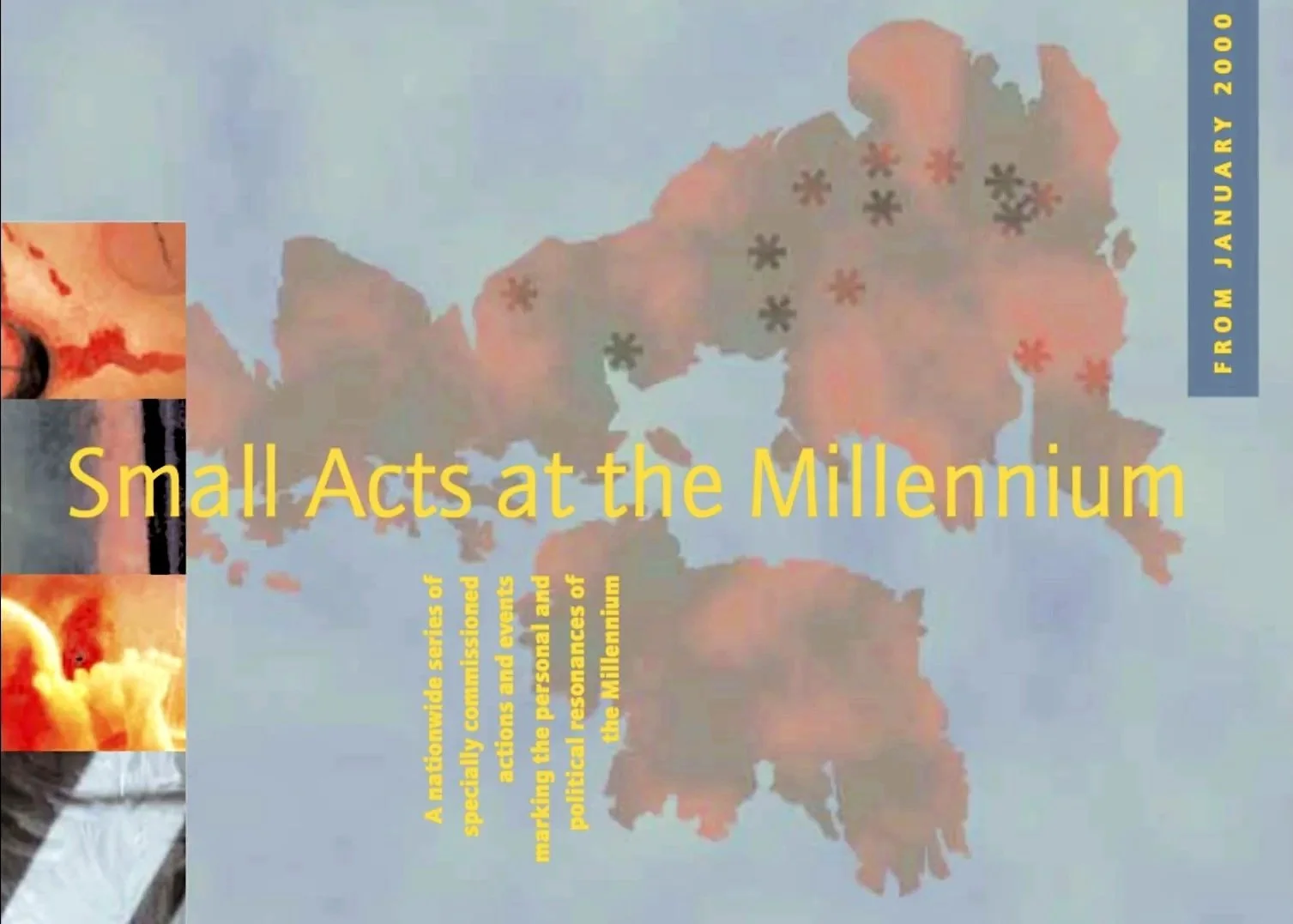
Small Acts at the Millennium (2000) publicity leaflet
SUSPENDED SENTENCE
(2000)
Public Art • Intervention • Text • ObjectsSuspended Sentence was a project centred on the themes of rumours and falsehoods. Around the turn of the Millennium, an unspecified number of texts, objects, and images were carefully deposited by invisible hands in various public locations across the country. Predating the rise of social media by several years, the hope of this work was that once these artefacts had been seen, read, or simply noticed, they would be discussed and, in that sharing, begin to forge a series of new questions, or half grasped truths. The fabricated stories and intentional falsehoods - ranging from faux scientific claims to imagined sexual scandals - were designed to gradually infiltrate daily conversations between friends, family members, or strangers. If the stars aligned maybe they might even reach the pages and airwaves of the nation’s regional press.
Suspended Sentence explored the theme of rumours as a prism through which to view state messaging about the Millennium. Carefully left behind small brown cardboard boxes tied with pink cotton, containing fragmentary texts and scrambled stories, allowed for rumours and statements to enter public space. These parcels were intended to be interactive, playing back the language of the media through a trickle of half-truths, distortions, and deliberately misleading phone numbers. This was a project about the authority of written word when then shared or spoken aloud. Viewers might question the nature of the information they found and how it was being communicated, but the hope was for the falsehoods to win out. This process sought to unsettle the conventional relationship between fact and fiction while simultaneously raising nuanced public questions about origin, authenticity, and the nature of truth itself.
Fourteen British artists were commissioned for Small Acts at the Millennium to create a series of works marking the personal and political resonances of the Millennium and the charged questions it raised. Contrasting with the epic and public nature of most Millennial events, Small Acts at the Millennium was a series of actions addressing the dissident, the private, the idiosyncratic, the ephemeral and the everyday. Against a global backdrop of corporate pageantry, media gloss, nationalist fireworks and bogus universalism, Small Acts at the Millennium presented works whose contribution was maverick; celebrating aspects of human experience otherwise neglected in the public spectacularism of official history. Some Small Acts at the Millennium projects took the form of public presentations, some, like Suspended Sentence, were discrete interventions or encounters, whilst others are chiefly experienced through their media presence or documentation. Working with such issues and experiences as personal and community history, memory, anonymity, mental health, public space, disability, rumours and hitch-hiking, the diverse Small Acts projects explored the suppressed or forgotten margins and events of our lives – the parts of our experience which society cannot fully deal with, remember or acknowledge.
THE PUBLICATION
Small Acts at the Millennium projects were documented for a Black Dog Publishing book, which placed traces of each action alongside critical essays on the work. Edited by Adrian Heathfield, ‘Small Acts: Performance, the Millennium and the Marking of Time’, includes writings spanning cultural commentary, fiction, art criticism and philosophy. Contributors include: Brian Eno, Peggy Phelan, Tim Etchells, Gilane Tawadros, Alexander Garcia Duttmann, Emma Kay, Lois Keidan, Deborah Levy and Suzanne Moore.
The back cover of the publication reads:
‘Small Acts documents the work of fourteen performance artists who marked the personal and political resonances of the new Millennium in a series of site-specific actions. Contrasting with the epic, populist and homogenising nature of the official celebrations, these works focused on forgotten and ephemeral experiences, enacting small but significant interventions in the public sphere. Small Acts examines how we frame and understand our experiences of art, time and society. A dynamic series of essays combining cultural commentary with fiction, art criticism and philosophy sits alongside the artists' work. These writings, like the works they complement, contest the stories that contemporary culture tells itself about time.'
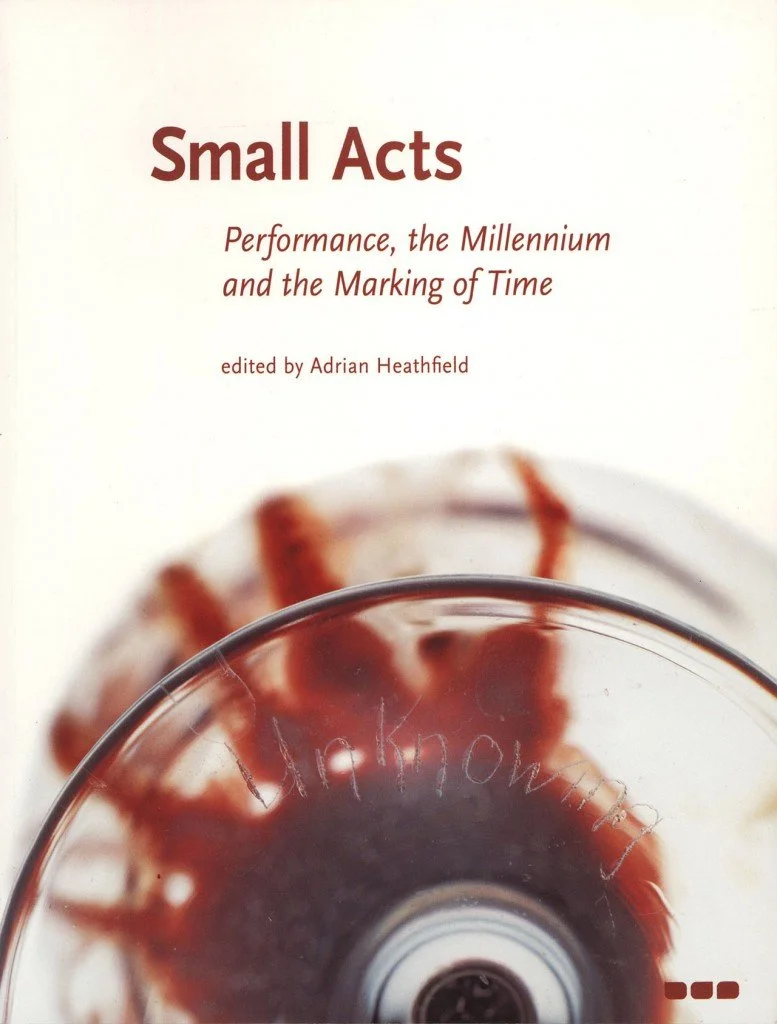
Small Acts: Performance, the Millennium and the Marking of Time (2000), front cover
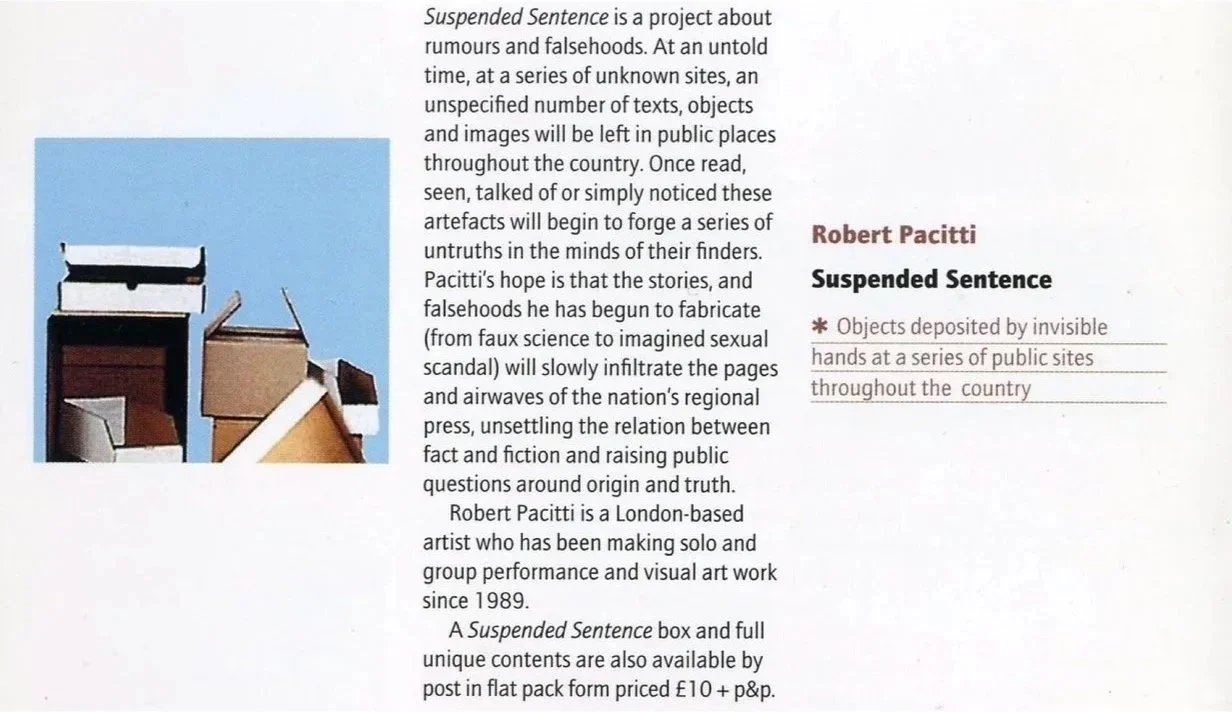
Small Acts (2000) publicity leaflet inside (excerpt)
CREDITS
Date: 1999 / 2000
Duration: Six months
Place: Across the UK
Writing and object creation: Robert Pacitti
Interventions: Actioned by Robert Pacitti and a network of friends
Curators: Tim Etchells, Adrian Heathfield, Lois Keidan, Verity Leigh
Publication Editor: by Adrian Heathfield
Publication publisher: Black Dog
Context: A Live Art Development Agency Commission
Funding: ACE Live Art Commissions Fund, and the Millennium Commission